
Gnocchi with Sage Butter
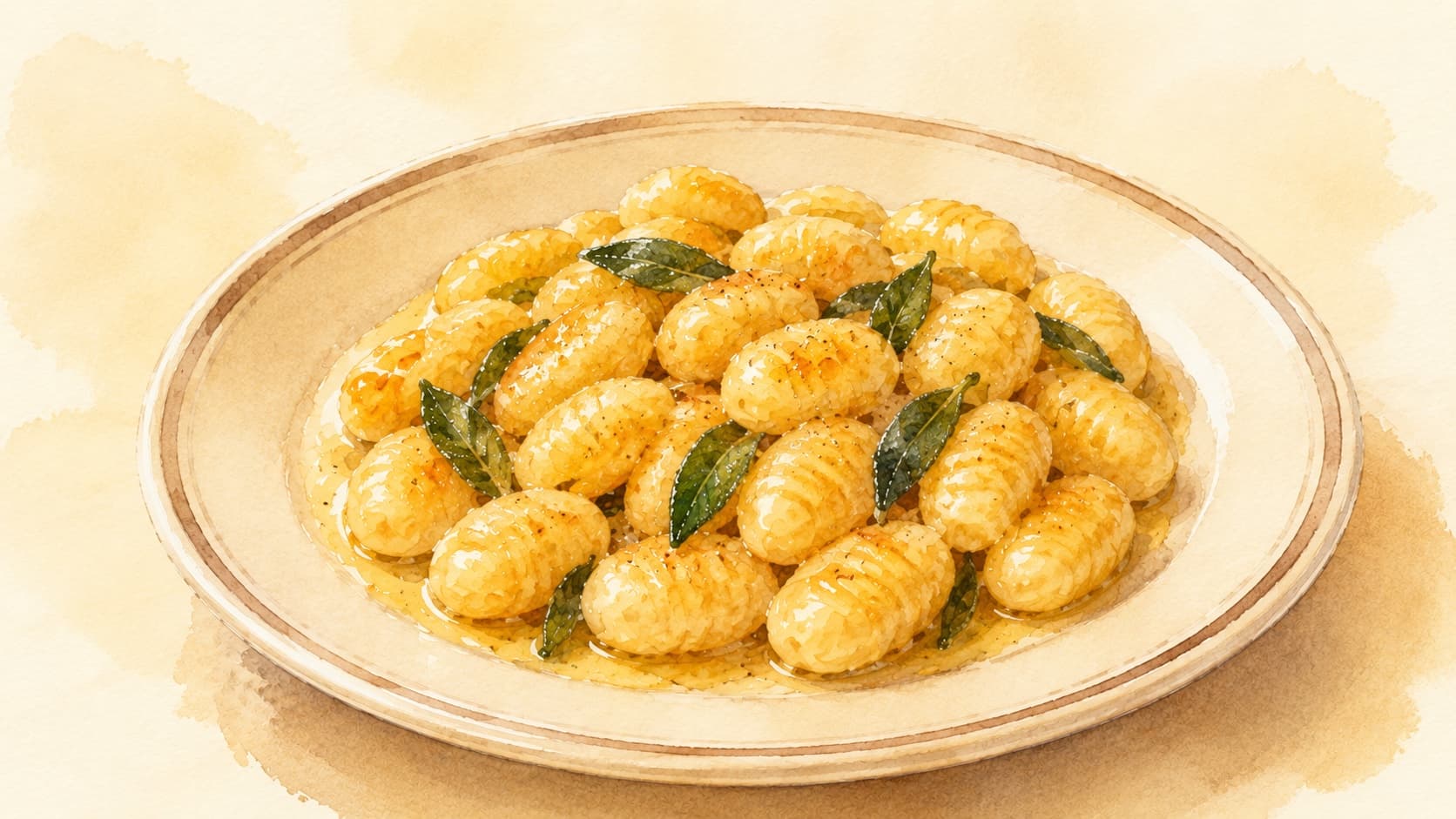
Delight in this classic Italian gnocchi tossed in fragrant sage butter for a simple yet elegant main dish.
Contents (5 sections)▾
Ingredients
- 500 g potatoes
- 150 g all-purpose flour
- 1 large egg
- 1 tsp salt
- 50 g unsalted butter
- 6-8 fresh sage leaves
- Parmesan cheese, grated, to taste
Steps
Boil the potatoes in salted water for about 20 minutes until tender. This step ensures the potatoes are soft enough to mash, forming the base of your gnocchi.
Drain the potatoes and let them cool slightly before peeling. Warm potatoes are ideal for making smooth dough without excess moisture.
Mash the peeled potatoes in a bowl until smooth. Avoid lumps for a refined texture.
Mix in the flour, salt, and egg, kneading gently until a dough forms. Be careful not to over-knead, which can make gnocchi tough.
Divide the dough into sections and roll each piece into a long rope about 1 cm thick. Cut into small pieces (about 2 cm each).
Using a fork, gently press each piece to create ridges, which help hold the sauce. This step is crucial for aesthetics and sauce adherence.
Bring a large pot of salted water to a boil and cook the gnocchi until they float, approximately 2-3 minutes. Floating indicates they are cooked.
In a pan, melt the butter over medium heat. Add the sage leaves and cook until the butter turns golden brown (beurre-noisette). This enhances flavor.
Drain the gnocchi and toss them in the sage butter for 1-2 minutes until well-coated. This final step melds the flavors beautifully.
Serve immediately, garnished with grated Parmesan cheese. Enjoy the comforting textures and aromas.
Why this works
The success of gnocchi (small Italian potato dumplings shaped by hand) lies in the balance of moisture and texture. Using starchy potatoes is essential, as they create a light and fluffy consistency. The process of boiling and then mashing helps release steam, reducing excess moisture. It's crucial to work with the dough while it's still warm, as this allows for better mixing without overworking it. If your dough seems too sticky, add a bit more flour, but be cautious; adding too much can lead to dense gnocchi. Perfectly cooked gnocchi should float, indicating they are done. The beurre-noisette technique adds rich, nutty flavors from browned butter, complemented by the aromatic sage. If the butter starts to burn, lower the heat immediately and add a splash of water to cool it down and prevent bitterness. This dish exemplifies Italian culinary principles by focusing on quality ingredients and simple techniques, allowing the natural flavors to shine.
Common mistakes
Boiling the potatoes whole in water-logged conditions.
Target: Bake the potatoes in their skins (or boil whole, skin-on) and rice (push through a ricer — a tool that shreds potato into fine, even threads) them while still hot. The mash should look fluffy and dry, almost steaming.
Why it matters: Potato gnocchi succeed or fail on moisture. Diced potatoes boiled in water absorb large amounts of liquid; that water then has to be compensated for with more flour, and more flour means dense, gummy gnocchi. Skin-on baking or whole boiling keeps the flesh drier and the starch intact.
What to do: Bake at around 200°C (400°F) until a knife slides through with no resistance, peel while hot, and rice straight into a bowl. Let the steam escape for a minute before adding flour and egg.
Over-kneading the dough.
Target: A soft, just-cohesive dough that comes together in 30–60 seconds of gentle pressing. The surface should feel barely tacky, not sticky.
Why it matters: Wheat flour contains gluten — proteins that develop into elastic strands the more they are worked. A little gluten is structural; a lot of gluten turns gnocchi into chewy rubber pellets. The famous "dense gnocchi" problem is usually over-kneading, not too much flour.
What to do: Sprinkle the flour over the riced potato, add the egg, then fold and press — do not knead aggressively. Stop the moment the dough holds together.
A cold pan and pale butter.
Target: Beurre noisette — butter cooked over medium heat until the milk solids on the bottom of the pan turn hazelnut brown and the aroma turns from creamy to toasted and nutty. Sage leaves added at the right moment crisp without burning.
Why it matters: Browned butter is the result of Maillard chemistry on milk proteins — the same browning reaction that makes seared meat or toast taste roasted. Pale, just-melted butter is greasy and flat; properly browned butter carries the dish. The risk is overshooting into black, acrid burnt butter.
What to do: Use a light-colored pan so you can see the color. Cook over medium, swirl frequently, add the sage as soon as the foam starts to subside and the smell turns nutty. Pull from the heat the second the solids go from gold to deep amber — they cook on after the pan is off.
Cooking gnocchi in too small a pot or in unsalted water.
Target: A large, generously salted pot of water at a strong rolling boil. Cook in batches so the gnocchi never crowd the pot.
Why it matters: Crowded gnocchi cool the water below boiling, stick to each other, and tear as you stir. Unsalted water makes the dumplings bland from the inside out — surface salt and a sauce cannot compensate. Gnocchi float when they are cooked through; pulling them the moment they surface keeps the centers tender.
What to do: Salt the water to taste like a mild broth. Cook in small batches, scoop with a slotted spoon as they rise, and drop them straight into the warm butter pan.
What to look for
- Riced potato: light, fluffy, almost steaming, with no visible lumps. If a fingerprint stays glossy and wet, let it cool and dry a moment longer.
- Dough ready to shape: soft, barely tacky, holds a thumbprint without sticking. If it pulls long strings off your hand, it is over-worked or too wet — stop and rest it.
- Beurre noisette: foam has subsided, you can see deep golden specks on the pan bottom, and the smell is toasted hazelnut, not bitter or acrid.
- Gnocchi at the right doneness: they float to the surface and bob steadily for 10–15 seconds. A cut piece shows a soft, even interior with no chalky core.
A note on history
Modern potato gnocchi are a relatively recent dish in the long history of Italian dumplings. Earlier gnocchi were not made with potatoes at all — Roman versions were based on semolina porridge, and medieval Lombard cooks used breadcrumbs, ground almonds, and milk in dumplings called zanzarelli (Gambero Rosso). Potatoes only reached Europe from the Andes via Spain in the sixteenth century, so the potato gnocchi most cooks know today became common in northern Italy — Piedmont and Lombardy especially — only from the seventeenth century onward (Britannica, Gambero Rosso). The name itself most likely comes from nocchio ("knot in wood") or nocca ("knuckle"), descriptions of the small, rounded shape of the dumplings (Gambero Rosso).
Get the essays in your inbox — free
Weekly notes on flavor, fermentation, and food history — the writing behind the Atlas of Flavor. No spam; unsubscribe anytime.