
Galaktoboureko
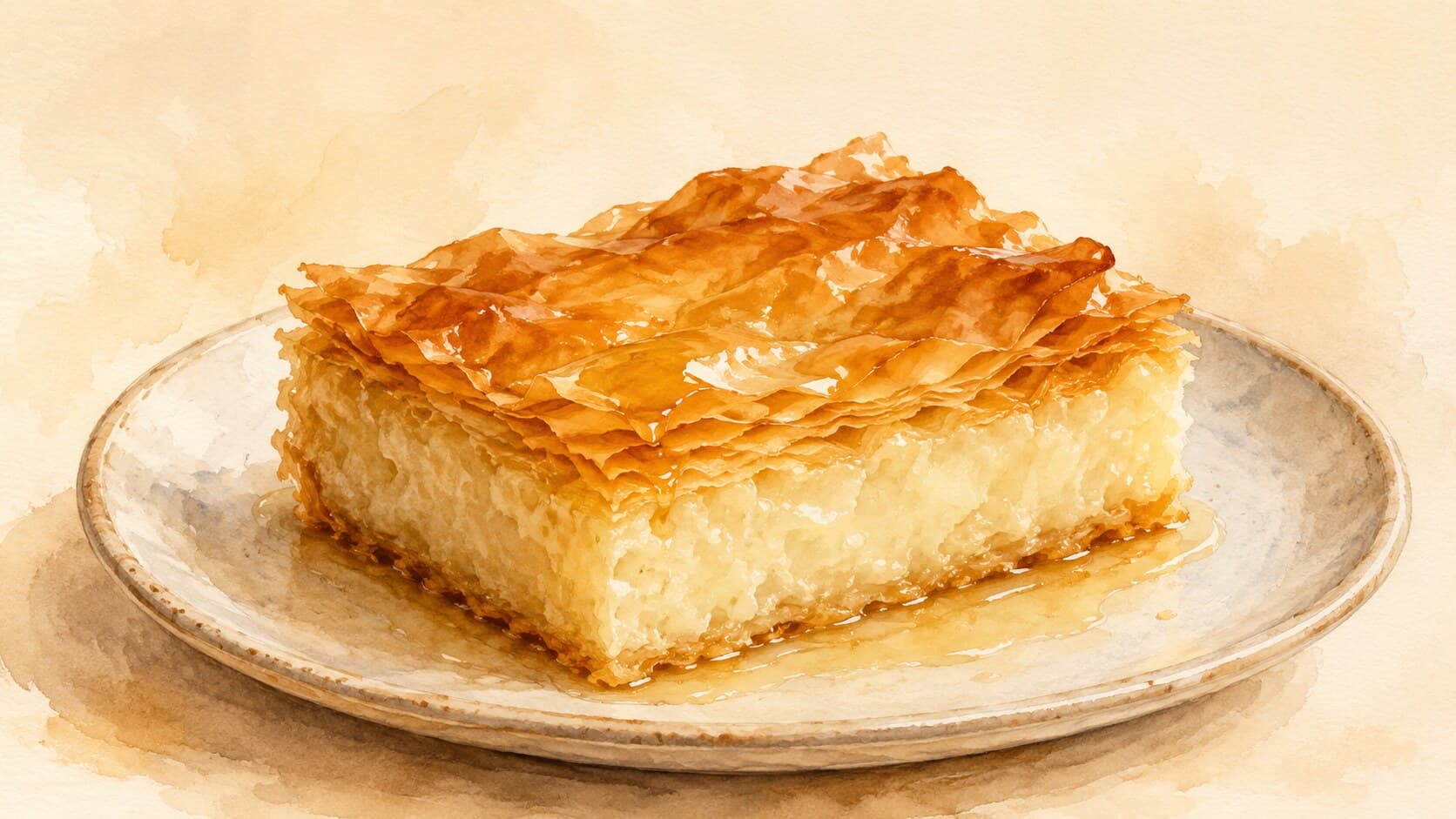
Galaktoboureko is a Greek dessert made with layers of phyllo pastry and semolina custard, finished with a citrus syrup.
Contents (5 sections)▾
Ingredients
- 250 g semolina
- 1 liter milk
- 200 g granulated sugar
- 4 large eggs
- 1 tsp vanilla extract
- 1/2 cup unsalted butter, melted
- 1 package phyllo dough (400 g)
- 1 cup water
- 1 cup granulated sugar (for syrup)
- 1/2 cup freshly squeezed lemon juice
- 1/4 teaspoon ground cinnamon
- to taste: lemon zest
Steps
Preheat the oven to 180°C (350°F). This ensures even baking of the pastry.
In a saucepan, heat the milk over medium heat until just below boiling. Gradually whisk in semolina and cook, stirring constantly for about 5 minutes until thickened. Remove from heat.
In a bowl, whisk together the sugar, eggs, vanilla extract, and lemon zest until combined. Slowly fold this mixture into the semolina mixture, ensuring it is smooth.
Brush a 9x13 inch baking dish with melted butter. Layer half of the phyllo sheets, brushing each layer with butter, to create a base.
Pour the semolina custard over the phyllo base, then layer the remaining phyllo sheets on top, brushing each with melted butter. Score the top layer into squares.
Bake in the preheated oven for 30-35 minutes, or until golden brown. While baking, prepare the syrup by combining water, sugar, and lemon juice in a saucepan over medium heat until sugar dissolves.
Once baked, immediately pour the hot syrup over the pastry, allowing it to soak in for at least 30 minutes before slicing.
Why this works
Layering phyllo dough (paper-thin sheets of pastry, brushed with butter and stacked) with semolina custard (a creamy filling thickened with coarsely milled durum wheat) creates a contrast of textures—crisp on the outside and creamy inside. The custard should be cooked until smooth and thick; if it appears too thin, extend cooking time. The phyllo must be kept moist; if layers break or dry out, apply melted butter between them to maintain texture. The hot pastry absorbs the citrus syrup, which balances the custard's richness. This technique chain ensures a well-executed dessert.
Common mistakes
Lumpy semolina custard. Target: A smooth, pourable custard with no grains or knots, thick enough to coat a spoon. Why it matters: Semolina (coarsely milled durum wheat) thrown into hot milk all at once clumps instantly, and those lumps bake into gritty pockets in the finished cream. A smooth custard is what gives galaktoboureko its silky center against the crisp pastry. What to do: Rain the semolina into the hot milk in a thin stream while whisking constantly, and keep stirring as it thickens so nothing catches on the bottom. Temper the eggs (whisk a little hot custard into the beaten eggs first, then return them) so they enrich the custard instead of scrambling.
Phyllo that dries out and shatters while you work. Target: Sheets that stay supple and fold without cracking, each one brushed with butter. Why it matters: Phyllo (paper-thin pastry sheets) loses moisture within minutes of being exposed to air and turns brittle, so layers crumble instead of stacking into clean, separate leaves. The butter between sheets is what makes them bake up crisp and flaky rather than dry and papery. What to do: Keep the stack you aren't using covered with a barely damp towel, work one sheet at a time, and brush each with melted butter before adding the next.
Pouring cold syrup on hot pastry, or hot syrup on hot pastry. Target: One side hot and the other cool — the classic move is hot pastry with cool syrup (or cooled pastry with warm syrup). Why it matters: When both are hot, the phyllo can't absorb cleanly and the surface goes soggy and slack. A temperature contrast lets the syrup soak into the layers while the crust stays crisp, which is the whole textural point of the dessert. What to do: Make the syrup ahead and let it cool while the pastry bakes, then ladle the cool syrup evenly over the hot pastry the moment it leaves the oven and let it drink it in for at least 30 minutes before cutting.
Cutting before it has fully set and soaked. Target: Slices that hold a clean edge with the custard firm, after a proper rest. Why it matters: Custard set by eggs and semolina needs time off the heat to firm up; cut too soon and the filling slumps out and the layers slide apart. Resting also lets the syrup distribute evenly through the pastry. What to do: Score the top layer into portions before baking (it makes neat cutting possible later), then wait until the pastry has rested and absorbed the syrup before slicing all the way through. Bake until the custard is fully set — the center should be firm, not loose or wet, when tested.
What to look for
- Cooked semolina custard: thick enough that a spoon drawn across the bottom leaves a trail that slowly closes, smooth and glossy with no visible grains. That trail means it has set enough to hold between the pastry layers.
- Buttered, baked phyllo top: deep golden brown with crisp, slightly lifted edges that crackle when tapped. Pale and limp means it hasn't crisped; very dark means it tipped toward burnt.
- Syrup absorption: the surface looks glazed and the pastry sounds faintly crisp, with a little syrup pooling at the base rather than sitting wet on top. A flooded, glistening top means too much syrup or pastry that was too hot to drink it in.
- A cut slice: distinct layers — crisp gold pastry, a firm pale custard band, crisp pastry again — standing as a clean square. Custard that runs out or layers that collapse mean it needed more setting or resting time.
A note on history
The name galaktoboureko joins the Greek gala (milk) with boureki, a pastry term of Turkish origin, giving roughly "milk pastry" (Wikipedia). The dessert belongs to the broad family of phyllo-and-syrup pastries that spread across the former Ottoman world, and the Greek version is distinguished by its semolina-based custard filling rather than the chopped-nut filling of baklava (Wikipedia).
Get the essays in your inbox — free
Weekly notes on flavor, fermentation, and food history — the writing behind the Atlas of Flavor. No spam; unsubscribe anytime.