
Fabada Asturiana
Fabada Asturiana is a Spanish bean stew made with chorizo and morcilla, emphasizing slow cooking and the layering of flavors.
Contents (5 sections)▾
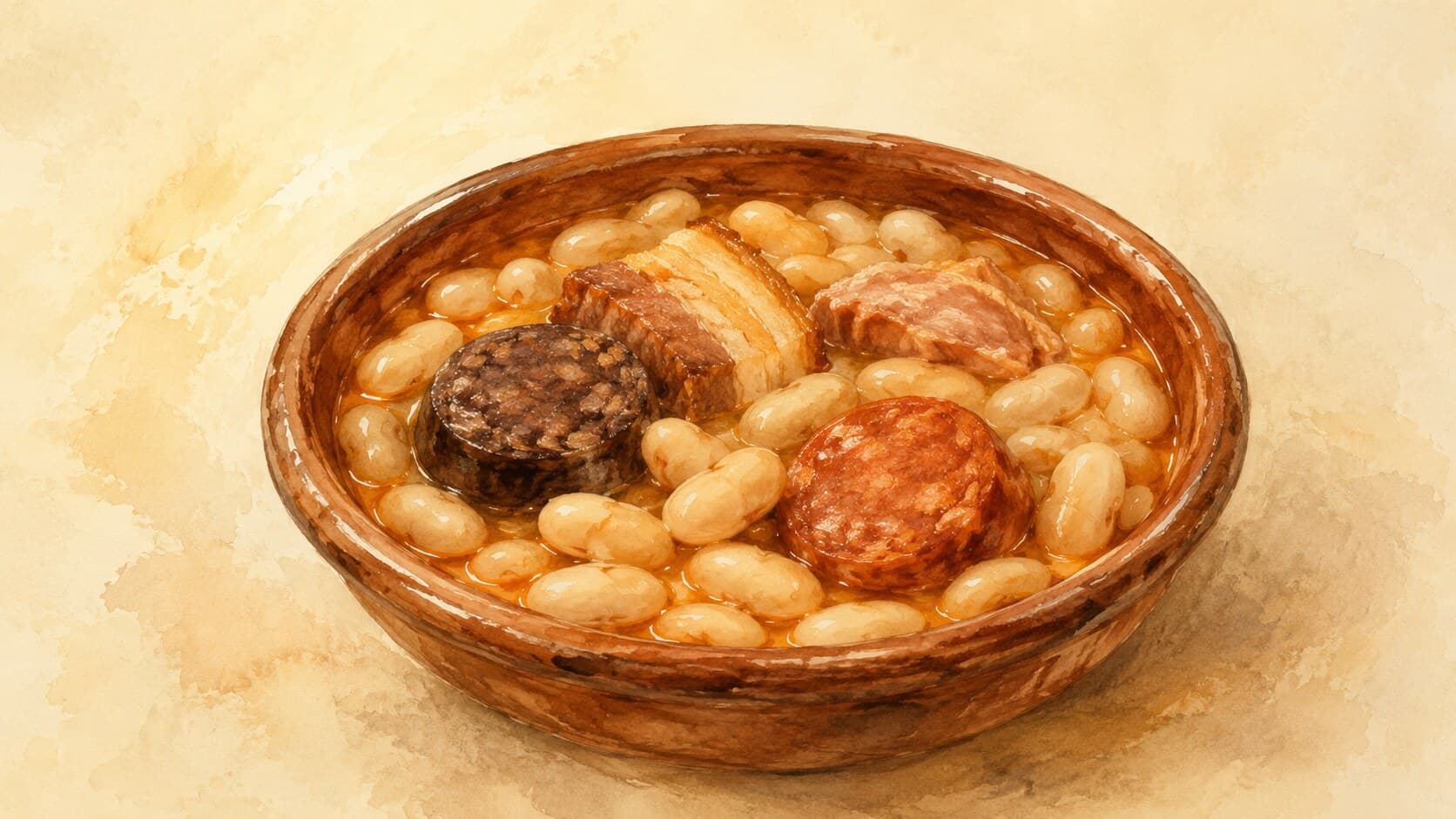
Ingredients
- 500 g white beans, dried
- 150 g chorizo, sliced
- 150 g morcilla (blood sausage), sliced
- 200 g pork shoulder, diced
- 1 onion, chopped
- 2 cloves garlic, minced
- 1 bay leaf
- 1 tsp smoked paprika
- 1 liter water
- Salt to taste
- Black pepper to taste
- Olive oil for cooking
Steps
Soak the dried white beans in water overnight to soften them, which helps them cook evenly and absorb flavors.
In a large pot, heat 2 tablespoons of olive oil over medium heat. Add the chopped onion and minced garlic. Cook for about 5 minutes until softened and fragrant.
Add the diced pork shoulder to the pot and cook until browned, about 10 minutes. This step adds depth to the flavor.
Stir in the sliced chorizo and morcilla, cooking for an additional 5 minutes. The sausages will release their smoky essence, enhancing the stew.
Drain the soaked beans and add them to the pot along with the bay leaf, smoked paprika, water, salt, and black pepper. Bring to a boil.
Reduce the heat to low, cover, and let simmer for 1.5 to 2 hours, stirring occasionally, until the beans are tender. If the stew becomes too thick, add a bit more water to achieve your desired consistency.
Once cooked, adjust seasoning if necessary. Remove the bay leaf before serving.
Why this works
The technique of slow-cooking Fabada Asturiana allows the flavors of the meats and beans to meld beautifully over time. The soaking of the beans reduces cooking time and prevents them from breaking apart during cooking, enabling them to maintain their texture in the stew. The combination of chorizo and morcilla infuses the dish with rich, smoky flavors, while the slow braise ensures that all the ingredients harmonize. If the stew seems too thick, simply add water gradually until you reach your preferred consistency; this will also help prevent the beans from sticking to the bottom of the pot. The use of smoked paprika is essential, as it complements the meat and beans, giving the dish its signature flavor that's both hearty and comforting.
Common mistakes
Salting the beans early.
Target: Add salt only in the last 20–30 minutes, once the beans are already turning tender; season the meat and base earlier, the beans late.
Why it matters: Early salt is often blamed for tough beans, but its effect on the skins is slight — a light brine soak can even soften them. What actually leaves fabes tough and splitting is hard water, old beans, or too hard a boil. Salting toward the end still earns its place for a different reason: the chorizo and morcilla give up plenty of salt as they cook, so seasoning late keeps the finished pot from turning too salty.
What to do: Cook the beans in unsalted (or lightly seasoned) liquid, check tenderness, then salt to finish. Remember the chorizo and morcilla also release salt as they cook, so taste before adding more.
Boiling the stew hard instead of barely simmering.
Target: A bare simmer — the surface just trembling, the occasional bubble — for the full 1.5–2 hours, lid on.
Why it matters: A rolling boil tumbles the beans against each other and tears their skins, turning the pot cloudy and broken. Fabada wants whole, intact fabes (the big, soft white beans this stew is built on) in a silky liquid; that texture comes only from gentle, slow heat. Slow heat also lets the beans' released starch thicken the broth naturally instead of needing flour.
What to do: Bring it to a boil once, then drop the heat until the surface barely moves. If it climbs, lower it or crack the lid. Resist stirring much — swirl the pot by the handles instead, which mixes without abrading the beans.
Undercooking the pork and sausages.
Target: Brown the diced pork shoulder fully (about 10 minutes), then let all the meats simmer in the stew until cooked through — pork to a safe internal 71°C / 160°F, the sausages hot all the way through.
Why it matters: Chorizo and morcilla (blood sausage) are often sold raw or semi-cured, and diced pork shoulder is raw — all need full cooking, not just a surface sear, to be safe to eat. The long braise handles this, but only if the meat actually reaches temperature; crowding the pan or rushing the simmer can leave it short.
What to do: Brown in batches so the pork colors rather than steams, give the full braise time, and if unsure, check the thickest piece of pork with an instant-read thermometer before serving.
Letting the pot scorch or run dry.
Target: Liquid should stay just above the beans throughout; top up with hot water as needed and keep the heat low.
Why it matters: As beans absorb water the level drops, and the starchy, fatty broth catches and burns on a dry, hot bottom — scorch flavor is irreversible and taints the whole pot. A heavy pot and gentle heat are your insurance.
What to do: Check the level periodically, add hot (not cold) water to keep the beans submerged, and if it has thickened too far near the end, loosen with a splash of water to your preferred consistency.
What to look for
- The browned pork before the beans go in: a deep, even golden-brown crust on the cubes, with brown fond (the toasted browned bits left on the bottom of the pot, packed with flavor) stuck to the pot — that color is the Maillard reaction (the browning that builds deep savory flavor), and it seeds the whole stew's depth.
- The simmer itself: the surface only trembling, with a bubble breaking now and then — not a churning boil. This is the single best visual guarantee of intact beans.
- A bean tested between your fingers: it crushes to a smooth, creamy interior with no chalky center — that, not the clock, tells you the beans are done and ready for final salting.
- The finished broth: glossy and lightly thickened, stained orange-red by the pimentón and rendered chorizo fat, coating a spoon — if it is thin and watery, simmer uncovered a few more minutes; if claggy, loosen with hot water.
A note on history
Fabes (the large white beans of fabada) have been grown and eaten in Asturias since at least the 16th century, but the dish as we know it is more recent: written references to fabada appear only in the 19th century, with the first known mention an 1884 advertisement in the Gijón newspaper El Comercio (Wikipedia, Campo Grande). Beans had reached Spain from the Americas centuries earlier, but it was the cool, damp climate of Asturias that suited them — especially the prized fabes de la Granja — and a humble farm stew slowly became a Sunday staple and a symbol of Asturian identity (Your Spanish Corner).
Get the essays in your inbox — free
Weekly notes on flavor, fermentation, and food history — the writing behind the Atlas of Flavor. No spam; unsubscribe anytime.