
Espinacas con Garbanzos
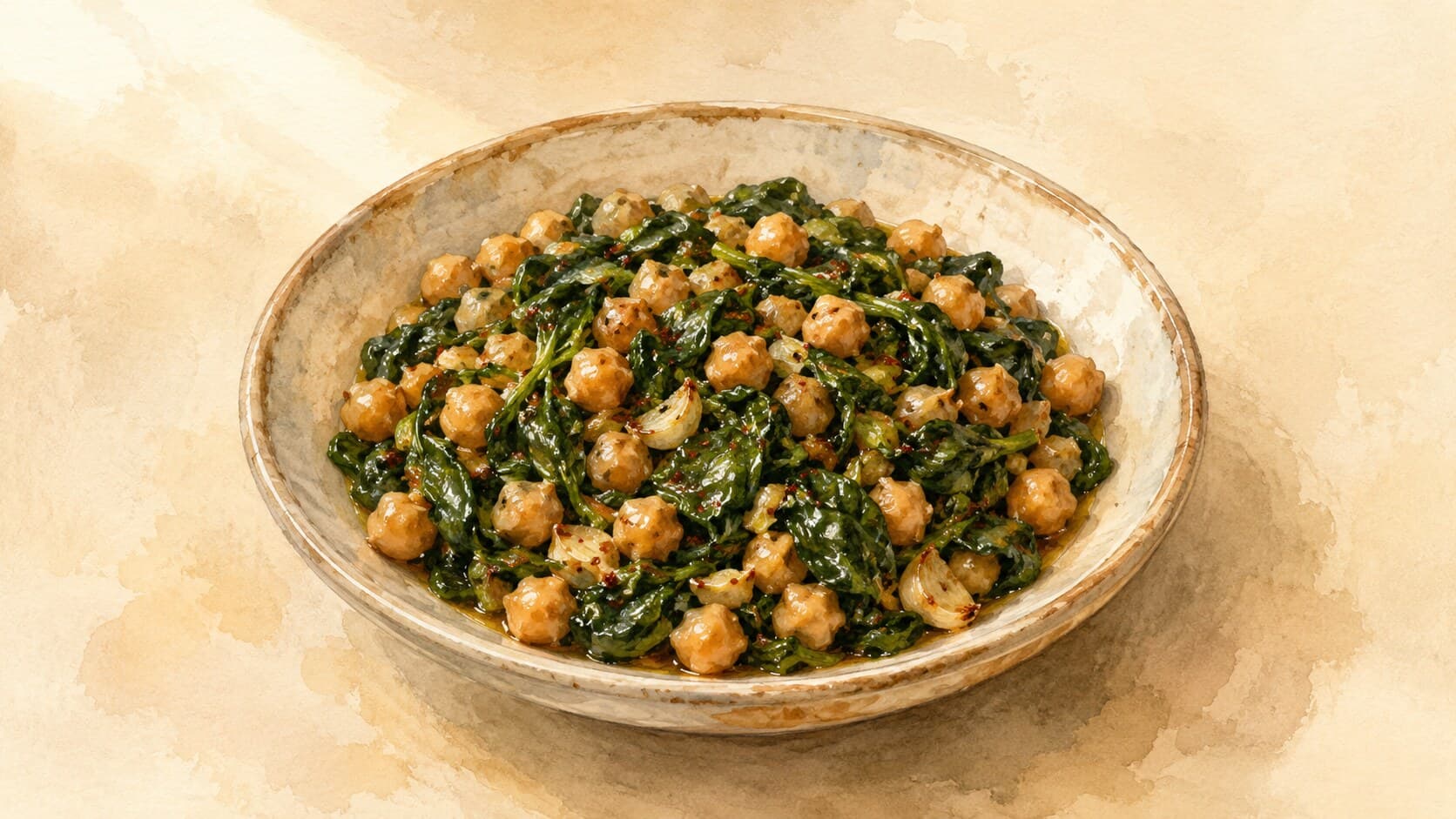
Espinacas con Garbanzos is a classic Spanish tapa combining tender spinach and chickpeas, seasoned with smoked paprika.
Contents (5 sections)▾
Ingredients
- 300 g fresh spinach, cleaned and chopped
- 200 g canned chickpeas, rinsed and drained
- 2 tbsp olive oil
- 1 clove garlic, minced
- 1 tsp smoked paprika
- 1 tbsp sherry vinegar
- Salt to taste
- Pepper to taste
Steps
In a large skillet, heat the olive oil over medium heat for about 2 minutes until shimmering.
Add the minced garlic and sauté for 1 minute, stirring frequently to avoid burning.
Stir in the chopped spinach and cook for about 3-4 minutes until wilted, stirring occasionally.
Add the chickpeas, smoked paprika, salt, and pepper. Cook for an additional 5 minutes, allowing the flavors to meld.
Finish by drizzling with sherry vinegar, stir gently, and cook for another 1-2 minutes before serving.
Why this works
Espinacas con Garbanzos showcases a beautiful balance of flavors and textures by combining the earthiness of chickpeas with the delicate, slightly bitter notes of spinach. The key technique here is the sautéing of garlic which infuses the oil with flavor, providing a fragrant base for the dish. Adding smoked paprika enhances the depth, while the sherry vinegar provides a necessary acidity to brighten the overall dish. If the dish seems too dry, adding a splash of water or broth can help create a more cohesive texture. Conversely, if it becomes too watery, allow it to simmer for a few more minutes to reduce excess liquid, ensuring a satisfying consistency. This dish is visually appealing and a wonderful representation of Spanish vegetarian tapas, perfect for sharing or as a side dish.
Common mistakes
Adding the garlic to cold oil, or letting it brown.
Target: Garlic goes into oil that is shimmering but not smoking, and cooks only 30–60 seconds until fragrant and pale gold — never brown.
Why it matters: Garlic's sugars and aromatic compounds turn bitter the moment it browns, and that bitterness threads through the whole dish. The oil is the flavor base here (the fat carries the garlic and paprika into everything else), so a scorched base means a scorched plate.
What to do: Get the oil hot first, add the minced garlic, and move to the next step before it colors. If it does brown, start the oil over — it is faster than trying to rescue it.
Blooming the smoked paprika over high heat.
Target: Stir the smoked paprika in off the boil, with the pan moderate, for under a minute before liquid or vinegar hits it.
Why it matters: Smoked paprika (pimentón — dried, smoke-cured red peppers ground to a powder) is almost pure surface area. High dry heat burns it in seconds, turning sweet-smoky into acrid. A brief warm contact with the oil "blooms" it — the fat dissolves its fat-soluble color and aroma compounds — without scorching.
What to do: Lower the heat before the paprika goes in, coat it in the oil, then add the chickpeas and their moisture quickly to protect it.
Adding the sherry vinegar too early.
Target: Vinegar goes in at the very end, off or nearly off the heat, with only 1–2 minutes of gentle cooking after.
Why it matters: Vinegar's brightness is its sharp, volatile acetic acid (the molecule that makes vinegar taste sharp). Sustained heat boils that aroma off and leaves only a flat sourness, so an early splash cooks away the exact lift it is there to provide.
What to do: Build and season the dish fully first; add the vinegar as a finishing stroke, stir, taste, and stop.
Drowning the spinach instead of wilting it.
Target: Spinach added in handfuls to a hot pan, stirred just until collapsed and glossy — a few minutes, no added water.
Why it matters: Spinach is mostly water held in its leaves; gentle heat ruptures the cells and that water releases on its own. Crowding it or adding liquid steams it into a grey, watery mass and washes out flavor, leaving you to boil off the excess later.
What to do: Add it in batches if the pan looks full, let each batch wilt down before the next, and let the leaves' own moisture do the work.
What to look for
- The garlic in the oil: pale gold and fragrant, never browning — the smell turns sweet and nutty right before it would burn; that is your cue to move on.
- The wilted spinach: collapsed to a fraction of its raw volume, glossy and dark green, with no standing water in the pan. If liquid pools, cook it off before the chickpeas go in.
- The paprika and chickpeas together: the oil stains a deep brick-red and the chickpeas glisten — the fat has taken up the pimentón's color and aroma, which means the base is built.
- The finished dish after the vinegar: the smell sharpens and lifts as the vinegar hits the warm pan, and the spinach and chickpeas hold together in a light sauce rather than swimming or sitting dry.
A note on history
Espinacas con garbanzos is one of Seville's defining tapas, and its ingredients trace back to Al-Andalus: spinach, chickpeas, and cumin were all introduced to the Iberian Peninsula by the Moors, with spinach arriving via Arab traders from its origins in ancient Persia (Spanish Sabores, Devour Tours). The dish became a fixture of Lent (Cuaresma) in Seville, when chickpeas offered protein and energy on the meat-free days observed by Catholics — a survival, in everyday food, of the blended Islamic, Jewish, and Christian heritage of Andalusian cooking (Cultural Plus).
Get the essays in your inbox — free
Weekly notes on flavor, fermentation, and food history — the writing behind the Atlas of Flavor. No spam; unsubscribe anytime.