
Couscous aux Sept Légumes
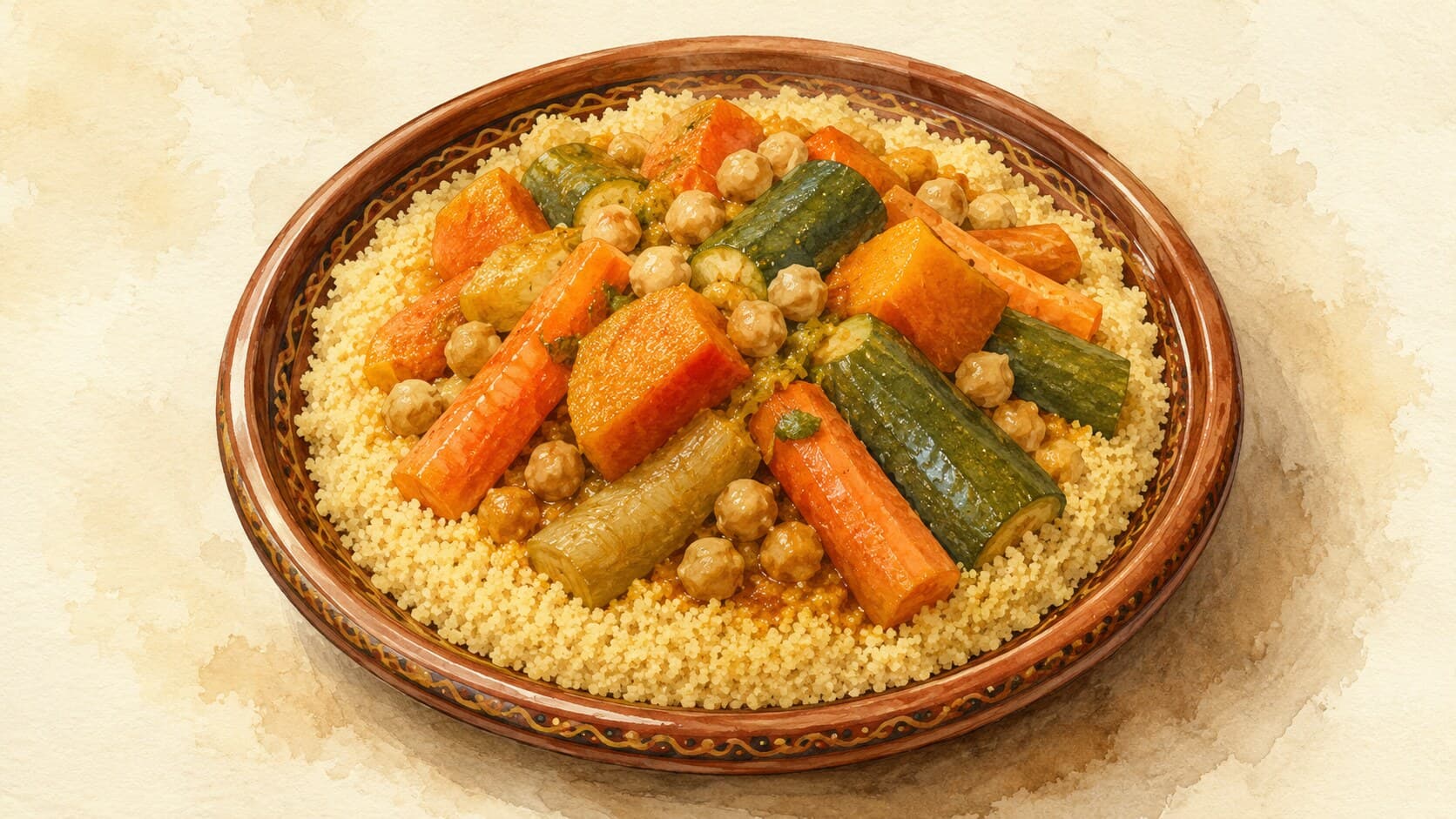
Couscous aux Sept Légumes is a Moroccan dish featuring steamed couscous topped with seven slow-braised vegetables, layered for flavor.
Contents (5 sections)▾
Ingredients
- 500 g couscous
- 1 liter vegetable broth
- 1 tsp ras-el-hanout
- 2 tbsp olive oil
- 2 medium carrots, sliced
- 1 turnip, cubed
- 1 zucchini, sliced
- 1/4 cabbage, chopped
- 200 g pumpkin, cubed
- 200 g chickpeas, cooked
- 1 onion, diced
- 3 cloves garlic, minced
- Salt to taste
- Pepper to taste
- Fresh coriander for garnish
Steps
In a large pot, heat 2 tbsp olive oil over medium heat. Sauté the onion and garlic until translucent, about 5 minutes.
Add the sliced carrots, cubed turnip, and zucchini to the pot. Season with salt and pepper, and sauté for another 10 minutes.
Incorporate the chopped cabbage and pumpkin, stirring in the ras-el-hanout. Cook for 15 minutes until the vegetables are tender.
Pour in the vegetable broth and simmer on low for 30 minutes to allow the flavors to meld.
Meanwhile, prepare the couscous. Place the couscous in a large bowl and cover it with 500 ml of boiling water. Let it sit for 10 minutes, then fluff with a fork.
To steam the couscous, set up a steamer basket and place the couscous inside. Steam over simmering water for 15 minutes, then fluff again.
Repeat the steaming process two more times to ensure the couscous is perfectly light and fluffy.
To serve, mound the couscous on a large platter and top with the braised vegetables and chickpeas. Garnish with fresh coriander.
Why this works
This recipe utilizes a three-stage steaming technique for the couscous, which is crucial for achieving the desired light and fluffy texture. Steaming the couscous multiple times allows it to absorb moisture evenly without becoming gummy. The combination of slow-braising the vegetables in a rich broth (gently simmering them in liquid) enriches their flavors while ensuring they remain tender yet intact. If you find that the couscous seems too dry after the first steaming, simply sprinkle a little more broth or water on it and fluff well before continuing. This technique maximizes the infusion of flavors and ensures a delightful balance of textures in your dish. Additionally, the spices and herbs used in the vegetable braise provide a depth of flavor that complements the couscous beautifully, making this a well-rounded meal for family gatherings.
Common mistakes
Steaming the couscous only once.
Target: Steam, fluff, and rest — then repeat, for three rounds in all.
Why it matters: Couscous is tiny semolina pasta, and it needs to take up moisture gradually. A single long soak or steam swells the outside faster than the core, so the grains clump and turn gummy. Steaming in stages, fluffing between each, lets every grain hydrate evenly and stay separate and light — the whole texture goal of the dish.
What to do: After each steam, tip the couscous out, rake it apart with a fork, sprinkle a little broth or water if it looks dry, let it sit a moment, then steam again.
Boiling the vegetables instead of gently braising them.
Target: A low, steady simmer until each vegetable is tender but still holding its shape.
Why it matters: A hard boil batters soft vegetables — zucchini and pumpkin especially — into mush and clouds the broth. A gentle braise (slow cooking in liquid) keeps them intact while it builds a layered, savory broth around them. The point is distinct vegetables in a flavorful liquid, not a uniform stew.
What to do: Keep the pot at a lazy simmer, not a rolling boil. Add the sturdier roots first and the quick-softening vegetables later so they all finish at once.
Adding every vegetable to the pot at the same time.
Target: Stagger by density — carrots and turnip early, zucchini and pumpkin late.
Why it matters: Dense roots need far longer than soft squash. Put them in together and either the carrots stay raw or the zucchini dissolves. Staggering is simply matching each vegetable's cooking time so they reach tenderness together.
What to do: Start the firm roots, give them a head start, then layer in the softer pieces partway through. Judge by feel, not the clock alone.
Under-seasoning the broth, so the couscous tastes flat.
Target: A broth seasoned assertively with salt and ras el hanout (a North African spice blend), tasted and corrected before serving.
Why it matters: Plain steamed couscous is nearly neutral; all of its flavor is borrowed from the broth and vegetables spooned over it. A timid, under-salted broth leaves the whole plate bland no matter how good the grain. Salt and the warm, aromatic spice blend are what carry the dish.
What to do: Taste the broth before you plate. It should taste a touch bold on its own, because the bland couscous will soften it. Moisten the grains with that broth so the seasoning reaches every bite.
What to look for
- The couscous between steamings: separate, springy grains that fall apart with a fork, never a sticky mass. Clumping means it needs fluffing and a longer rest between steams, not more water at once.
- The vegetables when done: tender enough to yield to a knife tip, yet still holding their shape and color. Collapsing, washed-out vegetables mean the heat was too high or the time too long.
- The broth: glossy and deeply colored, tasting boldly of salt and warm spice. Thin, pale, or flat-tasting broth needs more reduction and more seasoning before it meets the grain.
- The finished platter: a light mound of couscous, visibly moistened but not soggy, the vegetables arranged on top. A waterlogged, flattened heap means too much liquid poured on too fast.
A note on history
Couscous originated in the Maghreb of North Africa and is traditionally credited to the indigenous Amazigh (Berber) peoples, with the dish well established in the western and central Maghreb — modern Morocco and Algeria — by the Middle Ages. Couscous aux sept légumes, couscous crowned with seven slow-cooked vegetables, is among the most emblematic Moroccan versions; the "seven" carries a sense of abundance and good fortune rather than a fixed list. In 2020 UNESCO inscribed the knowledge and practices around couscous on its Representative List of the Intangible Cultural Heritage of Humanity — a rare joint submission by Algeria, Mauritania, Morocco, and Tunisia, recognizing a heritage shared across the region. (Encyclopedia.com: Couscous; UNESCO news: inscription of couscous traditions)
Get the essays in your inbox — free
Weekly notes on flavor, fermentation, and food history — the writing behind the Atlas of Flavor. No spam; unsubscribe anytime.