
Shrimp Tempura
This recipe combines precise batter ratios and frying techniques to achieve a light, crispy texture.
Contents (5 sections)▾
Ingredients
- 1 lb large shrimp, peeled and deveined
- 1 cup all-purpose flour
- 1/2 cup cornstarch
- 1/2 tsp baking powder
- 1 cup ice-cold water
- 1 tsp salt
- Vegetable oil for frying
- Dipping sauce (tempura sauce or tentsuyu)
Steps
Prepare shrimp by removing shells and tails.
In a bowl, mix flour, cornstarch, baking powder, and salt.
Gradually add ice-cold water to the dry ingredients, mixing lightly.
Heat vegetable oil in a heavy skillet to 350°F (175°C).
Dip shrimp in batter and carefully place in hot oil, frying until golden.
Remove shrimp and drain on paper towels; serve with dipping sauce.
Tools you'll want
Why this works
Shrimp tempura relies on a delicate batter and precise frying to achieve its signature light, crisp texture. The batter consists of a 1:1 ratio of cold water to cake flour, with the addition of a single egg yolk. Cold ingredients minimize gluten formation, resulting in a tender coating. The shrimp, deveined and lightly scored, cook evenly while maintaining moisture. Frying at a consistent oil temperature between 170°C and 180°C ensures the batter crisps without absorbing excess oil. The shrimp's natural sweetness contrasts with the savory batter, highlighting the dish's subtle flavors.
Common mistakes
Overmixing the batter.
Target: Mix flour and egg-water with chopsticks for 5–10 seconds maximum. Visible flour lumps are correct.
Why it matters: Mixing develops gluten (the stretchy protein network that forms when wheat flour meets water and gets worked) in the flour. Gluten produces a tough, chewy crust — the opposite of tempura's delicate, lacy shatter. Lumps and dry pockets are FEATURES, not bugs.
What to do: Stop mixing while you can still see streaks of dry flour. The batter goes into the oil; it doesn't need to be uniform.
Workarounds:
- For absolute beginners, mix flour with 30 % cornstarch — less gluten potential, more forgiving.
- For super-crisp results, the Japanese restaurant trick is to use cake flour (lower protein) instead of all-purpose.
Using warm batter.
Target: Ice-cold water, ice-cold eggs, batter mixed in a chilled bowl. Some chefs add ice cubes directly to the batter.
Why it matters: Cold inhibits gluten formation. Warm water + warm flour develops gluten in seconds; cold water + cold flour leaves the gluten dormant. This is why old Japanese kitchens have a special "tempura bowl" kept in the fridge.
What to do: Pre-chill everything for at least 30 minutes before frying. Mix the batter right before frying, not earlier.
Workarounds:
- For a faster route, use chilled sparkling water instead of plain — the carbonation adds extra lift in the crust.
Wet shrimp.
Target: Shrimp surface dry enough that batter sticks immediately on contact.
Why it matters: Water on the shrimp surface flash-boils on contact with hot oil (170–180 °C), creating steam pockets that push the batter away. The result is bare patches and detached batter strands floating in the oil.
What to do: Pat shrimp aggressively dry with paper towels right before battering. Dust lightly with plain flour first to ensure full coverage.
Workarounds:
- For pre-frozen shrimp, thaw on a rack overnight in the fridge to maximize drying.
- Score the shrimp belly to prevent curling — exposes more surface area for the batter to grip.
Wrong oil temperature.
Target: 170–180 °C measured with a thermometer. Visually: a chopstick dipped in produces a steady stream of small bubbles.
Why it matters: Below 170 °C, the batter absorbs oil before it crisps — soggy, greasy tempura. Above 190 °C, the batter browns before the shrimp cooks through. The window is narrow.
What to do: Use a thermometer. Adjust heat between batches — temperature drops every time food enters the oil.
Workarounds:
- No thermometer? Drop a small ball of batter in. It should sink halfway, then bob up immediately. If it sinks deep and stays, too cold. If it floats on the surface immediately, too hot.
Overcrowding the oil.
Target: No more than 4–5 pieces of shrimp in a 25 cm pot at a time; oil should be at least 60 % uncovered.
Why it matters: Each piece of food entering oil drops the temperature 5–10 °C. Overcrowding compounds the drop and stalls the cooking arc.
What to do: Fry in small batches. Wait 30 seconds between batches for the oil to recover temperature.
Workarounds:
- For larger volume, use a deeper pot with more oil — more thermal mass (the amount of heat a pot of oil can store and release, which buffers the temperature when cold food drops in) = smaller temperature drop per piece.
Serving immediately fried.
Target: Drain on a wire rack (NOT paper towels) for 30 seconds, then serve within 2 minutes.
Why it matters: Paper towels trap steam against the bottom of the tempura, turning the crust soggy. A wire rack lets steam escape from all sides. And tempura starts losing its crispness within 3 minutes — it's a "served immediately" food.
What to do: Set up a wire rack over a tray before you start frying. Eat as you fry, restaurant-bar style.
Workarounds:
- For dinner parties, fry in batches and serve in waves rather than holding everything at the end.
- A 100 °C oven with a wire rack inside can hold tempura for up to 5 minutes without serious sogginess.
What to look for
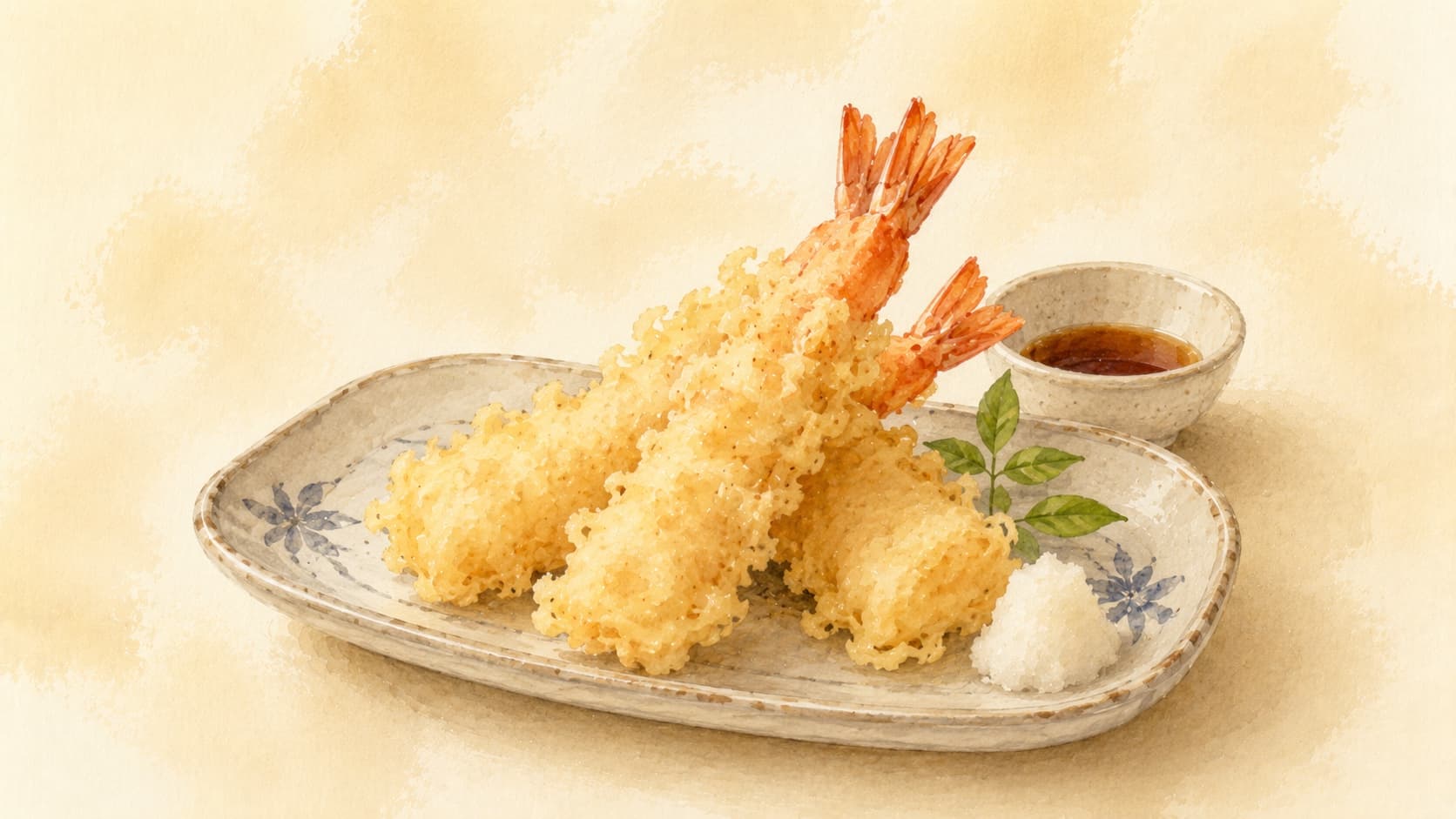
Successful shrimp tempura exhibits a pale golden color with a crisp, airy texture. The batter should feel light, adhering to the shrimp in a delicate, lacy pattern. When bitten, the coating shatters easily without resistance, indicating proper frying. The shrimp inside should be tender and juicy, with a slight bounce indicating doneness. Aroma is subtle, with no lingering oily scent. An off-white batter signals overmixing or excessive flour. Monitor the oil for clarity; cloudiness suggests improperly dried shrimp or residual batter particles.
Chef's view
Professional chefs emphasize the importance of mise en place (a French kitchen term for having every ingredient measured, prepped and within arm's reach before you start cooking) for tempura. All ingredients should be prepped and measured before beginning. Timing is critical; the batter should be mixed immediately before frying to maintain its cold temperature and minimize gluten development. Chefs often chill bowls and utensils to further control batter temperature. Consistency in shrimp sizing ensures uniform cooking. Experienced chefs adjust oil temperature based on batter reaction, using small test droplets to gauge readiness. They also value the subtle interplay of flavors: the shrimp's natural sweetness, the batter's neutral crispness, and the accompanying dipping sauce's umami depth.
<!-- beginner-glossed v1 -->Get the essays in your inbox — free
Weekly notes on flavor, fermentation, and food history — the writing behind the Atlas of Flavor. No spam; unsubscribe anytime.