
Steak au Poivre
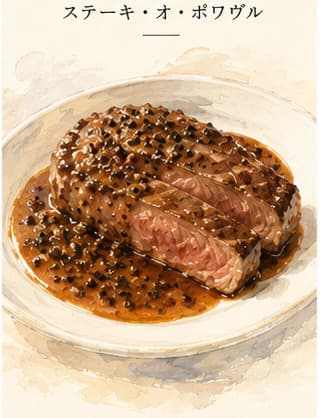
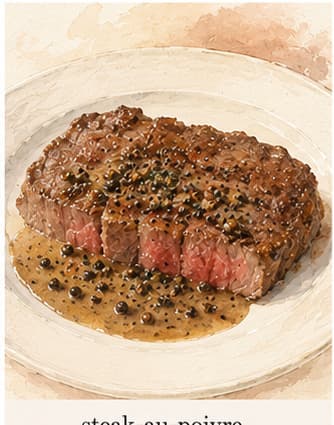
Pepper-crusted steak finished with a cognac-and-cream pan sauce — Maillard crust, flambé, and reduction in a single pan, sequenced correctly.
Contents (7 sections)▾

Ingredients
- 2 beef steaks, 200–250 g each (ribeye or NY strip, at least 2.5 cm thick)
- 12 g whole black peppercorns, coarsely crushed (not ground) — half for crust, half for sauce
- 8 g fine sea salt
- 15 g neutral oil (grapeseed or canola)
- —
- For the pan sauce:
- 20 g shallots, finely minced
- 50 ml cognac (or Armagnac)
- 150 ml heavy cream (35% fat)
- 30 g unsalted butter, cold, diced
- Salt to taste
Steps
Remove steaks from the fridge 30 minutes before cooking — tempering reduces the temperature gradient between exterior and interior. Pat completely dry with paper towels. Press half the coarsely crushed peppercorns firmly into both flat faces of each steak. Season the sides with salt. Do not salt the pepper-crusted faces; the salt can slow the Maillard reaction by drawing surface moisture.
Heat a heavy pan (cast iron or thick stainless) over high heat until a drop of water evaporates instantly on contact. Add the oil and swirl to coat. Place steaks in the pan — they should sear immediately and loudly. Cook without moving for 3–4 minutes until a deep-brown crust forms. Flip once and sear the second side 2–3 minutes. The USDA consumer-safe endpoint for beef steak is 63°C / 145°F measured before you remove it, then a 3-minute rest; the traditional medium-rare doneness for this dish is lower (around 54°C), a culinary preference below that safety endpoint rather than the same thing — cook to whichever you choose knowing the difference, and don't count on carryover to reach the safe temperature.
Remove steaks to a warm plate and tent loosely. Rest for at least 5 minutes. Do not skip this — resting lets carryover finish and the steak cool off its peak, so less juice runs onto the board when sliced.
Lower heat to medium. Add the minced shallots to the same pan (with the fond still in it) and stir for 1 minute until softened. Pull the pan off heat. Add cognac. Return to medium heat and carefully tilt the pan edge toward the burner flame (or use a long match) to flambé. The cognac will flame briefly — 15 to 30 seconds. The flame burns off most of the raw alcohol, leaving behind the cooked cognac flavor and the fond dissolved from the pan.
Once the flames subside, add the remaining crushed peppercorns and the cream. Stir and simmer over medium heat until the sauce reduces by about one-third and coats the back of a spoon — roughly 3–4 minutes. Remove from heat. Whisk in the cold butter cubes one at a time until the sauce is glossy and slightly thickened. Season with salt. Spoon over the rested steaks and serve immediately.
Tools you'll want
- · Cast-iron skillet (Lodge, 6.5–10in)
- · Instant-read digital thermometer
- · Balloon whisk (24cm / 11-inch)
Why this works
Steak au poivre is a lesson in sequencing: three separate techniques — searing, flambé, cream reduction — happening in the same pan, each setting up conditions for the next.
The pepper question comes first, and it is more interesting than it appears. The recipe calls for coarsely crushed whole peppercorns, not ground pepper, and uses them in two places: pressed into the crust before searing, and added again to the sauce. These are different cooking applications. Crust peppercorns are subjected to high dry heat against the pan surface — they toast, releasing volatile aromatics (especially the compound piperine and a range of terpenes) and forming a physical crust that insulates the meat slightly, slowing over-searing at the edges. Sauce peppercorns are added after deglazure, simmered in cream, never charred — they contribute a different, brighter, more aromatic pepper note. Two populations of the same spice, treated differently, producing complementary flavor layers.
The Maillard reaction at the searing stage is the structural foundation. A thick steak in a screaming-hot pan will develop a dark-brown crust through amino acid–sugar reactions that produce hundreds of flavor compounds at once. This requires: high surface temperature (above 140°C), low surface moisture (dry steak), and time without movement (at least 3 minutes per side without disturbing). Any one of these conditions failing — wet steak, lukewarm pan, premature flipping — produces a grey boiled surface instead of a crust.
The flambé step is often misunderstood as theatrical. It has a real function: burning off raw alcohol without simmering the cognac away, so that the cooked cognac flavor concentrates rather than dissipating. When the pan returns to heat after the alcohol burns out, the fond — the brown protein deposits on the pan floor — dissolves into the liquid, carrying all the flavors from the sear into the sauce. This is the same deglazing principle as any pan sauce, just with fire rather than a quiet liquid pour.
The cream reduces last. Heavy cream thickens as its water evaporates; at a one-third reduction, it has enough body to coat the steak without being heavy. The cold butter mount at the end adds gloss and a final round richness — the same technique as a beurre monté, applied at small scale.
Common mistakes
Wet steak surface.
Target: Bone-dry before seasoning. Pat thoroughly with paper towels.
Why it matters: Surface moisture steams instead of sears — the #1 cause of grey exteriors instead of mahogany crust.
What to do: Pat dry → salt → wait 30 min → pat dry again before pan.
Workarounds:
- For ultra-dry surface → air-dry in fridge on rack 1 hour.
Cold pan.
Target: Pan screaming hot — water drops evaporate on contact instantly.
Why it matters: Cold pan = slow cooking, moisture escapes before crust forms. Hot pan = immediate Maillard.
What to do: Heavy cast iron or carbon steel, preheat 3-4 min on high before adding oil.
Workarounds:
- Stove can't get hot enough → use a smaller pan with thicker bottom; concentrates heat.
Crowded pan.
Target: One or two steaks per pan with 5 cm space between.
Why it matters: Steam between touching steaks inhibits crust formation. Each steak needs air around it.
What to do: Cook two at a time in a 28 cm pan, or one at a time in a smaller pan.
Workarounds:
- Multiple steaks → cook in succession, keep finished ones warm in 60°C oven.
Skipping the rest.
Target: 5-7 minutes rest on warm plate, loosely tented with foil.
Why it matters: Cutting immediately, while the steak is screaming-hot, spills more juice onto the board. A short rest lets it cool off its peak, so less runs out when sliced.
What to do: Plan the rest. Use the time to make the sauce.
Workarounds:
- Need to serve hot → 3 min rest minimum; warm plate compensates partially.
Too much cognac.
Target: 50 ml for two steaks. More = alcoholic aftertaste even after flambé (the controlled ignition step that burns off raw alcohol without simmering the liquor away).
Why it matters: Cognac (a French oak-aged grape brandy from the Cognac region) is a flavor vehicle, not a main ingredient. Excess remains tasting boozy.
What to do: Measure. Pour into a heatproof cup first, not directly from bottle into hot pan.
Workarounds:
- No cognac → brandy works; Armagnac is closest substitute.
Skimping on pepper.
Target: Coarse cracked peppercorns pressed firmly into both faces — visible crust.
Why it matters: Steak au poivre means "pepper steak" — the pepper IS the dish. Light pepper = different dish (pan-sauce steak).
What to do: Cracked, not ground. Press firmly into the meat. Don't be shy.
Workarounds:
- Want milder → use mix of black + white peppercorns; less aggressive but still defined.
What to look for
- Before searing: steak completely dry, coarse pepper pressed firmly into both faces.
- Pan temperature: a drop of water bounces and evaporates instantly. Not sizzling gently — evaporating immediately.
- Crust: deep mahogany-brown, not black, not grey. Pepper on the crust should smell toasted, not acrid.
- Rest: 5 minutes minimum, loosely tented — residual heat continues mild cooking.
- After flambé: flames gone, shallots and fond dissolved into a dark amber liquid.
- Cream reduction: coats the back of a spoon and leaves a line when you drag a finger through.
- Butter mount: sauce turns glossy; do not let it simmer after the butter goes in.
Chef's view
The technical skill threshold for steak au poivre (literally "pepper steak" in French — a classic bistro dish of pepper-crusted seared steak with a cognac-cream pan sauce) is not the flambé — that is easy — it is the sear. A proper crust requires confidence with high heat, which means accepting that the pan will smoke, the exterior will darken quickly, and the correct instinct is to not touch the meat. Most home cooks flip too soon because a dark crust looks alarming. It is not alarming. It is Maillard.
The two-pepper technique is worth making explicit when teaching this dish, because it illustrates a principle that runs through a lot of professional cooking: the same ingredient at different thermal histories produces different flavor. The crust peppercorn and the sauce peppercorn are both black pepper, but they are not doing the same thing.
Chef Test Notes
I tested three pepper styles: coarsely crushed, medium ground, and whole peppercorns pressed flat with the side of a knife. The coarsely crushed version produced the best combination of crust adherence and pepper flavor release — the medium ground pepper charred at the edges into acrid notes, while the flat-pressed whole peppercorns detached from the crust during searing and ended up in the sauce anyway. Crush to about 2–4 mm fragments, not dust and not whole.
Related glossary terms
- Maillard reaction — the browning chemistry the crust depends on
- Fond — the brown pan deposits the cognac dissolves into the sauce
- Deglazing — the technique that converts fond into sauce liquid
- Flambé — the controlled ignition step that replaces a simmer for alcohol reduction
Get the essays in your inbox — free
Weekly notes on flavor, fermentation, and food history — the writing behind the Atlas of Flavor. No spam; unsubscribe anytime.