
Soondubu Jjigae
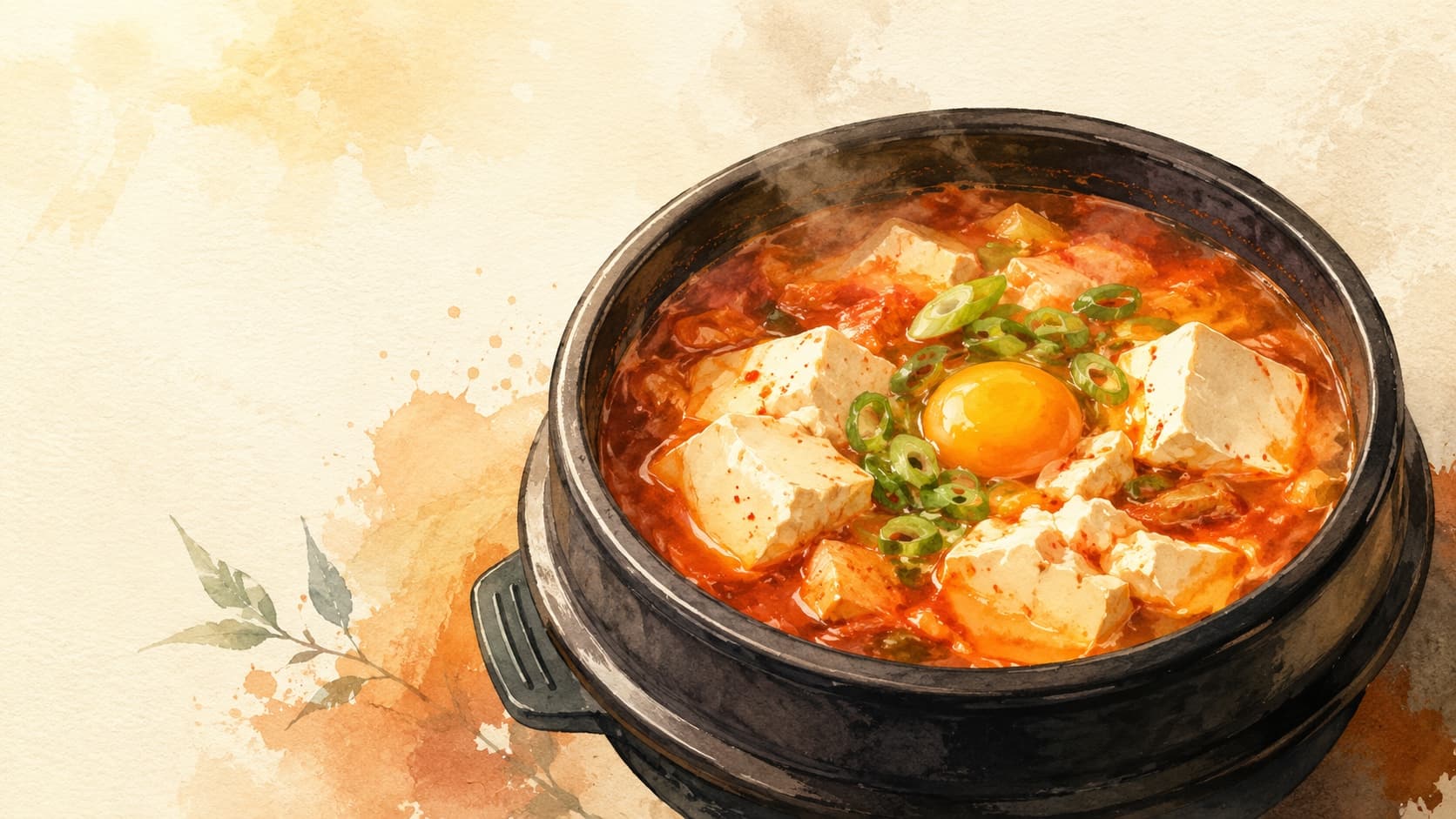
Soondubu Jjigae is a spicy Korean stew that emphasizes the contrasting textures of silken tofu and hearty ingredients.
Contents (5 sections)▾
Ingredients
- 1 tablespoon vegetable oil
- 1 medium onion, sliced
- 2 cloves garlic, minced
- 1 tablespoon gochugaru (Korean red pepper flakes)
- 4 cups vegetable broth
- 1 block silken tofu, cut into cubes
- 1 cup zucchini, sliced
- 1 cup mushrooms, sliced
- 2 green onions, chopped
- 1 tablespoon soy sauce
- 1 teaspoon sesame oil
- 1 egg (optional)
Steps
Heat vegetable oil in a wide, heavy skillet over medium heat.
Sauté onion and garlic until fragrant, about 3 minutes.
Stir in gochugaru, then add vegetable broth and bring to a simmer.
Add tofu, zucchini, and mushrooms; cook for 10 minutes.
Season with soy sauce and sesame oil, then gently stir.
Optional: Crack an egg into the stew just before serving.
Tools you'll want
Why this works
Soondubu Jjigae balances the creaminess of silken tofu with the robust flavors of gochugaru and broth. Starting with medium heat allows the onion and garlic to caramelize, enhancing the depth of flavor. Gochugaru activates at higher temperatures, releasing its oil-soluble compounds that infuse the broth with spice and color.
The simmering phase softens the tofu while keeping it intact. The addition of vegetables at this stage ensures they retain their structure and nutrients. Cooking for a precise 10 minutes allows the flavors to meld without overcooking the vegetables.
Adding the egg at the end provides richness. The gentle heat cooks the egg just enough to create a velvety texture without scrambling. This layering of flavors and textures creates a satisfying dish.
Safety — the raw egg: Cracked onto the stew off the heat, the egg stays soft — and this does not include a validated step that reliably kills Salmonella; the soft yolk, the barely-set white, the residual heat in the pot, and the look of the egg are not proof that it is safe. To add the egg this way, use a shell egg pasteurized in the shell, through to the contents (heat-treated to destroy Salmonella); an ordinary egg that has only been washed, graded, or surface-sanitized — no matter how fresh — is not pasteurized through the contents. Anyone at higher risk — pregnant, immunocompromised, very young, or older — should stir the egg through until fully set, or use a pasteurized egg.
Common mistakes
Using firm tofu.
Target: Soondubu (Korean extra-soft tofu, also written sundubu — the custard-like tofu the dish is named for) — the soft, custard-like Korean tofu sold in tubes (not blocks). Sometimes labeled "extra soft tofu."
Why it matters: Soondubu jjigae literally means "soft tofu stew." Firm tofu (momen-style) produces a completely different dish — soft cubes in broth, but not the creamy, custard-like texture that defines soondubu. The tofu IS the dish.
What to do: Source from a Korean grocery (sold in plastic tubes). Squeeze out gently into the stew at the end — should break into custardy folds.
Workarounds:
- No tube soondubu? Soft (silken) tofu from a Japanese grocery is the closest substitute.
Skipping the gochugaru (Korean coarse red-pepper flakes) oil base.
Target: Sauté Korean gochugaru (chili flakes) in sesame oil and pork fat for 1 minute BEFORE adding broth.
Why it matters: Soondubu jjigae's signature red color and aromatic punch come from blooming the gochugaru in fat first. Adding chili directly to broth produces a thin, dull-red soup that lacks depth.
What to do: Heat sesame oil + pork fat, add 1 tbsp gochugaru, stir for 60 seconds until oil turns bright red.
Workarounds:
- Vegetarian → use sesame oil alone; consider adding 1 tsp gochujang for body.
Using plain water.
Target: Anchovy-kelp stock (myeolchi dasima yuksu) — boil dried anchovies + dried kelp for 20 minutes.
Why it matters: Plain water produces a watery, flat soondubu. The anchovy-kelp stock provides the umami foundation that makes Korean stews taste authentic.
What to do: Make stock ahead, or use packaged anchovy stock packets (sold at Korean markets — convenient).
Workarounds:
- No anchovies? Dashi packet approximates the umami.
- Korean shortcut: 1 tsp dashida (Korean stock powder) in water.
Adding seafood too early.
Target: Clams, shrimp, or oysters added in the FINAL 3–5 minutes only.
Why it matters: Seafood overcooks in seconds in hot stew — turns rubbery. Adding at the end preserves tender texture and lets seafood's brine perfume the broth.
What to do: Have seafood prepped. Add when the rest of the stew is fully developed.
Workarounds:
- For seafood-free, increase the pork belly and add more anchovy stock for umami.
Cracking the egg too early.
Target: Crack a raw egg directly onto the surface of the bubbling stew, off the heat, RIGHT before serving.
Why it matters: Egg added during cooking dissolves into the broth (creates "egg drop" texture). Egg added at the table, on top of the hot stew, half-cooks dramatically as you eat — soft yolk and silken whites.
What to do: Bring the bubbling stone bowl to the table, crack the egg on top, serve immediately.
Workarounds:
- Stir the egg in if you prefer fully cooked.
Not using a stone bowl.
Target: Korean stone bowl (dolsot, ttukbaegi — heavy clay pots that stay scorching hot at the table) — pre-heated, brought bubbling to the table.
Why it matters: The stone bowl is structural — it retains heat to keep the stew bubbling at the table (the egg gets partially cooked, the rice next to it gets crisp). A regular pot loses temperature too fast.
What to do: Buy a Korean ttukbaegi. Pre-heat in the stew preparation; bring whole pot to table.
Workarounds:
- No stone bowl? Cast-iron skillet or mini Dutch oven retains heat reasonably.
What to look for
- A vibrant, red broth signaling spice and flavor.
- Silken tofu that holds its shape but is tender.
- Vegetables that retain bright colors and slight crunch.
- The aroma of garlic and gochugaru wafting from the pot.
- A gentle simmering sound indicating proper cooking.
Chef's view
Soondubu Jjigae is a staple in Korean households, cherished for its simplicity and comfort. Traditionally, it is made with seafood or meat, but the vegetarian version allows the tofu to shine. Each ingredient plays a role, contributing to a harmonious balance of flavors.
The dish reflects Korean culinary philosophy, emphasizing the use of fresh ingredients and communal sharing. It is often enjoyed with a bowl of rice and banchan (the small Korean side dishes served alongside the main meal), enhancing the dining experience. The warmth of Soondubu Jjigae makes it a perfect meal for any occasion, evoking a sense of home.
<!-- beginner-glossed v1 -->Get the essays in your inbox — free
Weekly notes on flavor, fermentation, and food history — the writing behind the Atlas of Flavor. No spam; unsubscribe anytime.