
Saba Miso
Mackerel simmered in miso, mirin, sake, sugar, and ginger — a nimono technique where the simmering ratio and ginger-sake odor control are the two technical keys.
Contents (7 sections)▾

Ingredients
- 1 fresh mackerel (saba), cleaned, cut into 4 pieces (about 300 g total)
- —
- Simmering liquid:
- 100 ml sake
- 100 ml water
- 40 ml mirin
- 20 g white sugar
- 50 g miso (shiro/white miso, or a blend of white and red)
- —
- Aromatics:
- 20 g fresh ginger, half sliced thin for simmering, half julienned for garnish
- 2 stalks green onion (negi), cut into 5 cm pieces (optional, for simmering)
Steps
Score and blanch the mackerel. Score the skin side of each piece 2–3 times with a knife (this prevents curling during simmering and allows the sauce to penetrate). Bring a small pot of water to a boil and pour it over the mackerel pieces in a bowl — a quick blanch called shimofuri. This removes the surface blood and fishy odor compounds. Rinse under cold water and pat dry. This step is important for clean flavor.
Build the simmering liquid. In a wide shallow pan (an earthenware donabe or a medium skillet), combine sake and water and bring to a simmer over medium heat. Add the sliced ginger, mirin, and sugar. Stir until the sugar dissolves.
Add the miso. Dissolve the miso in a small amount of the simmering liquid in a separate bowl (never add miso directly to a boiling liquid — it will not dissolve evenly). Add the dissolved miso to the pan and stir to combine. The liquid should now taste savory, slightly sweet, and aromatic — more concentrated than a miso soup.
Simmer the mackerel. Place the mackerel pieces skin-side up in the simmering liquid. The liquid should come about halfway up the pieces. Cut a drop lid (otoshibuta) from a sheet of aluminum foil and place it directly on the fish — this keeps the mackerel submerged and ensures even basting. Simmer over medium-low heat for 8–10 minutes, occasionally tilting the pan to baste with the sauce. Do not boil hard — vigorous boiling breaks the fish apart and makes the sauce cloudy.
Reduce and finish. After 8–10 minutes, remove the drop lid and increase the heat slightly. Simmer for a final 2–3 minutes to reduce the sauce until it has a light glaze consistency — it should cling to the fish when spooned over. Taste and adjust if needed. Serve the mackerel with the sauce spooned over, and top with the julienned ginger.
Tools you'll want
Why this works
Saba miso (鯖味噌煮, mackerel simmered in miso) is a nimono (Japanese simmered dishes cooked in a seasoned broth) dish — one of the four fundamental Japanese cooking methods alongside grilling, steaming, and deep-frying. Nimono means "simmered things," and the technique is built around a simmering liquid (煮汁, nitsuke) whose ratio determines the flavor and texture of the finished dish.
The classic simmering ratio for a miso-based nimono is built on the same framework as most Japanese simmering sauces: sake (Japanese rice wine used as a cooking aromatic) provides depth and acts as a tenderizer and odor suppressor; mirin (a sweet rice cooking wine that adds gloss) provides sweetness and a glossy finish; sugar adjusts sweetness independently of the mirin; water dilutes to the correct volume. The miso goes in last — or rather, it is dissolved separately and added carefully — because miso contains proteins and sugars that will scorch if exposed to direct intense heat without the buffer of the simmering liquid around them.
Mackerel is particularly suited to miso simmering because its intense, oily flavor can withstand and complement a bold miso sauce. Milder white fish would be overwhelmed. The ginger serves two functions: during simmering (sliced), it interacts with the compounds responsible for fishy odor — specifically trimethylamine and other volatile nitrogen compounds — and suppresses them. As a garnish (julienned), added at service, it provides a fresh, sharp aromatic contrast to the rich, dark sauce.
The shimofuri (霜降り, a brief hot-water pour over fish or meat to set the surface and remove blood and odor) step (pouring boiling water over the fish before cooking) is a Japanese technique for removing surface blood and the myoglobin compounds that produce off-flavor and cloudiness in the simmering liquid. It is quick — 30 seconds — and the visual result is the fish turning white on the surface while the interior remains raw. Rinsing afterward removes the coagulated proteins. This step is not unique to saba miso; it appears in many nimono and nabemono recipes as a standard preparation step for oily or strong-flavored fish.
The otoshibuta (落し蓋, a wooden or foil "drop lid" that sits directly on the simmering food rather than on the rim of the pan) is a lid placed directly on the surface of what is being simmered, rather than on the pan. It concentrates heat on the fish while allowing some steam to escape, and it creates a passive basting action as the simmering liquid rises around its edges and falls back over the fish. A circle of aluminum foil cut just smaller than the pan diameter works perfectly.
Common mistakes
Skipping the shimofuri (blanching the fish).
Target: Pour boiling water over the mackerel pieces for 5–10 seconds, then plunge into ice water and gently rinse off blood and surface proteins.
Why it matters: Without this step, the simmering liquid becomes murky and the finished dish carries the metallic off-note from blood and surface proteins. Shimofuri removes the fishy character without losing flavor.
What to do: Have boiling water in a kettle, ice water in a bowl. Place fish in a colander, pour boiling water over, immediately ice-bath, rinse, pat dry.
Workarounds:
- Salt the mackerel for 15 minutes before shimofuri — pulls additional moisture for cleaner flavor.
- For extra-fishy mackerel, do the shimofuri twice.
Adding miso directly to boiling liquid.
Target: Dissolve miso in a small amount of warm cooking liquid in a separate bowl, then add back to the pot.
Why it matters: Miso dropped into actively boiling liquid clumps and won't dissolve evenly. The fermented enzymes also lose viability when miso boils — flavor flattens.
What to do: Take 1/4 cup of warm cooking liquid, whisk in miso until smooth, return to pot. Reduce heat to low.
Workarounds:
- Use a miso strainer (small fine-mesh ladle) — submerge in liquid, mash miso through with a spoon.
Boiling too vigorously.
Target: Gentle simmer with surface moving but not breaking — about 85 °C.
Why it matters: Vigorous boiling breaks apart mackerel's delicate flesh (it's an oily fish with weak connective tissue) and emulsifies oils into the sauce, making it cloudy.
What to do: Bring to a boil briefly to activate the seasoning, then immediately reduce to low. Use a drop lid (otoshibuta) for even cooking without stirring.
Workarounds:
- For dinner-party staging, transfer to a 130 °C oven after the initial simmer — most stable.
Simmering skin-side down.
Target: Mackerel pieces SKIN-SIDE UP throughout cooking.
Why it matters: The skin holds the flesh together. Skin-side down on the pan bottom causes the flesh to disintegrate against the surface as the collagen breaks down.
What to do: Place skin-up. The drop lid presses gently on the flesh and protects shape.
Workarounds:
- For crispier skin, finish with the skin briefly under a broiler at the end.
Over-reducing the sauce.
Target: Sauce should coat the fish like a light glaze — flows off slowly, NOT syrupy.
Why it matters: Mackerel cooks in 12–15 minutes; the sauce keeps reducing if left in the pan. Past the right point, you get sticky candy-glaze that fights the fish.
What to do: Watch the sauce. When it coats a spoon and falls in a thin ribbon, immediately serve.
Workarounds:
- Over-reduced? Add 1 tbsp water + 1/2 tsp mirin and gently swirl to loosen.
Wrong miso.
Target: Aka (red) miso for depth, or a 50/50 blend with white miso for milder flavor.
Why it matters: White miso alone produces a sweet, one-dimensional sauce — fine but not "saba miso." Red miso provides the savory backbone that balances mackerel's richness.
What to do: Use Hatcho miso for the deepest flavor; standard akamiso works well; blend with shiro if you find aka too sharp.
Workarounds:
- Have only white miso? Add 1 tsp soy sauce + 1/2 tsp Worcestershire to deepen — not authentic but covers the gap.
What to look for
- After shimofuri: fish surface turns white, blood removed, rinsed clean.
- Simmering liquid before fish: savory, slightly sweet, miso aroma, more concentrated than miso soup.
- Fish in liquid: halfway submerged, otoshibuta on top, gentle bubbles around the edges.
- Finished fish: flesh is opaque all the way through, pulls away from the skin slightly.
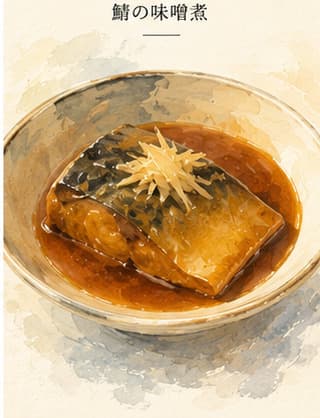
- Finished sauce: dark, glossy, clings to the fish when spooned over.
Chef's view
Saba miso is one of the most approachable nimono dishes because the technique is forgiving within the correct parameter range. The main variable is the ratio of miso to simmering liquid — too much miso and the sauce is dense and salty before the fish is cooked; too little and the sauce is watery and the miso flavor is lost. The amounts in this recipe produce a ratio that matches the concentration in most professional Japanese kitchen standards.
The dish is also a good example of how Japanese cooking manages strong-flavored ingredients without suppressing them. Mackerel's oiliness and intensity are not hidden — they are the point. The miso, ginger, sake, and mirin do not neutralize the mackerel; they provide the framework that makes the mackerel's intensity legible rather than overwhelming.
Chef Test Notes
I tested two miso types: shiro (white) miso alone, and a 50/50 blend of white and red (akami) miso. The white miso alone produced a sweeter, lighter sauce — pleasant but lacking depth at the end of the simmering time. The blend produced a more complex, deeper sauce that held its character through the reduction. A small amount of red miso is worth adding even if you prefer white miso's flavor.
Related glossary terms
- Nimono — the simmered dish category this recipe belongs to
- Shimofuri — the blanching technique that removes surface blood and odor
- Otoshibuta — the drop lid that bastes the fish during simmering
- Nitsuke — the simmering liquid whose ratio defines the dish
Get the essays in your inbox — free
Weekly notes on flavor, fermentation, and food history — the writing behind the Atlas of Flavor. No spam; unsubscribe anytime.