
Pozole
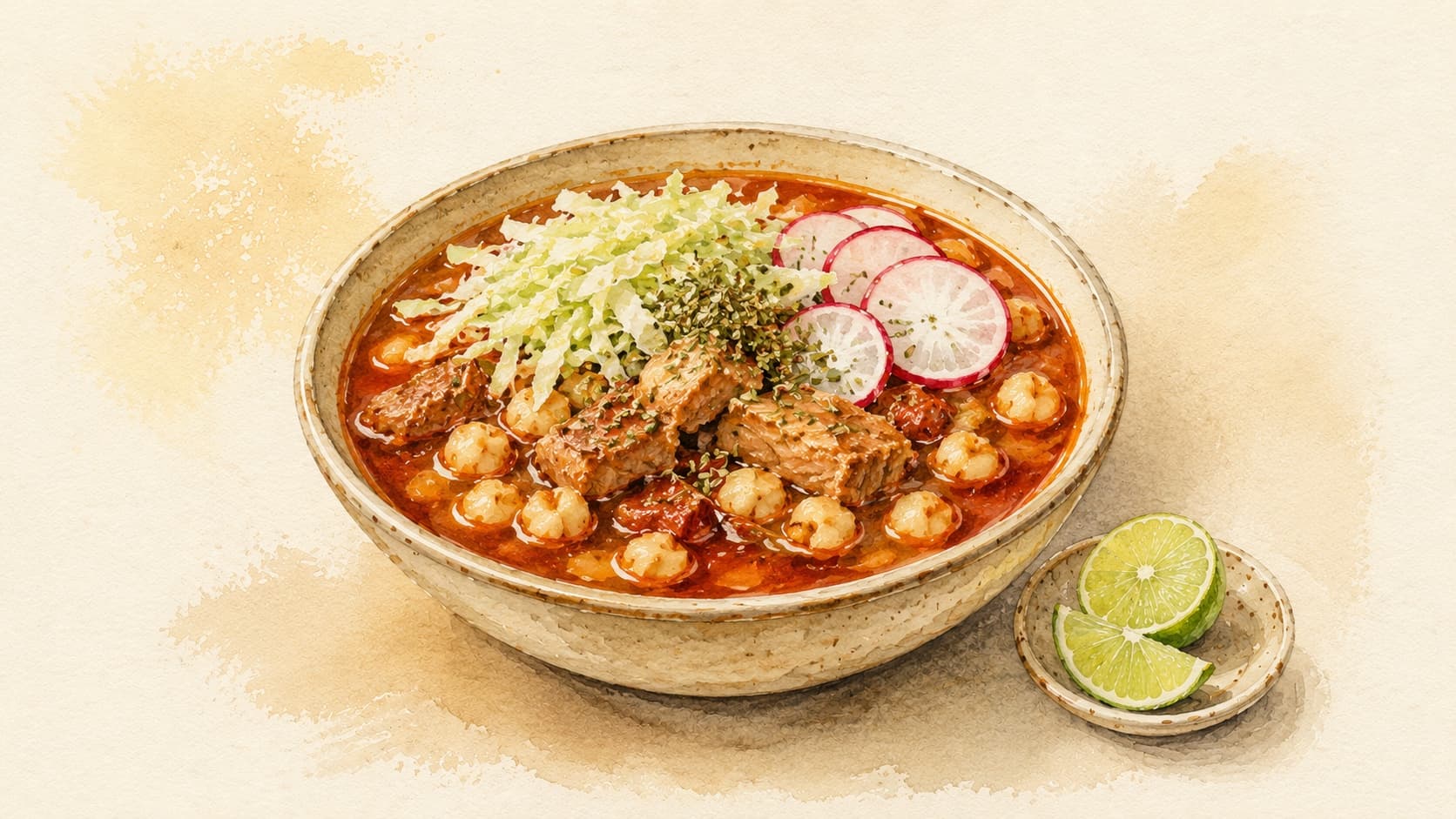
Pozole is a traditional Mexican soup that showcases the interplay of hominy, meat, and spices to create depth of flavor and texture.
Contents (5 sections)▾
Ingredients
- 2 cups hominy
- 1 lb pork shoulder, cubed
- 6 cups chicken broth
- 1 medium onion, chopped
- 4 cloves garlic, minced
- 2 tsp dried oregano
- 1 tsp cumin
- Salt to taste
- Lime wedges for serving
- Radishes, sliced for garnish
- Cabbage, shredded for garnish
- Fresh cilantro for garnish
Steps
In a large pot, combine broth, pork, onion, and garlic.
Bring to a boil, then reduce to a simmer for 15 minutes.
Add hominy, oregano, cumin, and salt; simmer for an additional 10 minutes.
Taste and adjust seasoning as needed.
Serve hot, garnished with lime, radishes, cabbage, and cilantro.
Tools you'll want
- · Digital kitchen scale (gram precision)
Why this works
Pozole relies on the unique texture of hominy, which adds a chewy element to the broth. The pork shoulder provides a rich, savory base, while the spices enhance the overall flavor. Simmering at a controlled temperature allows the flavors to meld without overcooking the meat. The addition of fresh garnishes like lime and radishes brightens the dish.
Common mistakes
Using canned hominy without rinsing.
Target: Drain and rinse canned hominy thoroughly under cold water, or use dried hominy soaked overnight.
Why it matters: Canned hominy's brine is heavily salted and slightly metallic — it carries over into the broth, making the soup too salty and adding a tinned flavor. Rinsing removes most of it.
What to do: Strainer + cold running water for 30 seconds. Drain well before adding.
Workarounds:
- Want best result → dried hominy soaked overnight, simmered 2 hours; chewy texture, no can flavor.
Short simmer time.
Target: 1.5-2 hours for pork shoulder to be fork-tender; meat shredded back into broth.
Why it matters: Pork shoulder needs collagen-to-gelatin conversion (88°C+ for extended time). Under-simmered = tough meat, watery broth without body. The dish is a long-cook tradition.
What to do: Plan for 2 hours minimum. Pork on the bone if available — bones add body and flavor.
Workarounds:
- Pressure cooker → 45 minutes high pressure; acceptable texture, less developed depth.
Skipping the chile preparation (for pozole rojo).
Target: Toast dried chiles (guajillo, ancho, pasilla) until fragrant, soak in hot water, blend into a paste.
Why it matters: The chile paste is the heart of pozole rojo (the red-broth version, named after the toasted-chile color). Substituting chili powder produces a different dish — flat, one-dimensional, lacking the deep red color and complex smoke.
What to do: Toast chiles 30 seconds per side until fragrant, not burnt. Soak in hot water 15 min, then blend.
Workarounds:
- For pozole verde → blend tomatillos, jalapeños, cilantro instead.
- For pozole blanco → skip; broth is plain by design.
Adding all salt at the start.
Target: Salt in stages — pinch with the meat, more after adding hominy, final adjust at the end.
Why it matters: Pork shoulder seasoning needs time to penetrate, but over-salting early concentrates as the broth reduces. Staged salt gives control over the final flavor.
What to do: Salt lightly at each stage. Taste before final adjustment.
Workarounds:
- Already too salty → dilute with water + bouillon-free broth.
Garnish bowls not on the table.
Target: Lime, cabbage, radish, oregano, avocado, tortilla chips in separate bowls — diners customize.
Why it matters: Pozole is incomplete without garnishes. The build-your-own-bowl pattern is structural — the bright fresh elements counter the rich pork-and-hominy base. Plain pozole is half a dish.
What to do: Set garnish station before serving. Lime wedges, shredded cabbage, sliced radish minimum.
Workarounds:
- Time-short → at least lime + cabbage + dried oregano; gives the dish its character.
What to look for
- A rich, slightly thickened broth.
- The hominy should be tender but not mushy.
- Pork should be fork-tender and flavorful.
- Bright colors from garnishes for visual appeal.
Chef's view
Pozole is more than just a dish; it is a celebration of Mexican culture and tradition. Often served during festivities, it brings people together. The process of making pozole can vary from region to region, showcasing local ingredients and preferences. Understanding the balance of flavors and textures is key to mastering this soup.
<!-- beginner-glossed v1 -->Get the essays in your inbox — free
Weekly notes on flavor, fermentation, and food history — the writing behind the Atlas of Flavor. No spam; unsubscribe anytime.