
Ponzu
Soy sauce and citrus juice combined with dashi, mirin, and kombu: the acid and salt must come into balance over a minimum 24-hour rest, and the difference between fresh ponzu and properly matured ponzu is the difference between sharp and integrated.
Contents (7 sections)▾

Ingredients
- 100 ml fresh citrus juice (yuzu preferred; sudachi or a blend of lemon and lime as substitute)
- 100 ml soy sauce (koikuchi)
- 50 ml mirin (briefly boiled to remove alcohol)
- 50 ml dashi (ichiban-dashi)
- 1 piece dried kombu (about 5 cm)
- 5 g katsuobushi (optional — for ponzu with stronger dashi character)
Steps
Combine soy sauce, mirin, and dashi in a clean jar or bottle. If using katsuobushi, add it now. Add the kombu piece. Pour in the citrus juice. Stir briefly to combine. Seal and refrigerate for at least 24 hours, ideally 48–72 hours for a properly integrated result. The initial mix will taste sharp and disjointed; the rest period allows the acid, salt, and umami to equilibrate and merge.
After resting, strain through a fine-mesh strainer to remove the kombu, katsuobushi, and any citrus pulp. Taste and adjust: if it tastes too acidic, add a small additional splash of soy sauce. If it tastes too salty, add a small additional splash of citrus juice. Store refrigerated in a clean jar; the ponzu improves with up to 2–3 weeks in the fridge and keeps for about 1 month.
Tools you'll want
- · Sauce strainer (chinois, perforated, or fine-mesh, 19–25cm)
- · Digital kitchen scale (gram precision)
Why this works
Ponzu is a compound sauce built on the tension between three distinct flavor vectors: the acid sharpness of citrus, the fermented depth of soy sauce, and the umami of dashi. Unlike most sauces, which are cooked to order, ponzu requires time. The minimum rest is 24 hours; 48–72 hours is better; some traditional preparations rest for weeks or months.
The chemistry of the rest is relevant to understanding why the timing matters. When acid (citric and malic acid from the citrus) and soy sauce (a complex fermented liquid containing organic acids, amino acids, glutamate, and sodium) are first combined, they exist in solution as separate chemical entities — the sharp organic acids haven't equilibrated with the buffering capacity of the soy, and the volatile aromatic compounds from the citrus haven't dissolved into the heavier, oil-miscible fraction of the soy. The result tastes jagged and disconnected: you can identify each component separately.
Over 24–72 hours in the refrigerator, several things happen. The organic acids equilibrate with the soy's buffering system and the perceived acidity softens. The volatile citrus aromatics (primarily limonene and linalool from yuzu, alpha-terpineol from sudachi) partition between the aqueous phase and the trace oil fraction of the soy, producing a more rounded aroma. The kombu and katsuobushi continue to slowly release glutamate and inosinate, adding umami underneath the acid-salt structure. The result, after proper rest, tastes unified — the citrus is bright without being sharp, the soy is savory without being heavy.
Yuzu is the traditional Japanese citrus for ponzu. Its flavor is a combination of lemon, mandarin, and grapefruit notes, with a distinct floral element from citronellal and linalool that no other citrus replicates exactly. Sudachi is the Tokushima Prefecture alternative — smaller, greener, sharper. Both are correct for ponzu. When neither is available, a 3:1 blend of lemon juice and lime juice produces a credible substitute — not identical, but the acid-aroma structure is closer to yuzu than lemon alone.
Common mistakes
Insufficient resting time.
Target: Minimum 24 hours of fridge rest; 48-72 hours ideal.
Why it matters: Fresh-mixed ponzu tastes jagged — citrus sharpness, soy depth, dashi umami are still chemically separate. Rest allows organic acids to equilibrate with soy's buffering, volatile aromatics to partition properly. Without rest, you have a sharp mix, not a sauce.
What to do: Plan ahead 2-3 days. Mix on day 1, use day 3+. Set a calendar reminder.
Workarounds:
- Need to use sooner → minimum 24 hours; expect somewhat less integration but still acceptable.
Using bottled lemon juice.
Target: Fresh-squeezed citrus only — yuzu, sudachi, or lemon-lime blend.
Why it matters: Bottled juice has lost volatile aromatics during processing; ascorbic acid preservatives add bitterness. The character that distinguishes ponzu from "soy with acid" lives in fresh juice.
What to do: Squeeze just before mixing. Strain seeds and excess pulp.
Workarounds:
- No fresh yuzu/sudachi → 3 parts lemon + 1 part lime by volume; closer to yuzu than lemon alone.
Over-reducing the mirin.
Target: 2 minutes gentle simmer to drive off alcohol — no significant reduction.
Why it matters: Ponzu mirin should retain its sweetness and body — heavily reduced mirin = concentrated sugar that overwhelms the balance. Brief boil is for alcohol removal only.
What to do: Time it. 2 minutes of gentle bubbling, pull off, cool, add to mixture.
Workarounds:
- Want less sweetness → reduce 3 minutes; further reduction is too much.
Storing in a reactive container.
Target: Glass jar or bottle only — no metal, no plastic.
Why it matters: Citric acid reacts with metal containers (off-flavors, possible metal leaching) and some plastics (chemical migration). Glass is inert.
What to do: Mason jar or recycled glass bottle. Sterilize with boiling water before first use.
Workarounds:
- Only plastic available → food-grade HDPE (#2) is acceptable for short-term; glass still preferred.
Not tasting before AND after resting.
Target: Taste at mixing time (sharp/disjointed expected) AND after 24h rest (integrated, balanced).
Why it matters: Without comparison, you can't tell if the rest worked. Tasting twice is calibration — and you can adjust seasonings after the rest if needed.
What to do: Note the initial taste mentally. Adjust acid/salt only after rest, never before.
Workarounds:
- Skipped the initial taste → trust the recipe; ponzu will be fine after 48 hours regardless.
Using strong red miso-style soy.
Target: Koikuchi (standard Japanese dark soy) — the balanced default.
Why it matters: Different soy varieties shift the balance. Koikuchi is calibrated for the 1:1 ratio. Usukuchi (light soy) is too salty for this ratio; tamari (a thicker, almost wheat-free Japanese soy with a deeper, more concentrated flavor) is too thick and concentrated.
What to do: Use Kikkoman or any Japanese-brand koikuchi. Not "regular soy" if it's the salty Chinese style.
Workarounds:
- Have only usukuchi → reduce by 20% and add 1 tsp extra dashi.
What to look for
- Immediately after mixing: noticeably sharp, sour on the front palate, soy follows behind. The components are still separated in flavor perception.
- After 24 hours: acid still present but rounded; soy more integrated; dashi umami beginning to show. Getting there.
- After 48–72 hours: bright, balanced, all components unified. Citrus leads, soy provides depth, dashi ties it together. This is the target.
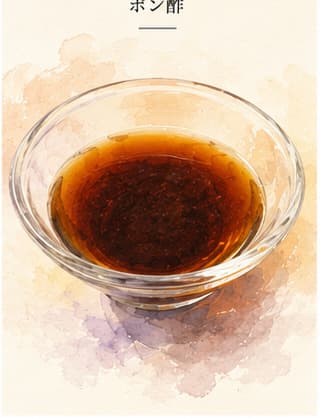
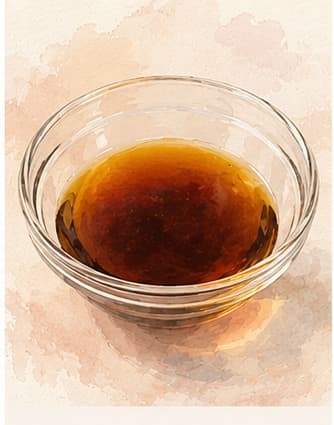
- Color: dark amber, slightly less opaque than straight soy. The citrus lightens the color of the soy slightly.
Chef's view
The traditional Japanese approach to ponzu uses daidai (bitter orange, Citrus aurantium) as the citrus, not yuzu — the word "ponzu" is thought to derive from the Dutch word pons (punch, a citrus drink), suggesting European influence during the Edo period when trade occurred through Nagasaki. The daidai version is sharper and more bitter than yuzu ponzu; it is the older form. The yuzu version became dominant in the 20th century because yuzu is more widely cultivated across Japan.
Commercial ponzu products are convenient and some (Mizkan's Ponzu Citrus, Kikkoman's Ponzu Lemon) are genuinely good. The main difference from homemade is the dashi character: commercial ponzu typically uses hydrolyzed proteins and MSG in place of real dashi, which produces a flat, one-dimensional umami hit. Homemade ponzu with real ichiban-dashi (the first, finest extraction of kombu-and-katsuobushi broth) has a multi-layered umami that gives the sauce a sense of depth the commercial versions cannot quite replicate.
The question of how much citrus to use relative to soy is fundamentally a personal calibration. The 1:1 ratio in this recipe (100 ml citrus : 100 ml soy) is the starting point. If you find the finished ponzu too acidic, pull back on the citrus toward 80 ml. If you find it too salty, add more citrus up to 120 ml. These adjustments should be made after the full rest period, tasting the rested product.
Chef Test Notes
I tested three citrus options: fresh yuzu (imported and expensive), fresh sudachi (in season), and a 3:1 lemon-lime blend. The yuzu version was the most complex — the floral notes were irreplaceable. The sudachi version was excellent in a different register — sharper, more herbaceous, slightly less floral. The lemon-lime blend was credible but noticeably flatter on the top notes; acceptable as a substitute but obviously different. For a ponzu with broad appeal and consistent access to ingredients, the lemon-lime blend is the everyday option; yuzu and sudachi are seasonal upgrades.
Related glossary terms
- Umami — the dashi-contributed glutamate-inosinate depth that bridges the acid and salt structure
- Fermentation — the process that produced the soy sauce's complexity before the citrus was ever added
- Infusion — the resting-extraction mechanism that draws kombu and katsuobushi character into the liquid
Get the essays in your inbox — free
Weekly notes on flavor, fermentation, and food history — the writing behind the Atlas of Flavor. No spam; unsubscribe anytime.