
Okonomiyaki (Osaka style)
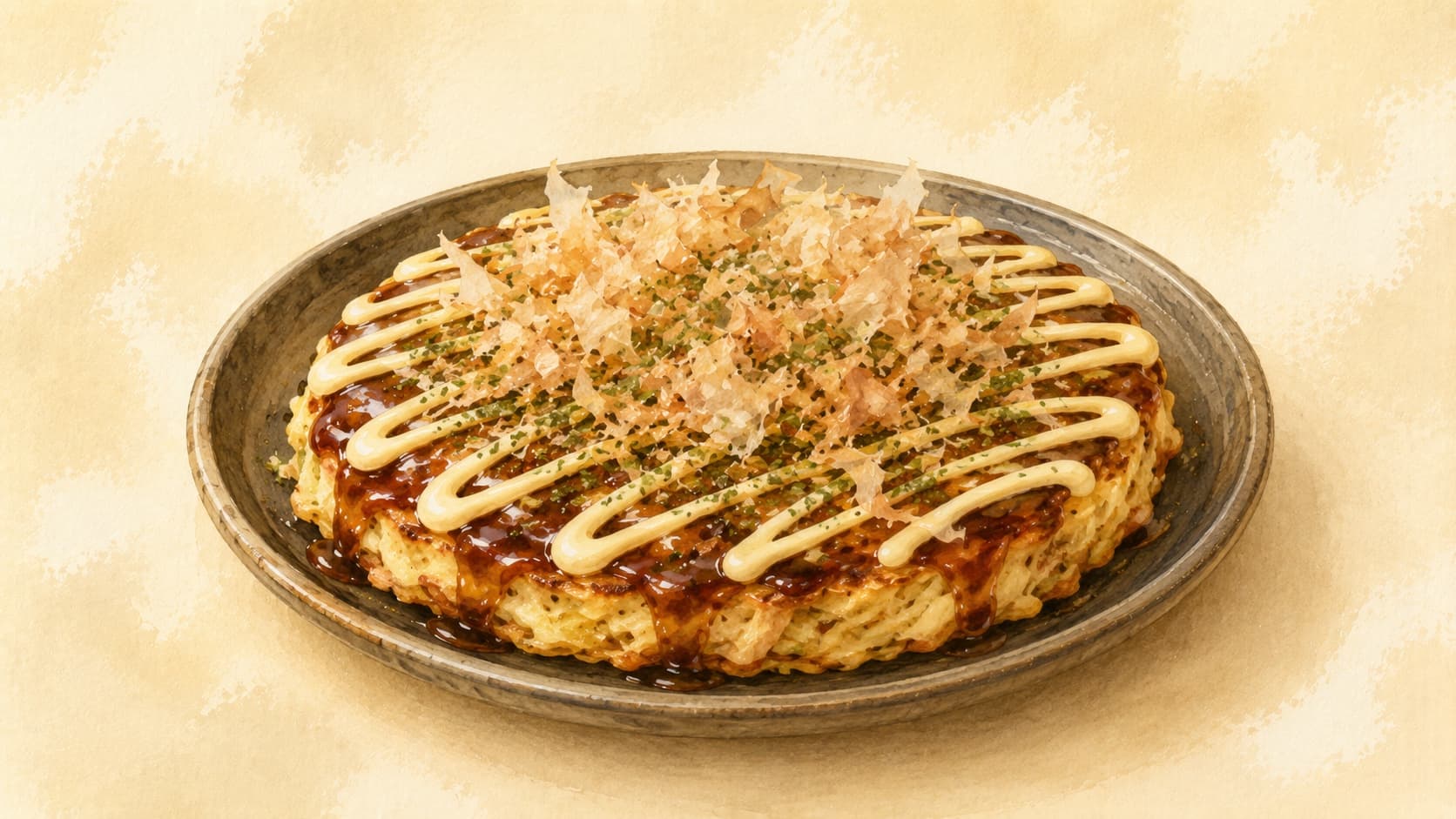
This savory pancake combines a variety of ingredients, resulting in a harmonious blend of textures and flavors.
Contents (5 sections)▾
Ingredients
- 1 cup all-purpose flour
- 1 cup dashi stock
- 2 large eggs
- 2 cups finely shredded cabbage
- 1/2 cup chopped green onions
- 1/2 cup cooked and chopped pork belly
- 1/4 cup tenkasu (tempura scraps)
- Okonomiyaki sauce, for drizzling
- Japanese mayonnaise, for drizzling
- Aonori (seaweed flakes), for garnish
- Bonito flakes, for garnish
Steps
In a bowl, mix flour and dashi stock until smooth.
Whisk in the eggs, then fold in cabbage, green onions, pork, and tenkasu.
Heat a skillet over medium heat and grease lightly.
Pour batter onto skillet, shaping into a round pancake.
Cook for 5-7 minutes on each side until golden brown.
Serve hot, drizzled with okonomiyaki sauce, mayonnaise, and garnished.
Tools you'll want
Why this works
Okonomiyaki relies on a balance of wet and dry ingredients to create a cohesive batter. The dashi (the foundational Japanese broth made from kelp and dried bonito flakes) stock enriches the flavor, while the flour provides structure. Eggs act as a binder, ensuring that the pancake holds together during cooking. Cooking at medium heat allows for even cooking without burning, giving time for the interior to set while achieving a crispy exterior.
The addition of tenkasu (crisp leftover crumbs from frying tempura batter, used as a topping or mix-in for crunch) contributes texture and flavor, enhancing the overall experience. Using finely shredded cabbage ensures that it cooks quickly and integrates well with the batter. The interplay of ingredients introduces complexity, making each bite unique.
The toppings are crucial. Okonomiyaki sauce adds a sweet-savory depth, while mayonnaise provides creaminess. Bonito flakes (paper-thin shavings of dried, smoked katsuobushi fish) and aonori (a powder of dried green seaweed, sprinkled for aroma) introduce umami and a hint of oceanic flavor, serving as a contrast to the pancake’s savory base.
Common mistakes
Skipping the nagaimo (mountain yam).
Target: Grated nagaimo or yamaimo — about 3 tbsp per 1 cup of flour in the batter.
Why it matters: Nagaimo's mucilaginous starch is what makes okonomiyaki light and tender, almost soufflé-like inside. Without it, you get dense, pancake-like texture — fine, but not real okonomiyaki.
What to do: Grate nagaimo on a fine grater (it'll be slimy — that's correct). Whisk into the dashi+flour batter.
Workarounds:
- No nagaimo? Add 1/2 tsp baking powder + 1 extra egg white whipped to soft peaks — approximates the lift.
- For Hiroshima-style, less nagaimo is used (relies on layered cabbage volume instead).
Mixing the cabbage in too early.
Target: Combine cabbage with the batter only just before cooking — within 5 minutes of hitting the pan.
Why it matters: Cabbage releases water when salted/mixed. Sitting in batter for more than 10 minutes turns it limp and waters down the mix, producing soggy okonomiyaki.
What to do: Prep batter separately. Add cabbage immediately before scooping onto the griddle.
Workarounds:
- For large batches, prep individual portions: scoop batter into a bowl, mix in cabbage, cook, repeat.
Flipping too early.
Target: Cook 4 minutes on first side, undisturbed. Confirm edges are dry/lifted before flipping.
Why it matters: Okonomiyaki is dense — the top side needs time for steam to rise through and partially set the interior before flipping. Premature flips collapse the structure into a mush.
What to do: Use a wide spatula (the wider the better). Slide under fully, flip in one confident motion. Press gently after flipping to compact.
Workarounds:
- For beginners, make smaller okonomiyaki (15 cm vs 20 cm) — easier to flip.
- Two spatulas: one to lift, one to support the top during flip. Restaurant technique.
Wrong sauce.
Target: Real okonomiyaki sauce (Otafuku is the most common brand) — thick, sweet-savory, Worcestershire-adjacent.
Why it matters: Okonomiyaki sauce is a specific seasoning — sweeter and thicker than standard Worcestershire, with fruit (tamarind, prune) and vegetable purée. Substituting plain Worcestershire produces a dish that tastes "almost right but not quite."
What to do: Source Otafuku okonomiyaki sauce from an Asian market.
Workarounds:
- DIY: 4 tbsp Worcestershire + 2 tbsp ketchup + 2 tbsp soy + 1 tbsp sugar + 1/2 tsp Dijon. Close approximation.
- For Hiroshima-style, use a less sweet sauce or thin Otafuku with a splash of soy.
Skipping the toppings.
Target: Okonomi sauce drizzle + Kewpie mayo zigzag + bonito flakes (katsuobushi) + aonori (powdered seaweed) + pickled red ginger.
Why it matters: The toppings aren't garnish — they're part of the architecture. Sauce provides sweetness, mayo provides richness, bonito provides smoky umami, aonori provides aroma, pickled ginger provides acid cuts. Skip any one and the dish is off-balance.
What to do: Set up all toppings before cooking. Apply IMMEDIATELY when the okonomiyaki comes off the griddle (the heat makes the bonito flakes dance — visual spectacle).
Workarounds:
- No bonito flakes? Use sesame seeds for a different but legitimate finish.
- For a less sweet profile, halve the sauce and add a squeeze of lemon.
Using the wrong cabbage.
Target: Green cabbage (regular cabbage, NOT Napa cabbage). Finely shredded — strands about 3 mm wide.
Why it matters: Green cabbage has the right sturdiness to hold up to cooking while becoming tender. Napa cabbage is too watery; red cabbage too crunchy. Shred too coarse and the okonomiyaki won't bind; too fine and it becomes mush.
What to do: Use a sharp knife or a mandoline. Pat the shredded cabbage dry before mixing with batter.
Workarounds:
- No mandoline? A box grater (large hole side) works for finer shreds.
- For winter, add 50 % shredded daikon or carrot for color variation.
What to look for
- A golden-brown exterior with a slight crisp.
- A puffed appearance indicating a well-risen pancake.
- Steam escaping from the sides while cooking.
- Toppings melting slightly, creating a cohesive finish.
- A pleasant aroma of savory and umami notes.
Chef's view
Okonomiyaki reflects the heart of Japanese street food culture. Originating in Osaka, it embodies the concept of "as you like it," allowing for personal customization. This dish is a meal and a social experience, often prepared on griddles at the table, inviting communal enjoyment.
The technique emphasizes balance and adaptability. Each ingredient serves a purpose, and the cooking method highlights the harmony of flavors. Understanding this philosophy transforms the preparation into an art, celebrating the versatility of Japanese cuisine.
<!-- beginner-glossed v1 -->Get the essays in your inbox — free
Weekly notes on flavor, fermentation, and food history — the writing behind the Atlas of Flavor. No spam; unsubscribe anytime.