
Oden
A complex harmony of textures and flavors achieved through gentle simmering.
Contents (5 sections)▾
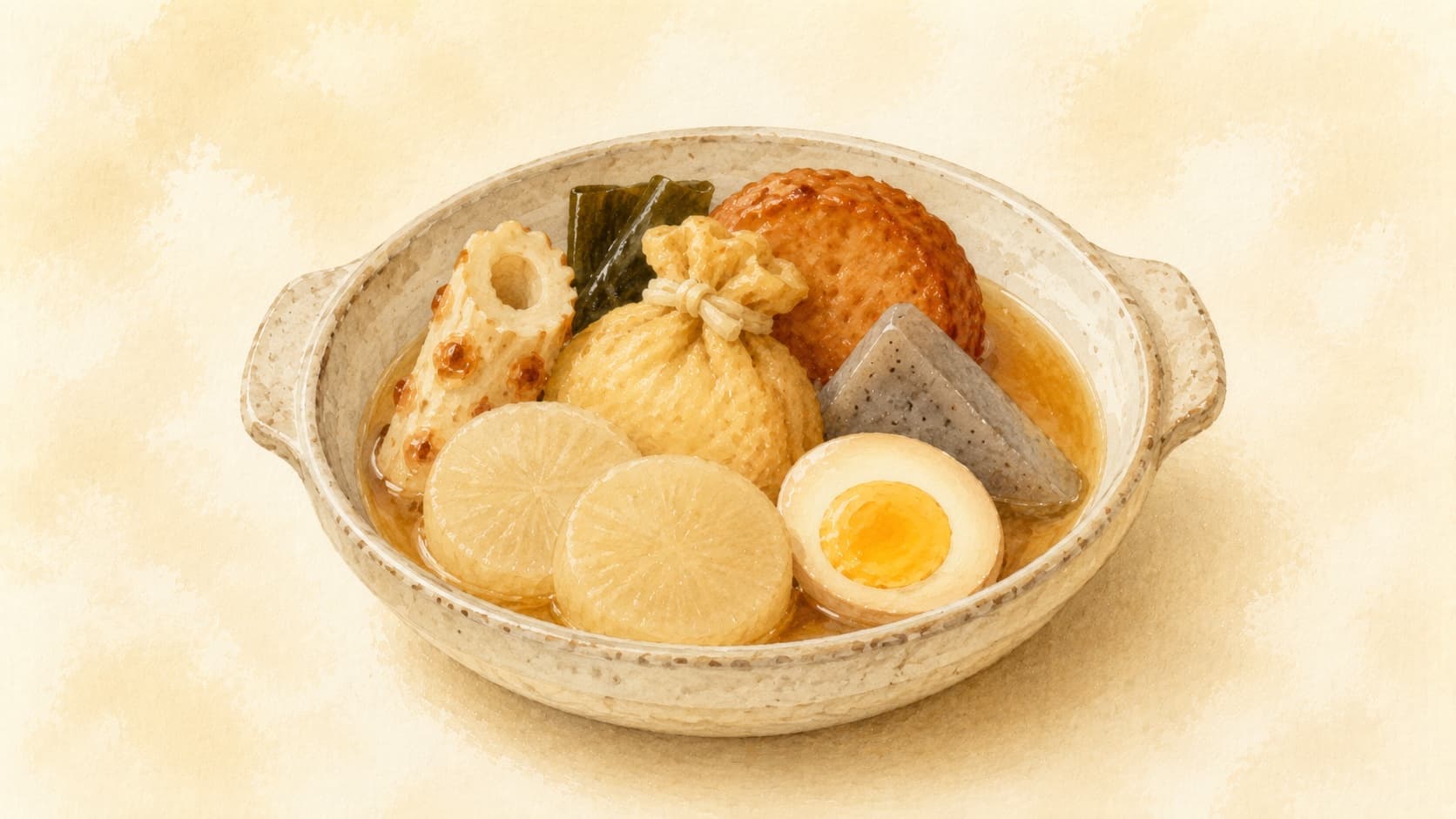
Ingredients
- 200g daikon radish, sliced
- 4 boiled eggs
- 200g konjac (yam cake), cut into blocks
- 200g fish cakes (various types)
- 100g tofu, cut into cubes
- 1 liter dashi stock
- 3 tablespoons soy sauce
- 2 tablespoons mirin
Steps
Prepare dashi stock by simmering kombu and bonito flakes.
Add sliced daikon to the pot and simmer until tender.
Incorporate konjac and fish cakes, simmer for 10 minutes.
Introduce tofu and boiled eggs, simmer for an additional 5 minutes.
Stir in soy sauce and mirin; adjust seasoning to taste.
Serve hot, garnished with green onions or mustard.
Tools you'll want
- · Digital kitchen scale (gram precision)
Why this works
Oden's success relies on the balance of simmering temperatures. A gentle simmer (broth held just below a true boil, so bubbles barely rise) allows flavors to meld without losing ingredient integrity. The dashi (the foundational Japanese broth made from kelp and dried fish flakes) stock infuses umami, while each ingredient contributes distinct taste and texture. The gradual heating ensures even cooking, preventing tough textures.
The ratio of liquid to solids is crucial. Too much liquid dilutes flavor; too little results in uneven cooking. Ingredients like daikon absorb broth, enhancing flavor over time. The addition of soy sauce and mirin at the end preserves their aroma and sweetness.
Oden’s appeal lies in its adaptability. Use seasonal ingredients for variety. The simmering method allows for long cooking times without compromising the health benefits of the vegetables.
Common mistakes
Skipping the daikon pre-cook.
Target: Daikon parboiled separately in rice-water (or water + 1 tbsp rice) for 20 minutes before adding to the dashi.
Why it matters: Raw daikon has bitter compounds that leach into the broth. The rice-water parboil pulls those compounds out and partially softens the daikon, allowing it to absorb the oden dashi without contributing bitterness.
What to do: Peel daikon thickly (the inner core is the prized flesh), cut into 3 cm slices, score the cut faces in a cross pattern (helps flavor penetrate). Boil in rice-water until just translucent at the edges, drain, then add to dashi.
Workarounds:
- No rice on hand? Plain water works, just expect slightly more bitterness.
- For extra-tender daikon, microwave for 5 minutes before the rice-water step.
Wrong dashi for oden.
Target: Strong dashi — niban dashi base PLUS kombu, bonito, sometimes dried sardine (niboshi). Seasoned with light soy sauce + sake + mirin.
Why it matters: Oden's broth needs to be assertive enough to flavor a dozen different ingredients. Standard dashi is too delicate. Many home oden tastes flat because the dashi wasn't built up enough.
What to do: Use kombu + bonito + niboshi for a "tsuyu" style stock. Season aggressively — the ingredients will dilute it.
Workarounds:
- Time short? Use kombu + 1 tbsp white miso for a quick oden-style depth.
- For deeper flavor without more ingredients, simmer the dashi 20 minutes longer to concentrate.
Adding all ingredients at once.
Target: Add ingredients in order of cook time: daikon + eggs + konnyaku first (1 hour), tofu + fish cakes (30 min before serving), shirataki + tender items (10 min before serving).
Why it matters: Ingredients have very different cook times. Daikon needs 60+ minutes to absorb dashi; tofu collapses if cooked that long. All-at-once cooking means some are mush and others are bland.
What to do: Plan a staged cook. Set a timer for each addition.
Workarounds:
- For dinner-party serving, do all the long-cook items the day before, refrigerate in dashi, reheat with the tender items added fresh.
Boiling the broth.
Target: Bare simmer (85 °C). Surface barely moves.
Why it matters: Hard boiling roughens fish cakes' surfaces, makes tofu spongey, and reduces dashi to oversalt levels. Oden is meant to be a long, gentle steep.
What to do: Once seasoned, drop to lowest heat. A drop lid (otoshibuta) helps maintain even temperature.
Workarounds:
- For unattended cooking, transfer the pot to a 90 °C oven — most stable.
Skipping the overnight rest.
Target: Make oden a day ahead. Cool, refrigerate, reheat to serve.
Why it matters: Oden improves dramatically overnight. The ingredients absorb the dashi during the cold rest in a way they don't during active cooking — the result is deeper-flavored and more cohesive.
What to do: Cook fully the night before. Cool. Refrigerate. Reheat gently the next day for serving.
Workarounds:
- Same-day service: cook the long items in the morning, rest in the dashi 6+ hours at room temp (food-safety dependent on temperature), reheat with tender items added before serving.
Wrong mustard pairing.
Target: Japanese yellow mustard (karashi) served on the side — sharp, brief heat that cuts the dashi richness.
Why it matters: Karashi is structural to the oden experience — diners dip each piece briefly. American yellow mustard (Heinz-style) has vinegar and turmeric; English mustard is too pungent. Karashi has the specific clean burn that suits oden.
What to do: Source Japanese karashi powder; mix with cold water to a paste. Serve small portions per diner.
Workarounds:
- No karashi? Hot English mustard + a pinch of sugar approximates.
What to look for
- Daikon should be tender but not falling apart.
- Fish cakes should maintain shape and texture.
- Broth should be clear with a rich, inviting aroma.
- Tofu should be warm and slightly firm.
- Boiled eggs should have a creamy yolk.
Chef's view
Oden holds a special place in Japanese culinary tradition, often enjoyed in winter months. Its origins trace back to the Edo period (the era of Tokugawa shogun rule from 1603 to 1868, when much of modern Japanese cuisine took shape), where street vendors would serve it hot from large pots. Each family has its unique recipe, reflecting personal preferences and regional ingredients.
The dish embodies the essence of comfort. It encourages sharing and warmth, making it a staple at gatherings. The process of simmering allows not just for nourishment but also for communal bonding over a warm bowl, making oden a cherished part of Japanese culture.
<!-- beginner-glossed v1 -->Get the essays in your inbox — free
Weekly notes on flavor, fermentation, and food history — the writing behind the Atlas of Flavor. No spam; unsubscribe anytime.