
Naan
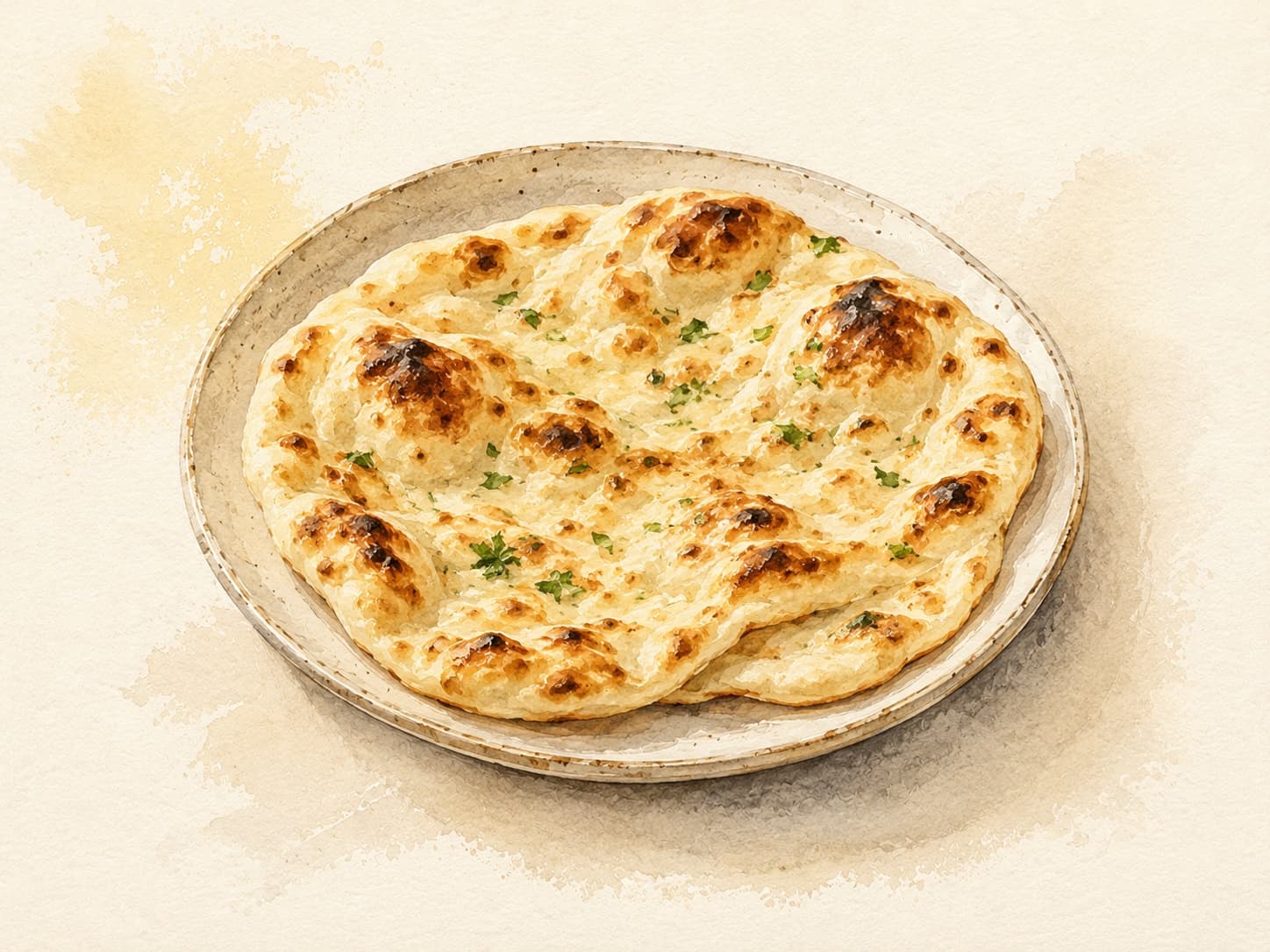
Naan is a leavened flatbread, characterized by its fluffy texture and slight chew, achieved through fermentation and high-temperature cooking.
Contents (5 sections)▾
Ingredients
- 2 cups all-purpose flour
- 1/2 teaspoon active dry yeast
- 1 teaspoon sugar
- 1 teaspoon salt
- 1/4 cup plain yogurt
- 3/4 cup warm water
- 1 tablespoon olive oil
- 2 tablespoons melted butter (for brushing)
Steps
In a bowl, mix warm water, yeast, and sugar; let sit for 5 minutes.
In a large mixing bowl, combine flour and salt; create a well in the center.
Add the yogurt, yeast mixture, and olive oil into the well; mix until a dough forms.
Knead the dough for 8-10 minutes until smooth; cover and let rise for 1 hour.
Divide the dough into equal balls; roll each out to 1/4 inch thick.
Cook each naan in a preheated skillet over high heat for 2-3 minutes per side; brush with melted butter.
Tools you'll want
Why this works
Naan's texture derives from the fermentation process (the slow rest during which yeast eats sugars and releases gas, lifting the dough and building flavor). The yeast not only leavens the dough (makes it puff up by trapping gas bubbles) but also contributes to flavor development. Allowing the dough to rise creates air pockets, resulting in a soft, fluffy bread. The high cooking temperature, typically achieved in a tandoor (a tall clay oven heated by charcoal or wood that can reach 500°C, used across South and Central Asia) or skillet, creates a crispy exterior while retaining moisture inside.
The combination of yogurt and water provides sufficient hydration, essential for gluten formation (the elastic protein network that gives bread its stretch and chew). The flour-to-water ratio is crucial; too much water leads to a sticky dough, while too little results in a dry texture. The addition of sugar feeds the yeast, enhancing fermentation speed and flavor.
Cooking on high heat gives naan its characteristic char. The immediate contact with the hot surface causes steam to form, which pushes the dough upwards, creating its distinctive puffiness. Brushing with butter afterward adds flavor and moisture, improving mouthfeel.
Common mistakes
Using only water — no yogurt or milk.
Target: Naan dough contains yogurt (or milk) — about 1/4 cup per 2 cups of flour.
Why it matters: Dairy is structural to naan. The yogurt's acid tenderizes the gluten, the fat contributes to softness, and the lactose feeds the yeast. Water-only dough produces a leaner, chewier flatbread (chapati territory).
What to do: Use plain whole-milk yogurt for the most authentic version. Greek yogurt thinned with milk also works.
Workarounds:
- Dairy-free? Coconut yogurt approximates the role.
Wrong cooking surface or heat.
Target: Tandoor oven (550 °C+) traditionally, or a cast-iron skillet pre-heated for 8 minutes on max heat.
Why it matters: Naan's signature bubbles and charred spots come from extreme high heat — the dough's water vaporizes in seconds, creating the iconic puff. Low or medium heat produces flat, dense bread.
What to do: Cast-iron skillet at max heat, no oil — naan cooks on dry hot metal. 60 seconds per side.
Workarounds:
- For maximum char, finish briefly under a broiler after pan-cooking — produces leopard spots like a tandoor.
- Pizza stone in oven at max heat also works (less ideal for direct contact).
Skipping the proof.
Target: Bulk-rise 1 hour, then divide and rest 15 minutes before rolling.
Why it matters: Naan needs proofed dough for proper softness. Unrisen dough produces tough, crackery flatbread. The 15-minute rest after dividing relaxes gluten so it rolls thin without springback.
What to do: Cover the dough with plastic wrap, place somewhere warm. Test by pressing — should spring back slowly.
Workarounds:
- Short on time? Cold-ferment overnight then warm 30 minutes before rolling — actually produces better flavor.
Rolling too thick.
Target: Roll naan to 3–5 mm thick, irregular oval or teardrop shape.
Why it matters: Thicker naan stays doughy in the center; thinner doesn't develop the chewy interior. The signature is "thin edge, slightly puffed center."
What to do: Roll on a lightly floured surface. Don't aim for a perfect circle — traditional naan is hand-stretched into an oval/teardrop.
Workarounds:
- For uniform shape, use a rolling pin.
Not buttering immediately.
Target: Brush with melted ghee or butter the MOMENT naan comes off the pan, while still hot.
Why it matters: Hot naan absorbs butter, integrating the fat into the bread structure. Butter applied to cooled naan sits on the surface — different texture entirely.
What to do: Have ghee/butter and brush ready. Apply within 5 seconds of pulling from pan.
Workarounds:
- For garlic naan, mix minced garlic into the melted butter beforehand.
- For sweet naan (sheermal style), add sugar to the butter.
Skipping the toppings.
Target: Brush with garlic-butter + sprinkle with chopped cilantro and nigella seeds.
Why it matters: Plain naan is fine, but the classic toppings are what make naan visually and aromatically distinctive. Nigella seeds (kalonji) provide the small black specks and onion-like aroma.
What to do: Have toppings ready. Sprinkle while butter is wet so they stick.
Workarounds:
- No nigella? Black sesame seeds approximate the look (different but acceptable flavor).
What to look for
- Puffing up while cooking.
- Light golden-brown spots on the surface.
- Soft and pliable texture when torn.
- Slightly chewy yet tender consistency.
- Aroma of toasted bread as it cooks.
Chef's view
Naan has deep cultural roots in Indian cuisine, traditionally cooked in clay ovens. Each region has its variations, often incorporating local ingredients and spices. The communal aspect of making naan reflects the hospitality inherent in Indian culture.
Mastering naan requires practice and attention to detail. The ability to adapt the dough based on conditions—humidity, temperature—demonstrates a cook's intuition. This flexibility is part of what makes naan a staple across the globe.
<!-- beginner-glossed v1 -->Get the essays in your inbox — free
Weekly notes on flavor, fermentation, and food history — the writing behind the Atlas of Flavor. No spam; unsubscribe anytime.