
Kimbap
Kimbap combines seasoned rice and various fillings, rolled in seaweed to create a portable meal.
Contents (5 sections)▾
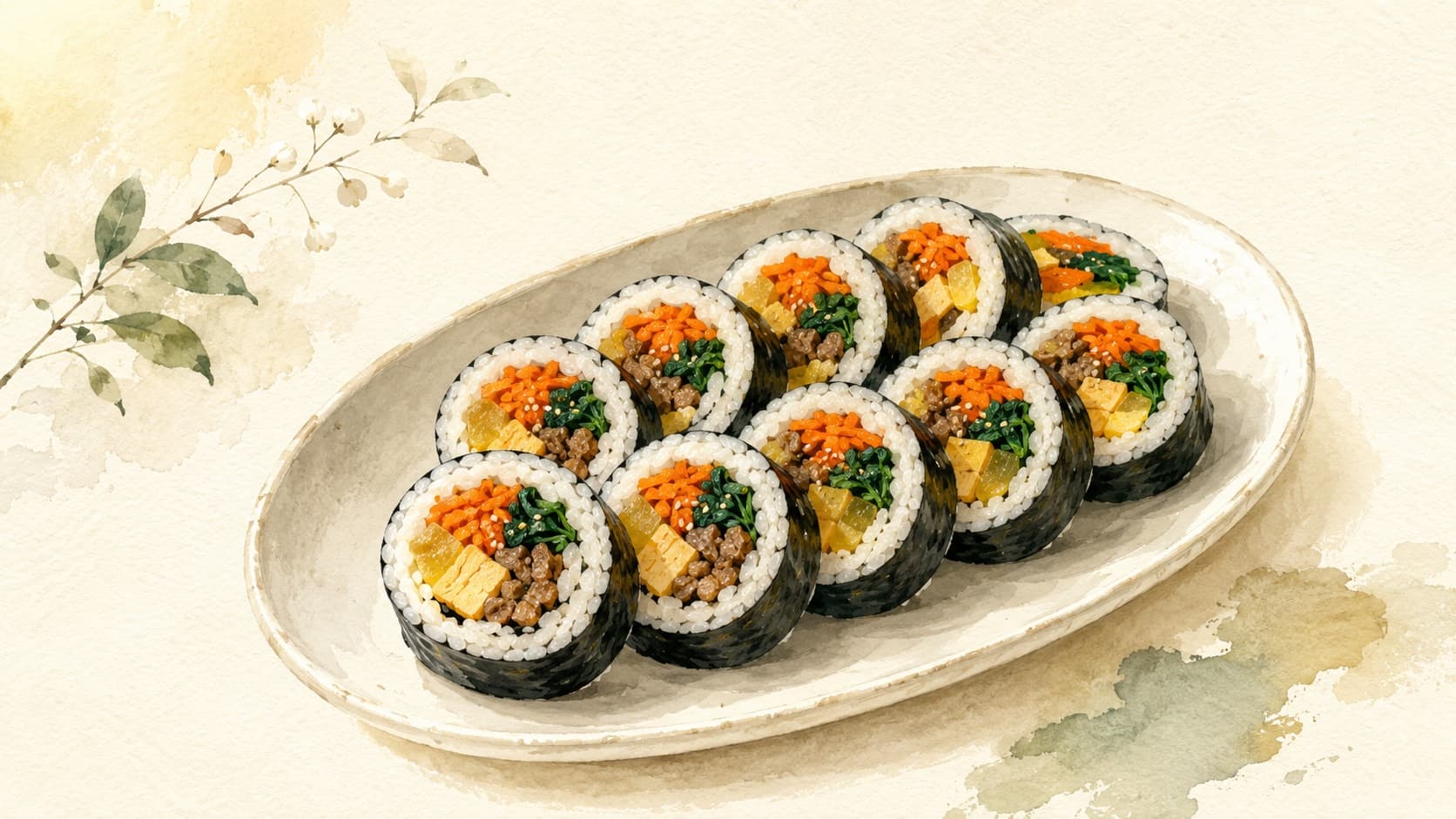
Ingredients
- 2 cups cooked short-grain rice
- 1 tablespoon sesame oil
- 1 teaspoon salt
- 4 sheets of seaweed (gimbap-nori)
- 1 cucumber, julienned
- 1 carrot, julienned
- 4 cooked eggs, thinly sliced
- 100g cooked beef or tofu, julienned
- Pickled radish, sliced
- Sesame seeds, for garnish
- Soy sauce, for serving
Steps
Mix the cooked rice with sesame oil and salt in a bowl.
Lay a sheet of seaweed on a bamboo mat, shiny side down.
Spread a thin layer of rice on the seaweed, leaving a border.
Arrange cucumber, carrot, eggs, beef or tofu, and pickled radish on top of the rice.
Roll the mat tightly to form a log, sealing the edge with a bit of water.
Slice the roll into bite-sized pieces and sprinkle with sesame seeds.
Tools you'll want
Why this works
Kimbap (Korean seasoned-rice roll wrapped in toasted seaweed, sliced into bite-sized rounds) relies on short-grain rice for its sticky texture, allowing it to hold together when rolled. The sesame oil enhances flavor while also providing a sheen that makes the dish visually appealing. A thin layer of rice ensures the rolls are not overly bulky, maintaining structural integrity. The balance of fillings—vegetables, protein, and pickled elements—creates layers of flavor that contrast beautifully with the seaweed wrap.
Common mistakes
Using vinegar-seasoned (sushi) rice.
Target: Short-grain rice mixed with sesame oil + salt (NOT vinegar like sushi rice).
Why it matters: Sushi rice (酢飯, sushi-meshi) is vinegared — sweet and sour. Kimbap uses plain rice with sesame oil — produces the savory, nutty character that distinguishes Korean from Japanese roll. Vinegared rice produces "Korean sushi" but not real kimbap.
What to do: Cook short-grain rice plainly. Mix in 1 tbsp sesame oil + 1/2 tsp salt per cup of cooked rice.
Workarounds:
- For more umami, add a pinch of MSG or dashida (Korean stock powder) to the rice.
Long-grain rice.
Target: Short-grain Japonica rice.
Why it matters: Long-grain rice (Basmati, Jasmine) doesn't bind — the roll falls apart at the first slice. Short-grain is structurally essential.
What to do: Use Korean, Japanese, or Calrose rice. Slightly less water than usual (kimbap rice should be firmer than sushi rice).
Workarounds:
- No short-grain? Medium-grain rice (Arborio) is the next best.
Overfilling.
Target: Modest fillings — about 5–6 thin strips of vegetables/protein per roll, plus rice.
Why it matters: Overstuffed kimbap won't roll closed, won't slice cleanly, and the fillings spill out. Less is more.
What to do: Lay fillings in a line at the rice's edge, about 2 cm from the bottom. Keep the line thin.
Workarounds:
- For substantial portions, make MULTIPLE rolls rather than one fat roll.
Skipping the brush of sesame oil on the outside.
Target: Brush the rolled kimbap with sesame oil before slicing.
Why it matters: The sesame oil on the outside provides visual sheen + aromatic finishing + prevents the seaweed from drying. The sliced kimbap has a polished, professional look.
What to do: Roll → brush surface with sesame oil → slice → arrange.
Workarounds:
- For extra finish, sprinkle toasted sesame seeds on the oiled surface.
Slicing with a wet knife.
Target: Sharp knife, wiped with a damp cloth between slices.
Why it matters: A dry or sticky knife crushes the roll and tears the seaweed. Damp knife slices cleanly without sticking.
What to do: Set up a damp cloth or damp paper towel next to the cutting board. Wipe knife between slices.
Workarounds:
- For extra clean slices, use a serrated knife with very light pressure (saw, don't press down).
What to look for
- A shiny, smooth surface on the rice layer.
- Vibrant colors of the fillings peeking through the seaweed.
- The roll should feel firm but not overly tight when pressed.
- Clean, precise slices without squished fillings.
Chef's view
Kimbap is a staple in Korean cuisine, often enjoyed during picnics or as a convenient lunch. Its origins date back to the early 20th century, influenced by Japanese sushi but evolving into a distinct dish with local flavors. The versatility of kimbap allows for endless combinations of fillings, reflecting personal tastes and seasonal ingredients. The act of rolling kimbap can be a meditative process, fostering creativity and mindfulness in cooking.
<!-- beginner-glossed v1 -->Get the essays in your inbox — free
Weekly notes on flavor, fermentation, and food history — the writing behind the Atlas of Flavor. No spam; unsubscribe anytime.