
Hummus
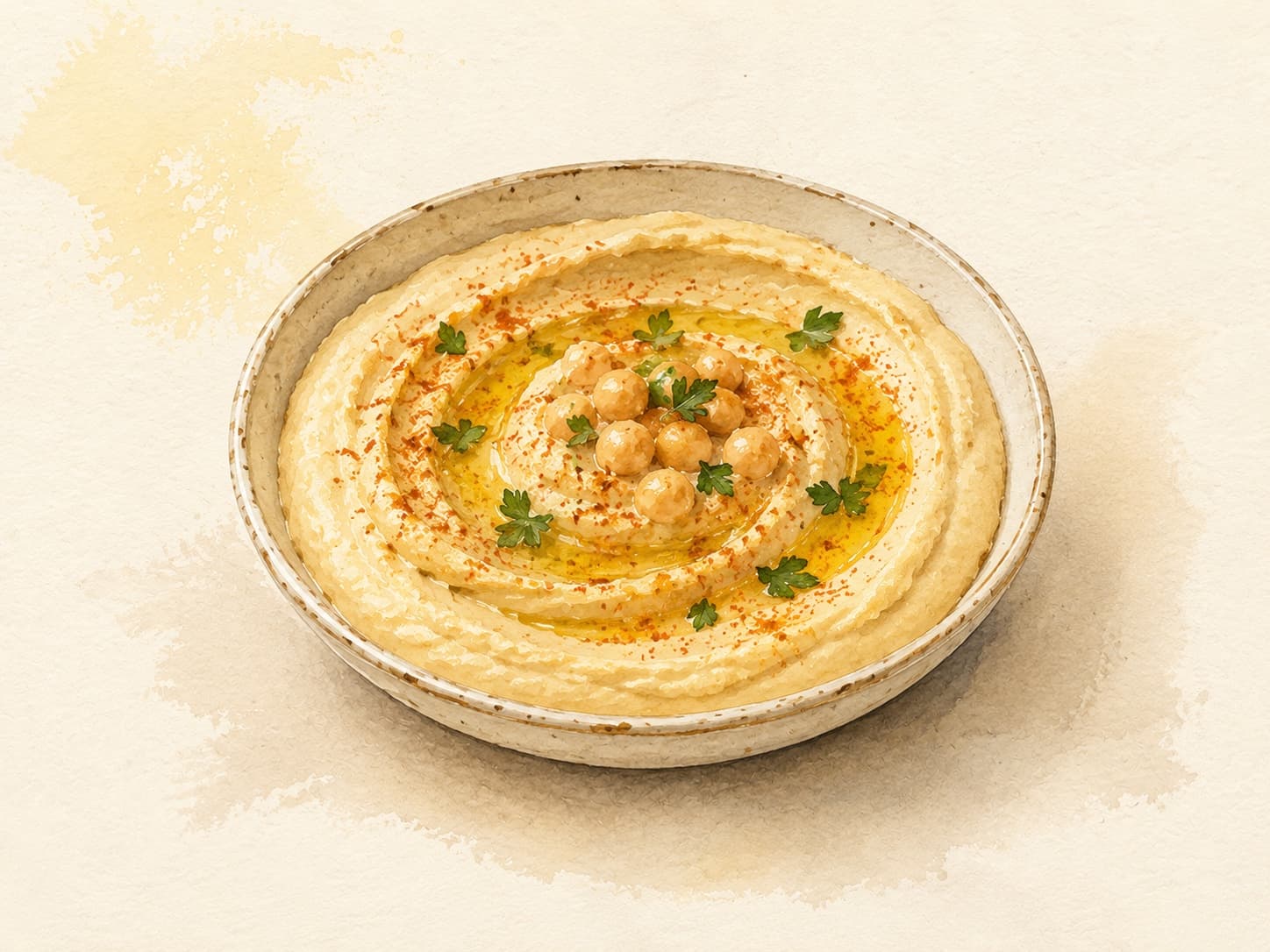
A smooth blend of chickpeas and tahini forms the base of this versatile Middle Eastern dip.
Contents (5 sections)▾
Ingredients
- 1 can (15 oz) chickpeas, drained and rinsed
- 1/4 cup tahini
- 1/4 cup olive oil
- 2 tablespoons lemon juice
- 1 garlic clove, minced
- 1/2 teaspoon ground cumin
- Salt to taste
- Water, as needed
Steps
Combine chickpeas, tahini, olive oil, lemon juice, garlic, cumin, and salt in a food processor.
Blend until smooth, adding water gradually to reach desired consistency.
Taste and adjust seasoning if necessary.
Transfer to a serving bowl and drizzle with additional olive oil.
Tools you'll want
Why this works
Hummus achieves its creamy texture through the emulsification of tahini and olive oil with chickpeas. The balance of tahini, which provides fat, and lemon juice, which adds acidity, creates a harmonious flavor. Using canned chickpeas simplifies the process, allowing for quick preparation without soaking or cooking dried beans.
Blending at a high speed incorporates air, enhancing the smoothness. Gradually adding water allows for control over the final consistency. Aim for a silky texture that holds its shape without being overly runny.
Cumin and garlic infuse depth and warmth, complementing the nuttiness of tahini. Adjusting salt at the end ensures the flavors bloom without overpowering the dish.
Common mistakes
Not removing the chickpea skins.
Target: Remove as much of the loose skin as possible — either by rubbing cooked chickpeas in a towel or by cooking with baking soda.
Why it matters: Chickpea skins are mostly cellulose, which doesn't break down in a blender. They leave a grainy, slightly bitter texture that no amount of additional blending fixes. This is THE single difference between mediocre and silky restaurant hummus.
What to do: Cook chickpeas with 1 tsp baking soda per liter of water — the alkaline environment dissolves the skins partially during cooking. Rub the cooked chickpeas in a tea towel to remove what remains.
Workarounds:
- Time-saver: peel only as many as you can in 5 minutes. The texture improvement is noticeable even from partial peeling.
- For canned chickpeas, microwave them for 2 minutes in fresh water + 1/2 tsp baking soda before blending — softens skins.
Using cheap tahini.
Target: Single-ingredient sesame tahini, ideally Lebanese or Palestinian brands. Should taste nutty, slightly bitter — not sour or rancid.
Why it matters: Tahini is half the flavor of hummus by weight. Cheap or old tahini tastes bitter, sour, or chalky and dominates the finished product. The brand makes more difference than any other single ingredient.
What to do: Taste tahini straight before using. Trusted brands: Soom, Seed + Mill, Al Wadi, Achva.
Workarounds:
- If your tahini is on the verge, balance with extra lemon and a pinch of cumin to mask off-notes.
- For an emergency, blend toasted sesame seeds + neutral oil to make fresh tahini.
Skipping the ice water trick.
Target: Add 2–4 tbsp ice water at the end of blending.
Why it matters: Ice water emulsifies the tahini with the lemon juice and chickpeas, creating the fluffy, mousse-like texture of great hummus. Cold liquid also keeps the mixture from warming during blending (which thins it irrevocably).
What to do: Blend chickpeas + tahini + lemon + garlic first, then drizzle in ice water while the blender runs — watch the texture lighten dramatically.
Workarounds:
- No ice cubes? Use very cold water from the fridge — less effective but still helps.
- For maximum fluffiness, blend the tahini with lemon juice alone first (it'll seize and look broken), THEN add ice water to "unbreak" it — creates the lightest texture.
Adding raw garlic directly.
Target: Blend 1 clove of raw garlic with the lemon juice and salt for 1 minute, then strain. Use only the lemon-garlic juice.
Why it matters: Raw garlic flavor intensifies over time in hummus — a "balanced" garlic level at the time of making becomes overwhelming by the next day. The lemon-garlic infusion captures the aroma without the harsh enzymatic intensification.
What to do: Microplane the garlic + lemon juice + salt, rest 10 minutes, strain through fine mesh, use the liquid.
Workarounds:
- For a milder, sweeter profile, roast the garlic first (15 minutes at 200 °C in foil).
- No time to infuse? Use 1/4 the listed garlic and increase salt slightly to compensate for missing flavor depth.
Eating it cold.
Target: Serve at room temperature, ideally just-made.
Why it matters: Hummus served cold (straight from the fridge) tastes flat and chalky — the tahini fats firm up and mute the flavors. Room temperature is when all the components shine.
What to do: Let refrigerated hummus rest at room temperature for 30 minutes before serving.
Workarounds:
- For freshness, make hummus the day of serving — it really is at its best in the first 4 hours.
- Drizzled olive oil + a sprinkle of za'atar (a Middle Eastern herb-and-sesame blend) or sumac (a tart, lemony red spice) warms up the visual and aromatic profile even when the hummus is slightly cold.
Skipping the long blend.
Target: Blend for 4–5 minutes minimum on high speed.
Why it matters: Hummus needs sustained mechanical breakdown to achieve true smoothness. Most home cooks stop at 1–2 minutes because the mixture "looks done" — but the cellular structure of chickpea + tahini + water needs longer to fully homogenize.
What to do: Set a timer. Blend, scrape down the sides, blend again, scrape, blend. Don't stop because it looks smooth.
Workarounds:
- For weaker blenders, blend in batches with extra liquid.
- A high-speed blender (Vitamix, Blendtec) produces silkier results in less time — the most worthwhile equipment upgrade for hummus.
What to look for
- A smooth, creamy texture without visible graininess.
- A vibrant color, typically pale beige or light brown, depending on the tahini.
- A glossy surface from the olive oil drizzle.
- An inviting aroma of garlic and tahini.
- The ability to hold shape but spread easily on bread.
Chef's view
Hummus has deep roots in Middle Eastern cuisine, with variations across the region. Each culture adds its spin, from garnishing with sumac to incorporating roasted red peppers. This dish symbolizes hospitality, often served with pita and shared among friends.
The technique emphasizes balance—between flavors, textures, and temperatures. The simplicity of the ingredients belies the complexity of its flavor, showcasing the beauty of using high-quality, fresh components. Each batch can be customized, reflecting personal tastes while honoring tradition.
<!-- beginner-glossed v1 -->Get the essays in your inbox — free
Weekly notes on flavor, fermentation, and food history — the writing behind the Atlas of Flavor. No spam; unsubscribe anytime.