
Green Beans Amandine
Blanched green beans finished in beurre noisette with toasted almonds — a French vegetable side that teaches butter browning, color retention, and the principle of finishing in fat.
Contents (7 sections)▾

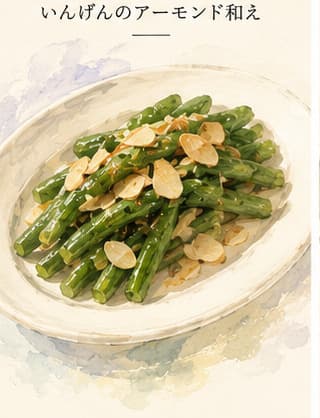
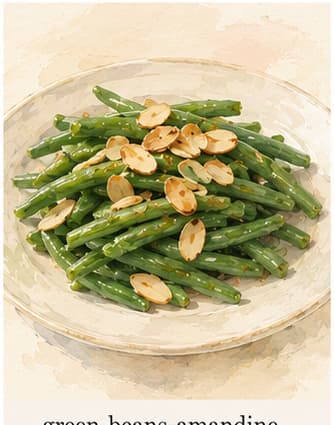
Ingredients
- 400 g green beans (haricots verts), trimmed
- 50 g unsalted butter
- 40 g slivered almonds
- 1 tbsp fresh lemon juice
- Fine sea salt and black pepper
- Ice water for blanching (large bowl)
Steps
Bring a large pot of water to a rolling boil. Salt heavily — a tablespoon of fine salt per liter of water. Prepare a large bowl of ice water. Blanch the green beans for 3–4 minutes until they are vivid, bright green and just barely tender with a crisp bite. They should flex without snapping. Remove immediately and plunge into the ice water. This halts the cooking and fixes the chlorophyll, preserving the color.
Drain the beans thoroughly and pat dry with kitchen towels. Residual water will spatter when the beans meet the hot butter and will dilute the noisette.
In a wide skillet, toast the slivered almonds over medium heat, stirring frequently, until golden and fragrant, about 3–4 minutes. Transfer to a plate. Almonds toast unevenly in butter (the butter browns before the almonds are done) so toasting them dry first gives better control.
In the same skillet, melt the butter over medium heat. Watch it carefully from the moment it stops foaming. The butter will go through stages: foaming (water evaporating), then quieting (water gone), then the milk solids will begin to color — pale gold, then a warm amber, then brown. At the moment of deep golden brown and a nutty, toasted-bread smell, pull the pan off the heat. This is beurre noisette. If it goes black, start over.
Add the dry beans to the pan with the beurre noisette. Toss to coat over medium heat for 1–2 minutes — the beans are already cooked; this step just finishes them in the fat and reheats them. Add the toasted almonds. Season with salt, pepper, and the lemon juice. The acid sharpens the flavors and cuts the richness of the brown butter. Serve immediately.
Tools you'll want
Why this works
Green beans amandine (a French side of green beans tossed with brown butter and toasted almonds) is a study in three simultaneous techniques: blanching for color and texture, beurre noisette for flavor, and finishing in fat for cohesion. Each one teaches something independent and useful.
The blanching step does what it always does for green vegetables — it cooks the beans rapidly in boiling salted water, then stops the heat with cold water. The ice bath is the key step: it halts both the cooking and the chlorophyll conversion. Chlorophyll, the pigment that makes beans green, converts to a dull grayish compound (pheophytin) when held at high heat for too long. The ice bath drops the temperature instantly, locking in the vivid green that makes the finished dish visually striking. Salting the blanching water has two effects: it seasons the beans from the inside (the beans will taste flat if you only salt them at the end), and it slightly raises the boiling point, cooking the beans marginally faster.
Beurre noisette (brown butter) is butter cooked past its melting point until the milk solids — the protein-and-sugar fraction suspended in the fat — begin to undergo Maillard reactions. The same class of chemistry that browns bread, meat, and coffee operates here: at around 150°C, the amino acids and sugars in the milk solids react to produce hundreds of flavor compounds, including pyrazines and furans with nutty, toasted-hazelnut aromas (the name "noisette" means hazelnut). The visual cue is a deep golden-amber color and a sudden intensification of aroma. The window between "noisette" and "noir" (burned black) is about 30 seconds at medium heat. Pay attention.
The finishing-in-fat step is not just reheating. Tossing the blanched beans in the hot noisette coats every surface in fat, which carries the fat-soluble flavor compounds from the butter directly onto the surface of the beans. It also creates a slight gloss — the beans look finished, not just cooked. The lemon juice at the end is structural: acid balances the richness of the butter, brightens the green color slightly (by a different mechanism than chlorophyll — the acid increases light reflection from the surface), and sharpens the overall flavor.
Common mistakes
Burning the butter.
Target: Pull butter at deep golden-amber — color of dark honey. 30-second window from noisette to burned.
Why it matters: Past noisette, milk solids char black — bitter, irreversibly ruined. The transition is fast.
What to do: Medium heat (not high). Have beans ready beside the pan. Watch and smell — nutty aroma signals readiness.
Workarounds:
- Burned → start over with fresh butter; bitterness cannot be rescued.
Wet beans into hot butter.
Target: Pat beans dry after ice bath before adding to butter.
Why it matters: Water in hot butter splatters violently and dilutes the noisette character.
What to do: Clean towel or paper towels. Dry thoroughly.
Workarounds:
- Some moisture remains → drop heat momentarily; add beans gently away from face.
Over-blanching beans.
Target: 2-4 minutes in salted boiling water — vivid green, slight resistance to bite.
Why it matters: Limp gray beans can't be recovered; they're a different vegetable. The blanching is the protection step against the final hot pan.
What to do: Test at 2 minutes with a knife tip. Pull when still slightly firm; finish in the butter.
Workarounds:
- Over-blanched → use as soup ingredient or fold into salad; not for amandine.
Toasting almonds in butter.
Target: Dry-toast almonds separately before making noisette; add to finished noisette.
Why it matters: Almonds need 5-8 min to toast; butter browns in 2. Together = burned butter before nuts are done.
What to do: Toast almonds in dry pan until fragrant, set aside. Then make noisette.
Workarounds:
- Already started together → pull pan immediately, salvage what you can; restart almonds separately.
Under-seasoning with lemon.
Target: Generous lemon juice squeeze at the end — acid balances the rich butter.
Why it matters: Without acid, brown butter feels heavy and flat. Lemon brightens and lifts everything.
What to do: Half a lemon for a side dish portion. Taste before adjusting.
Workarounds:
- No lemon → white wine vinegar (half the amount) gives similar acid lift.
What to look for
- Beans after blanching: vivid, bright green, slightly flexible but with a clear snap. Not gray, not limp, not raw-crunchy.
- Butter early stage: foaming, pale. Water is still evaporating.
- Butter at noisette: foam subsides, color is deep golden, smell is nutty. The moment to stop. Not amber, not brown.
- Finished dish: every bean coated, slight gloss, almonds distributed. Not swimming in butter, not dry.
Chef's view
The word amandine simply means "with almonds" in French — it is a preparation name, not a sauce or technique in itself. The same preparation logic applies to other vegetables: haricots beurre (yellow wax beans), asparagus, broccoli, even cauliflower florets all work well with the beurre noisette-and-almond treatment. The one constant is that the vegetable must be blanched and thoroughly dried before it meets the butter, and the butter must be taken to noisette, not just melted.
The quality of the butter matters here more than in a compound sauce. In a béchamel, the butter is diluted by milk and starch; in beurre noisette, the butter is the whole story. Use the best unsalted butter you have. Higher-fat European-style butters (84%+ fat) produce a slightly richer, more intense noisette because there is less water to evaporate before the milk solids start browning.
Chef Test Notes
Tested with three butter fat levels: standard French butter (82%), European-style (84%), and a clarified butter variant. The 84% butter produced the most intense noisette aroma and a slightly deeper color. The clarified butter (which has no milk solids) could not produce noisette at all — it simply became clarified hot oil. Stick with whole unsalted butter.
Related glossary terms
- Beurre noisette — the brown butter at the center of this dish, and a classic French technique
- Blanching — the rapid cooking-plus-ice-bath that sets color and texture before the finishing step
- Maillard reaction — the browning chemistry in the milk solids that creates beurre noisette's flavor
Get the essays in your inbox — free
Weekly notes on flavor, fermentation, and food history — the writing behind the Atlas of Flavor. No spam; unsubscribe anytime.