
Gazpacho
A cold Spanish soup that balances acidity and sweetness through raw vegetables.
Contents (5 sections)▾
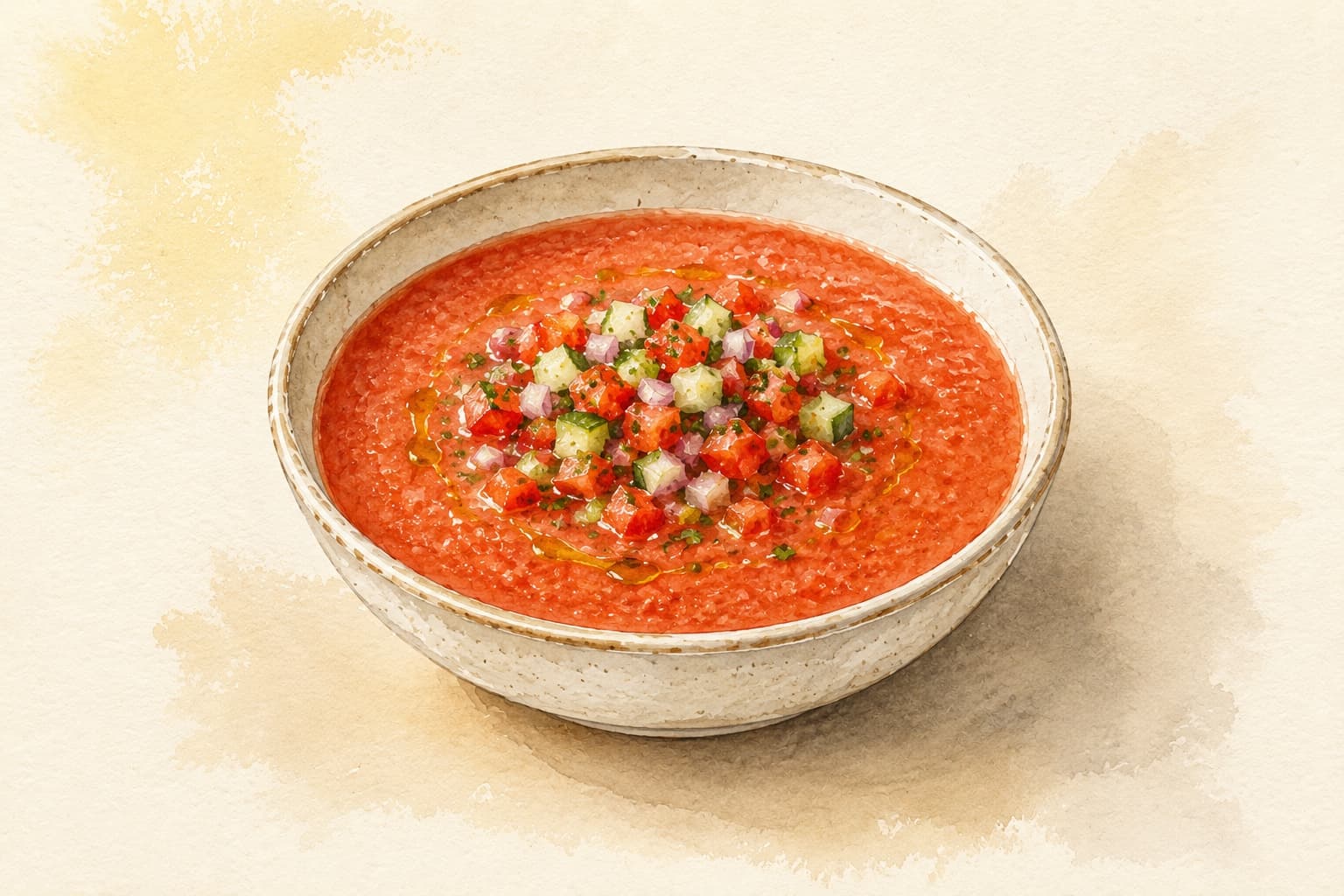
Ingredients
- 4 ripe tomatoes, chopped
- 1 cucumber, peeled and diced
- 1 bell pepper, chopped
- 1 small red onion, chopped
- 2 cloves garlic, minced
- 3 cups tomato juice
- 3 tablespoons olive oil
- 2 tablespoons red wine vinegar
- Salt to taste
- Pepper to taste
- Fresh basil for garnish
- Croutons for serving
Steps
Combine tomatoes, cucumber, bell pepper, onion, and garlic in a blender.
Add tomato juice, olive oil, and vinegar; blend until smooth.
Season with salt and pepper; blend again to mix.
Chill in the refrigerator for at least 30 minutes before serving.
Serve in bowls, garnished with basil and croutons.
Tools you'll want
Why this works
Gazpacho relies on the freshness of raw ingredients to create a vibrant flavor. The balance of acidity from tomatoes and vinegar enhances the sweetness of the vegetables. Blending creates a smooth texture, ensuring a uniform flavor. Chilling allows the flavors to meld, resulting in a refreshing dish.
The ratio of vegetables to liquid is crucial. Too much liquid dilutes the flavor; too little creates a chunky texture. Using ripe tomatoes maximizes sweetness and reduces the need for additional seasonings. The addition of olive oil provides richness while complementing the acidity.
Serving it cold enhances its refreshing qualities. The chill contrasts with warm weather, making it an ideal summer dish. Garnishing with fresh herbs adds a visual appeal and aromatic quality that enhances the tasting experience.
Common mistakes
Using out-of-season tomatoes.
Target: Ripe, peak-summer tomatoes — heirloom, Roma, or any variety at full ripeness. The tomato should smell intensely tomato-like through the skin.
Why it matters: Gazpacho is a tomato-forward dish — there's almost nothing to mask poor tomato quality. Out-of-season hothouse tomatoes produce flat, watery, slightly cardboard-tasting gazpacho. Authentic gazpacho is a summer-only dish.
What to do: Wait for peak tomato season. Buy from farmers' markets, smell-test each tomato.
Workarounds:
- Off-season? Use good canned San Marzano tomatoes + 1 tsp tomato paste + a pinch of sugar. Different but workable.
- Combine canned with whatever fresh you can find — best of both.
Skipping the bread.
Target: A small piece of stale white bread (about 30 g per portion), soaked briefly in water or sherry vinegar before blending.
Why it matters: Bread is structural in authentic Spanish gazpacho — it thickens the soup and provides body. Without it, the result is "tomato juice with vegetables in it" — fine, but not gazpacho.
What to do: Use day-old crusty bread (no crust). Soak in water for 5 minutes, squeeze out, add to blender with tomatoes.
Workarounds:
- Gluten-free? Use rice flour (1 tbsp) as a thickener — different but workable.
- For a creamier version, use soaked almonds instead of bread (ajo blanco style).
Skipping the sherry vinegar.
Target: Spanish sherry vinegar — about 2 tsp per portion. NOT generic red wine vinegar.
Why it matters: Sherry vinegar provides the distinctive nutty, complex acidity of Spanish gazpacho. Generic vinegars are sharper and one-note, producing a gazpacho that tastes "ok but not Spanish."
What to do: Source from a quality grocery — Spanish sherry vinegar (Pedro Ximenez or aged sherry vinegar).
Workarounds:
- No sherry vinegar? Champagne vinegar + a drop of balsamic approximates.
Not enough olive oil.
Target: Generous extra-virgin olive oil — at least 4 tbsp per liter of gazpacho, ideally streamed in while blender runs.
Why it matters: Olive oil emulsifies (binds oil and water-based juices into one smooth liquid) the gazpacho, creating a velvety mouthfeel and rounding the tomato acidity. Stingy oil produces a thin, watery soup.
What to do: Drizzle 4–6 tbsp Spanish EVOO while blender runs on high — produces an emulsion similar to mayonnaise's structure.
Workarounds:
- For deeper flavor, use Spanish picual or arbequina olive oils — characteristic of the region.
Skipping the chill.
Target: Refrigerate AT LEAST 2 hours after blending, ideally overnight.
Why it matters: Gazpacho needs cold development time — flavors meld, the soup body settles, and serving cold is the entire point. Lukewarm gazpacho tastes flat.
What to do: Make ahead. Chill in the fridge in a covered container. Stir before serving (some separation is normal).
Workarounds:
- Quick chill: pour into a wide shallow dish over ice for 30 minutes.
- For service, glass or chilled bowl maintains temperature.
Wrong garnishes.
Target: Diced cucumber, diced bell pepper, diced tomato, croutons, hard-boiled egg, drizzle of olive oil. Served alongside in small bowls.
Why it matters: Spanish gazpacho is served with extensive garnishes — they add textural contrast to the smooth soup and let diners customize. Pre-mixed gazpacho without garnishes is incomplete.
What to do: Dice all garnishes finely (3 mm cubes). Serve in 4–5 small bowls alongside the soup.
Workarounds:
- For simpler service, mix 50 % of the garnishes into the soup AT the time of serving, leave the rest on the side.
What to look for
- Bright red color indicating ripe tomatoes.
- Smooth texture with slight thickness.
- Fresh aroma of vegetables and herbs.
- Chilled temperature for a refreshing experience.
- Garnishes intact and visually appealing.
Chef's view
Gazpacho is rooted in Spanish history, often associated with Andalusian cuisine. It reflects the region's agricultural abundance, utilizing local produce. The technique emphasizes simplicity, showcasing the natural flavors of vegetables.
Culturally, gazpacho serves as a refreshing antidote to the heat of summer. It embodies the Mediterranean lifestyle, celebrating fresh, wholesome ingredients. The evolution of gazpacho has led to many variations, yet the core principles remain the same: fresh, raw, and vibrant.
<!-- beginner-glossed v1 -->Get the essays in your inbox — free
Weekly notes on flavor, fermentation, and food history — the writing behind the Atlas of Flavor. No spam; unsubscribe anytime.