
Dal Tadka
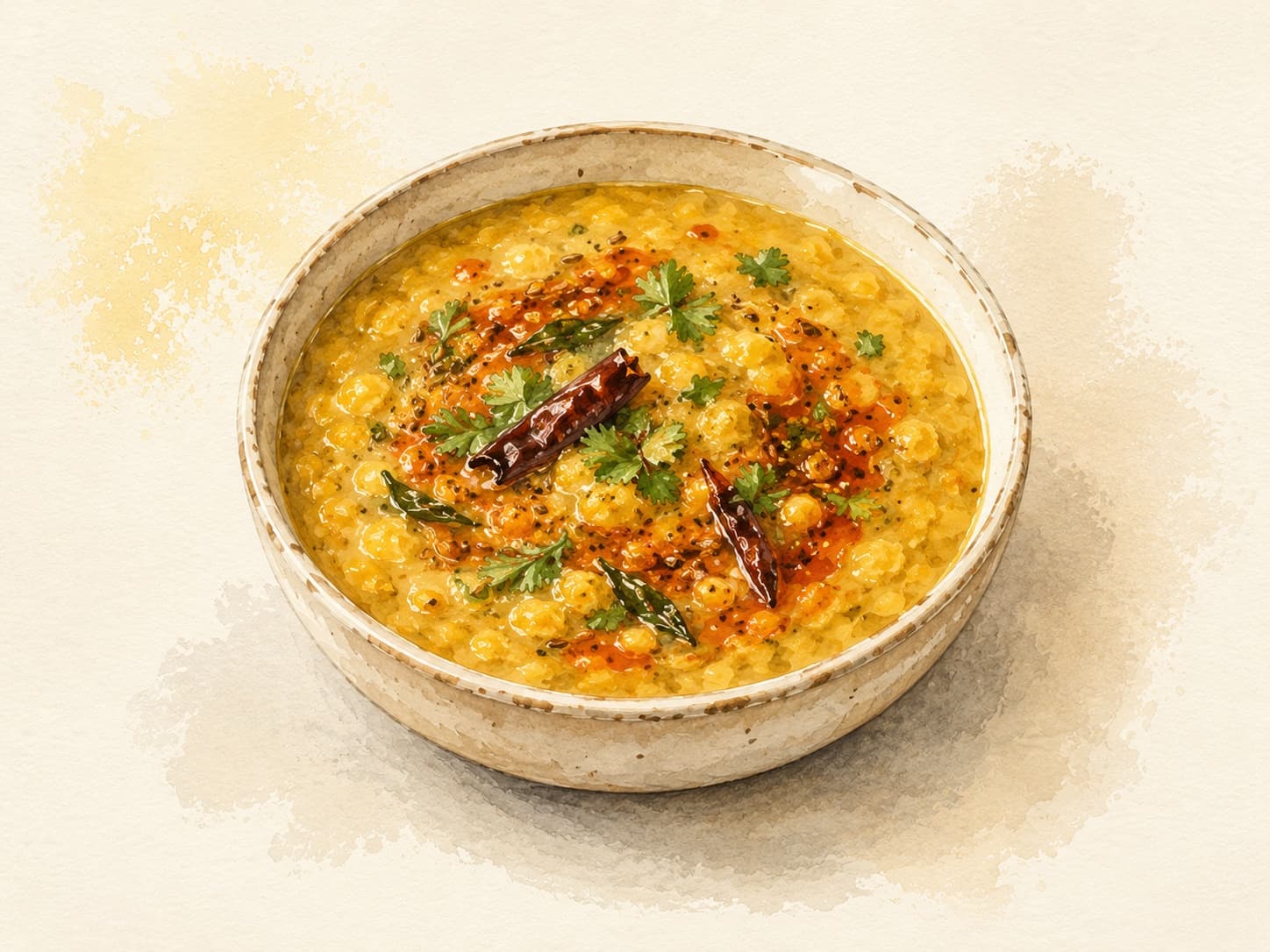
Dal Tadka achieves a rich, creamy texture through the tempering of spices and the simmering of lentils.
Contents (7 sections)▾
Ingredients
- 1 cup split yellow lentils (moong dal)
- 4 cups water
- 1 medium onion, finely chopped
- 2 tomatoes, chopped
- 2 green chilies, slit
- 1 teaspoon turmeric powder
- 1 tablespoon ghee or oil
- 1 teaspoon cumin seeds
- 1 teaspoon garam masala
- Fresh cilantro, for garnish
- Salt, to taste
Steps
Rinse the lentils under running water until it runs clear.
In a pot, combine lentils, water, turmeric, and salt; bring to a boil.
Reduce heat and simmer for 20 minutes until lentils are soft.
In a skillet, heat ghee or oil; add cumin seeds and allow to splutter.
Add onion and green chilies; sauté until golden brown.
Stir in tomatoes and garam masala; cook until tomatoes soften, then mix into lentils.
Tools you'll want
Why this works
Dal Tadka relies on the interaction between lentils and spices. The lentils, when boiled, absorb water and swell, creating a creamy consistency. The turmeric adds color and aids in digestion.
Temperatures play a crucial role. Ghee (clarified butter with the milk solids removed — common in Indian cooking, with a high smoke point) heated to the ideal temperature releases aromatic compounds from cumin seeds, enhancing flavor. The sautéing process caramelizes the onions, introducing sweetness that balances the dish.
Simmering (cooking gently at a bare bubble, just below a boil) the lentils allows flavors to meld. The longer the lentils cook, the more they break down, achieving a velvety texture. The final addition of garam masala (a warm Indian spice blend — typically cardamom, cinnamon, clove, and more) layers in warmth and complexity.
Common mistakes
Skipping the tadka (tempering).
Target: Heat ghee in a small pan, add whole spices (cumin seeds, asafoetida (a pungent dried resin used in tiny pinches, lending an onion-garlic depth), garlic, chili), let sizzle 30 seconds, pour OVER the cooked dal.
Why it matters: The tadka is the dish's name — it's literally "tempered dal." The hot oil-fried spice mixture provides the aroma kick that defines tadka. Mixing spices directly into the dal during cooking produces "spiced dal" — different dish entirely.
What to do: Cook the lentils plainly first. Make tadka separately at the end. Pour the sizzling hot tadka over the dal just before serving — should hiss dramatically.
Workarounds:
- For one-pot version, make tadka in the bottom of the pot first, then add water + lentils. Less dramatic but workable.
Wrong lentil.
Target: Toor dal (split pigeon peas) for traditional Punjabi tadka, OR moong dal (split mung beans) for lighter version.
Why it matters: Different lentils have different cooking times, textures, and flavor profiles. Brown lentils (whole) take longer and produce muddier color. Toor is the classic choice for tadka.
What to do: Source from an Indian grocery. Soak briefly (30 min) before cooking.
Workarounds:
- Mix toor + moong (50/50) for textural variety.
Cooking too short.
Target: Simmer lentils for 25–40 minutes until they break down into a creamy mass — NOT cooked al dente.
Why it matters: Dal's signature is the creamy, almost soup-like texture of broken-down lentils. Undercooked dal has discrete pieces — wrong texture.
What to do: Use pressure cooker (15 min on high) OR slow simmer with extra water. Stir periodically to encourage breakdown.
Workarounds:
- For chunky version, use whole lentils intentionally — different dish (sabut dal), but legitimate.
Tomatoes too early.
Target: Add tomatoes to the COOKED dal during the final 5 minutes, OR cook them in the tadka.
Why it matters: Adding raw tomatoes too early dilutes the dal and produces vegetable-stew texture. Tomatoes belong in the tadka (cooked in oil first) for proper integration.
What to do: Two options: (1) cook tomatoes in tadka oil → pour over dal; or (2) add diced tomatoes to dal in final 5 minutes.
Workarounds:
- For tomato-free version (also traditional), use a squeeze of lemon at the end instead.
Skipping kasuri methi.
Target: 1/2 tsp dried fenugreek leaves added in the final minute.
Why it matters: Kasuri methi is what makes Indian dal taste "Indian-restaurant-quality." Without it, the dal is fine but missing the maturity.
What to do: Crush between palms before adding to release oils. Add at the very end.
Workarounds:
- No kasuri methi? 1/4 tsp ground fenugreek seeds approximates the flavor (toasted briefly).
What to look for
- Lentils should be soft but not fully disintegrated.
- The color should be a vibrant yellow with a glossy finish.
- Aromatic spices should be prominent without overpowering.
- The consistency should be creamy, not watery.
- A rich, well-rounded aroma should fill the kitchen.
Substitutions
- Toor dal (split pigeon pea) → masoor (red lentils) or moong (split green). Masoor cooks fastest (15 min), toor classic, moong lightest. Brown lentils take longer and don't break down the same way.
- Ghee → neutral oil with a teaspoon of butter at the tadka stage. The butter carries some of the toasted-dairy aroma ghee provides; pure neutral oil cooks fine but the dish reads flatter.
- Asafoetida (hing) → small pinch of garlic powder + onion powder. Not the same, but covers the savory base note for kitchens that don't stock hing.
- Fresh tomato → tinned crushed tomato (60 g) or 1 tsp tomato paste. Use less paste than you'd expect — the concentrated version reads sharper.
Make-ahead and storage
- Dal improves overnight. The flavors marry and the texture firms slightly; a refrigerated dal often tastes better the second day.
- Refrigerate within 2 hours of cooking. Keeps 4 days refrigerated; freezes well in 250 ml portions for up to 2 months.
- Reheat with water. Dal thickens to a paste on cooling. Splash 2–3 tbsp warm water in the pan and stir to loosen — the goal is the original spoon-coating consistency.
- Re-temper the tadka if reheating from a frozen or 2+ day refrigerated state. A fresh tadka — ghee, cumin, hing, dried chili — poured on top at serving restores the dish to its full register.
- Don't leave at room temperature longer than 2 hours. Cooked legumes are a known growth substrate; refrigerate or freeze, never "keep it on the stove for dinner."
Chef's view
Dal Tadka is more than a dish; it embodies Indian home cooking. Each family has its own take, passing down traditions through generations. The art of tempering spices is a skill refined over years, balancing heat and flavor.
Historically, dal has been a staple in Indian diets, offering nourishment and protein. This dish symbolizes comfort, often served with rice or bread, making it a versatile meal across regions. The technique of dal tadka showcases the harmony of spices, lentils, and cooking methods, reflecting India's rich culinary heritage.
<!-- beginner-glossed v1 -->Get the essays in your inbox — free
Weekly notes on flavor, fermentation, and food history — the writing behind the Atlas of Flavor. No spam; unsubscribe anytime.