
Mexican Ceviche
Ceviche combines fresh seafood and citrus for a refreshing dish that relies on acid to 'cook' the fish.
Contents (5 sections)▾
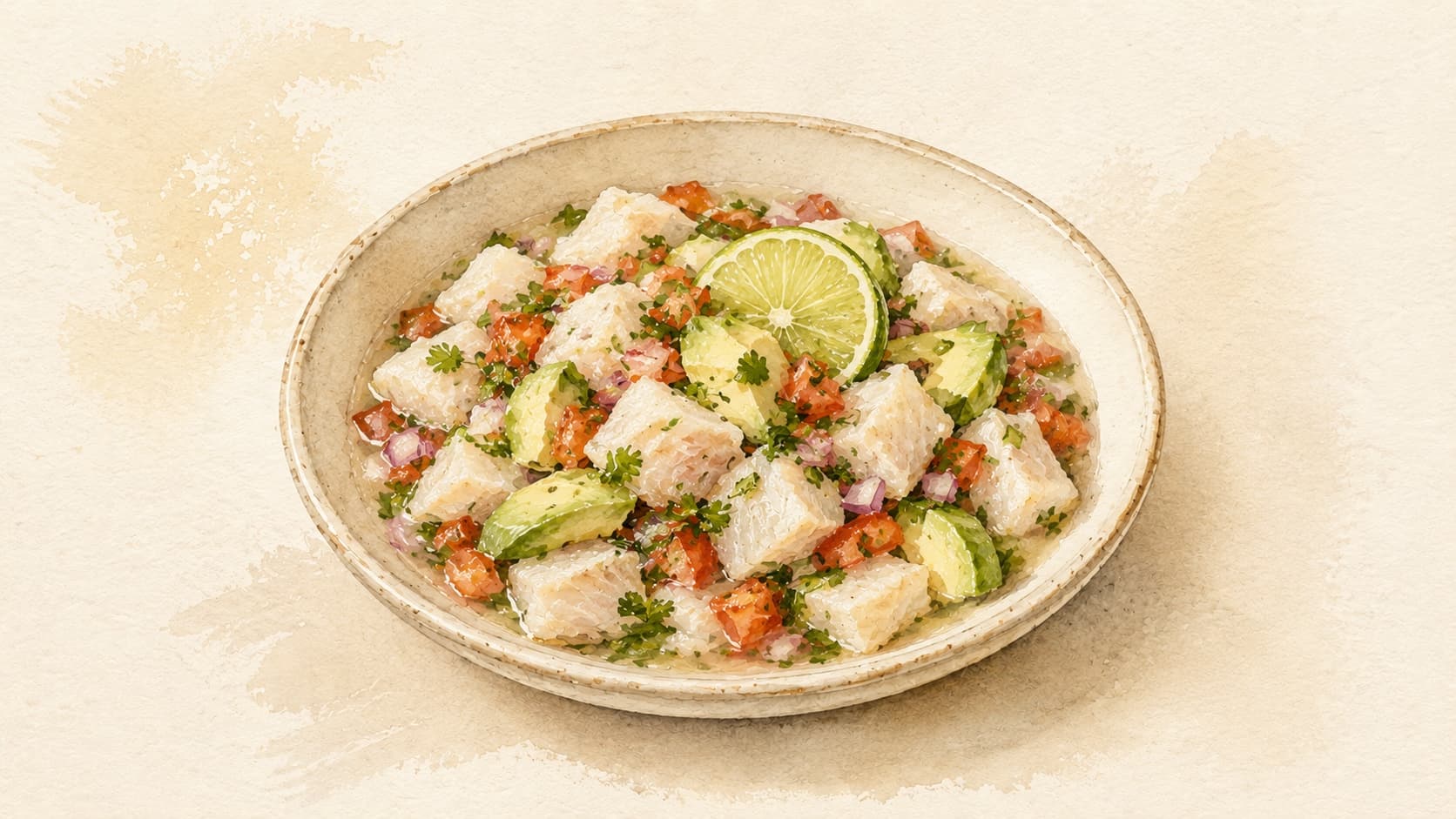
Ingredients
- 1 lb fresh white fish, diced
- 1 cup fresh lime juice
- 1/2 cup red onion, finely chopped
- 1 cup tomatoes, diced
- 1/2 cup cucumber, diced
- 1/4 cup cilantro, chopped
- 1 jalapeño, seeded and minced
- Salt to taste
Steps
Combine the diced fish and lime juice in a glass bowl.
Cover and refrigerate for 15 minutes, allowing the fish to marinate.
Add red onion, tomatoes, cucumber, jalapeño, and cilantro to the fish.
Stir gently to combine, then season with salt.
Serve immediately in chilled bowls.
Tools you'll want
Why this works
Ceviche utilizes the acid from lime juice to denature (chemically firm up) proteins in fish, effectively 'cooking' it without heat — but this is a textural change, not a safety step. The marinating process softens the fish, while the acidity enhances the flavor and texture. Balance in the ratio of fish to acid is crucial; too much lime can overpower the delicate seafood. Fresh ingredients retain their crispness, adding texture to the dish.
Safety — read this before sourcing fish: Lime juice changes the fish's texture, but it does not reliably destroy parasites (Anisakis and others) — the acid change is textural, not a safety step. Fish for raw eating needs a documented freezing treatment that meets an accepted parasite-destruction regimen — for example, −20 °C (−4 °F) for 7 days; faster deep-freezing regimens also exist. If the fish will be eaten raw and the species or source needs parasite destruction, confirm with the supplier that it has had an appropriate freezing treatment for raw consumption — a "fresh from the market" label is not that confirmation. Freezing controls parasite risk but does not eliminate every foodborne hazard, and cooking remains the lowest-risk option; if you cannot confirm the freezing treatment, cook the fish instead of serving it raw. Corvina, red snapper, halibut, mahi-mahi, and sea bass all work when properly frozen.
Common mistakes
Over-marinating in lime juice.
Target: Marinate 15–20 minutes for white fish, 5 minutes for shrimp or scallops. NEVER overnight.
Why it matters: Lime juice "cooks" the fish through acid denaturation of proteins. Beyond the window, the fish over-denatures — turns chalky, dry, and rubbery. The signature "just-opaque" texture is precise.
What to do: Time the marinade. Once the fish turns opaque on the outside but still pink-translucent in the center, drain off excess lime juice and serve.
Workarounds:
- For pre-made ceviche, drain liquid after the target time and refrigerate the fish only — stops the "cooking."
- For deeper flavor without over-cooking, increase the amount of lime juice but keep the time short.
Fish without a documented freeze history.
Target: Firm white fish with a documented freezing treatment suitable for raw consumption (an accepted regimen is −20 °C / −4 °F for 7 days; faster deep-freezing regimens also exist): corvina (traditional in Mexico), red snapper, halibut, mahi-mahi, sea bass. Diced 1 cm cubes.
Why it matters: This is the single most important point in the recipe. Lime juice denatures (chemically firms) the proteins but does not reliably destroy parasites such as Anisakis — an accepted freezing treatment is what handles them. "Fresh off the boat" is not the same as safe to eat raw, and freezing lowers parasite risk without removing every foodborne hazard. Separately, on texture: soft fish like cod disintegrates in the acid, and oily fish like salmon goes off-flavored.
What to do: Buy from a supplier who can confirm the fish had a freezing treatment suitable for raw service. If you cannot confirm it, cook the fish instead of serving it raw — cooking is the lowest-risk option. Pregnant, elderly, very young, and immunocompromised eaters should avoid raw ceviche entirely.
Workarounds:
- For cooked-style ceviche, briefly blanch shrimp before marinating — eliminates raw-fish concerns.
- For dietary preferences, hearts of palm or sweet potato ceviche (vegan) uses the same lime + chile + onion structure.
Wrong citrus.
Target: Fresh lime juice — Mexican (Key lime) variety preferred. NOT lemon.
Why it matters: Mexican lime is more aromatic and slightly less acidic than Persian (US grocery) lime. Lemon's profile is fundamentally different — produces a Mediterranean-style preparation, not Mexican ceviche.
What to do: Source Mexican lime if possible. Standard limes are second-best. Lemon: only as last resort.
Workarounds:
- For depth, use 3 parts lime + 1 part bitter orange juice (naranja agria) — Yucatecan style.
Skipping the salt cure.
Target: Salt the fish briefly (5 minutes) BEFORE adding lime juice.
Why it matters: A brief salt cure draws moisture from the fish, firming the texture and pre-seasoning. Without it, the fish stays soft and the lime juice over-penetrates.
What to do: Toss diced fish with 1 tsp salt per 500 g. Wait 5 minutes. Pour off excess liquid. Then add lime juice.
Workarounds:
- For maximum texture, salt-cure for 15 minutes — fish becomes firmer, with stronger seasoning.
Wrong vegetable timing.
Target: Add onion, chili, and herbs at the END (after lime juice has "cooked" the fish, when ready to serve).
Why it matters: Onion soaked too long in lime turns soggy and loses its sharpness; cilantro wilts. The vegetables provide textural and aromatic contrast and should be FRESH at serving.
What to do: Have all vegetables prepped. Combine with the marinated fish immediately before serving.
Workarounds:
- For a softer onion, "tame" it first by soaking in lime juice + salt for 10 minutes, then drain — milder bite.
Serving without accompaniments.
Target: Serve with tostadas (crisp corn tortillas), avocado, cucumber slices, and hot sauce.
Why it matters: Ceviche is meant to be eaten WITH something — usually scooped onto tostadas. The crispy texture against the soft ceviche is the defining mouthfeel. Bowl-only ceviche feels incomplete.
What to do: Set up tostadas alongside the ceviche bowl. Each person scoops onto their own tostada.
Workarounds:
- No tostadas? Fried plantain chips are a Caribbean variation that works well.
What to look for
- Bright, vibrant colors from vegetables.
- Firm, opaque fish edges after marination — this is the acid firming the surface proteins, a textural change, not a safety signal. Any parasite-safety margin comes from the fish's freezing treatment before it ever met the lime, not from the "cooked" look.
- Fresh herbs that maintain their green color.
- A burst of citrus aroma from lime juice.
Chef's view
Ceviche is more than a dish; it embodies the coastal regions of Mexico, where fresh seafood is abundant. Each region has its own twist, reflecting local ingredients and traditions. The technique of using acid to 'cook' fish is a culinary innovation that highlights the quality of the ingredients. Its simplicity and freshness make it a celebrated dish at gatherings and celebrations.
<!-- beginner-glossed v1 -->Get the essays in your inbox — free
Weekly notes on flavor, fermentation, and food history — the writing behind the Atlas of Flavor. No spam; unsubscribe anytime.