
Cacio e Pepe
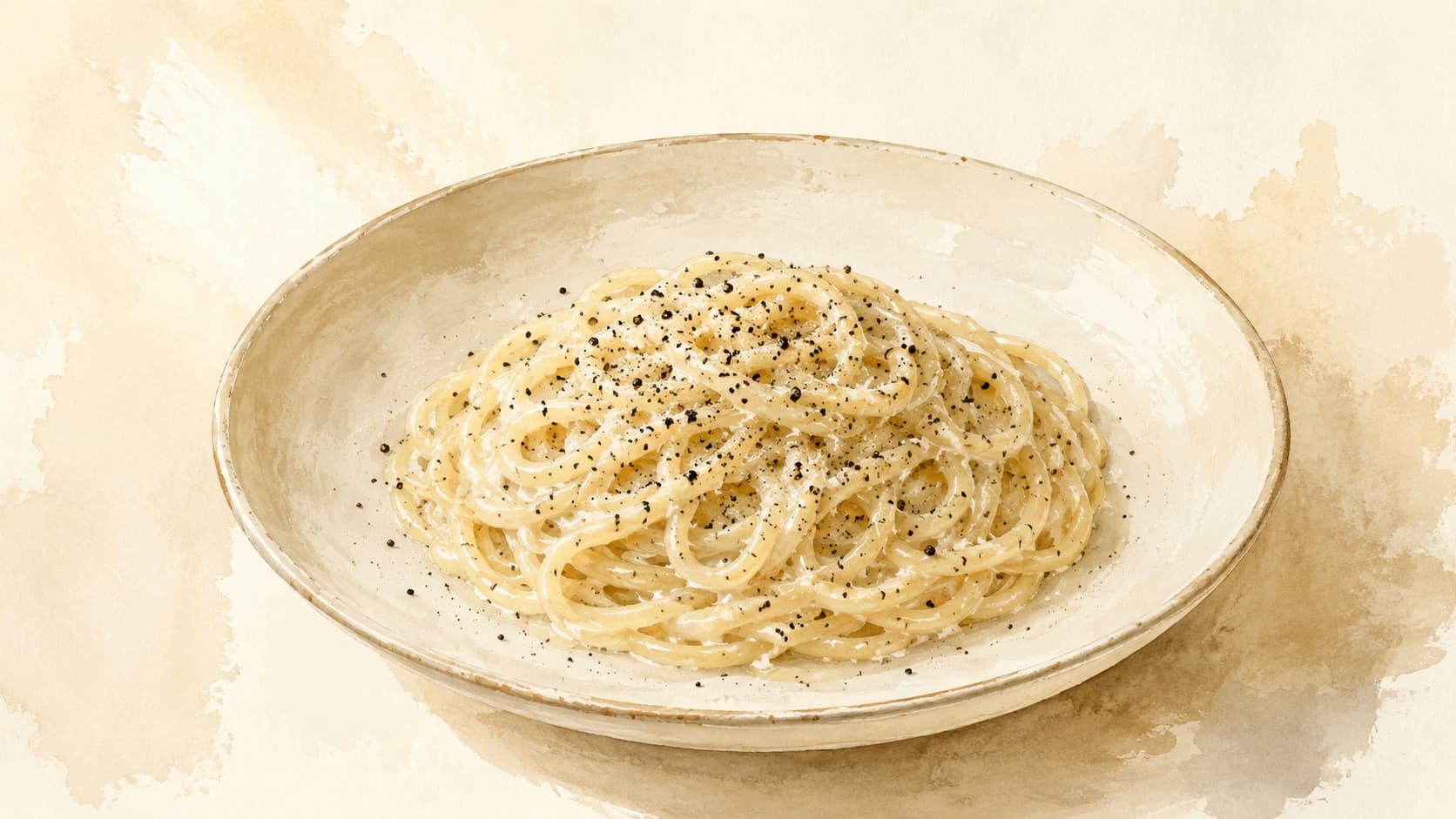
This dish relies on the emulsification of cheese and pasta water to create a creamy sauce without cream.
Contents (5 sections)▾
Ingredients
- 400g spaghetti
- 100g Pecorino Romano cheese, grated
- 50g Parmesan cheese, grated
- 2 tablespoons black pepper, freshly cracked
- Salt, for pasta water
- Extra virgin olive oil, for drizzling
- Chopped parsley, for garnish (optional)
Steps
Bring a large pot of salted water to a boil.
Cook spaghetti until al dente, reserving 1 cup of pasta water.
In a large skillet, toast black pepper over low heat for 1-2 minutes.
Add drained spaghetti to the skillet, along with reserved pasta water.
Remove from heat and stir in cheeses until creamy.
Serve immediately, drizzled with olive oil and garnished with parsley.
Tools you'll want
- · Digital kitchen scale (gram precision)
Why this works
Cacio e Pepe's simplicity relies on quality ingredients. The key is balancing the cheese and pasta water. Pecorino Romano (a hard, salty sheep's-milk cheese) provides saltiness and a distinct flavor. The starch in the pasta water helps emulsify (bind the cheese fat and water into one smooth, glossy sauce) the sauce, creating a creamy texture without cream.
Cooking the pasta until al dente is crucial; this texture holds up to the sauce. Toasting the black pepper releases essential oils, enhancing the dish's aroma and flavor. The heat from the pasta and skillet melts the cheese, forming a cohesive sauce.
The timing of each component is important. Mixing cheese and pasta off the heat prevents clumping. The result is a silky sauce that clings to each strand of spaghetti, delivering flavor in every bite.
Common mistakes
Using pre-grated cheese.
Target: Pecorino Romano DOP, grated FRESH on a microplane right before tossing.
Why it matters: Pre-grated cheese is coated in anti-caking agents (cellulose, potato starch) that prevent smooth melting and produce a gritty, clumpy sauce. Cacio e pepe is a 3-ingredient dish — every ingredient must be perfect.
What to do: Buy a wedge of Pecorino Romano. Grate fresh using a microplane (finer than a box grater) for best emulsion.
Workarounds:
- For more forgiveness, blend Pecorino 75 % + Parmigiano 25 % — slightly more fat helps emulsion stability.
Adding cheese to a hot pan.
Target: Pan OFF the heat. Cheese tempered with pasta water first to form a paste, THEN combined with pasta.
Why it matters: Pecorino's proteins coagulate and clump when hit with high heat. The classic failure: stringy clumps of cheese floating in oily water instead of a creamy sauce.
What to do: Pull pan from heat. In a separate bowl, mix freshly grated cheese with hot pasta water (start with 2 tbsp per portion) to form a thick paste. Add pasta to the bowl, toss with the paste, add more pasta water as needed.
Workarounds:
- Cheese already clumped? Strain, add a splash of cold water to the strained sauce, return pasta, toss again.
Skipping the pepper toast.
Target: Toast whole black peppercorns in a dry pan for 30 seconds, then crush coarsely with a mortar.
Why it matters: Toasting volatilizes the pepper's aromatic compounds, releasing the complex citrus-floral notes. Untoasted pre-ground pepper is one-dimensional heat.
What to do: Toast 1 tbsp peppercorns per portion in a dry hot pan, shaking constantly for 30 seconds. Grind coarsely — visible specks, not powder.
Workarounds:
- For maximum aroma, use Tellicherry peppercorns (premium variety) — significantly more aromatic.
Wrong pasta.
Target: Tonnarelli (Roman square spaghetti) or bucatini. Spaghetti acceptable.
Why it matters: Cacio e pepe's sauce needs textured pasta to cling to. Smooth, thin pasta (capellini) lets the sauce run off; tonnarelli's square shape grips the cheese-pepper coating.
What to do: Look for tonnarelli at Italian groceries. De Cecco makes it.
Workarounds:
- No tonnarelli? Bucatini is excellent. Spaghetti alla chitarra is similar to tonnarelli.
Using regular salt water.
Target: Cook pasta in slightly LESS-salted water than usual — about 7 g salt per liter, instead of 10 g.
Why it matters: Pecorino is already very salty. Combined with standard pasta-water salt, the sauce becomes over-salted. Less salt in the water leaves room for the cheese's saltiness.
What to do: Salt the pasta water lightly, taste the sauce before serving, don't add extra salt.
Workarounds:
- For ultra-starchy water (better emulsion), cook pasta in less water than usual (about 2 L per 400 g of pasta).
Insufficient starchy pasta water.
Target: Reserve 1 cup pasta water before draining. Use as needed to adjust sauce consistency.
Why it matters: Starch from the pasta water is the emulsifier — it lets the cheese fat and water suspend together rather than separate. Without enough, the sauce breaks.
What to do: Always reserve more water than you think you'll need. For extra starch concentration, cook pasta in less water than usual.
Workarounds:
- Forgot to reserve? Plain hot water + 1 tsp cornstarch + a pinch of salt approximates the pasta water.
What to look for
- Creamy, smooth sauce clinging to the pasta.
- Even distribution of black pepper throughout the dish.
- A glossy appearance that indicates proper emulsification.
- Freshly grated cheese that melts into the pasta without lumps.
Chef's view
Cacio e Pepe reflects Roman culinary tradition. It embodies the philosophy of simplicity, where few ingredients create a harmonious dish. The dish's origins date back to shepherds who relied on pantry staples.
Understanding technique is key. The careful balance of heat, timing, and texture transforms basic ingredients into an exceptional dish. Cacio e Pepe exemplifies how restraint in cooking can yield profound flavors and satisfaction.
<!-- beginner-glossed v1 -->Get the essays in your inbox — free
Weekly notes on flavor, fermentation, and food history — the writing behind the Atlas of Flavor. No spam; unsubscribe anytime.