
Baba Ganoush
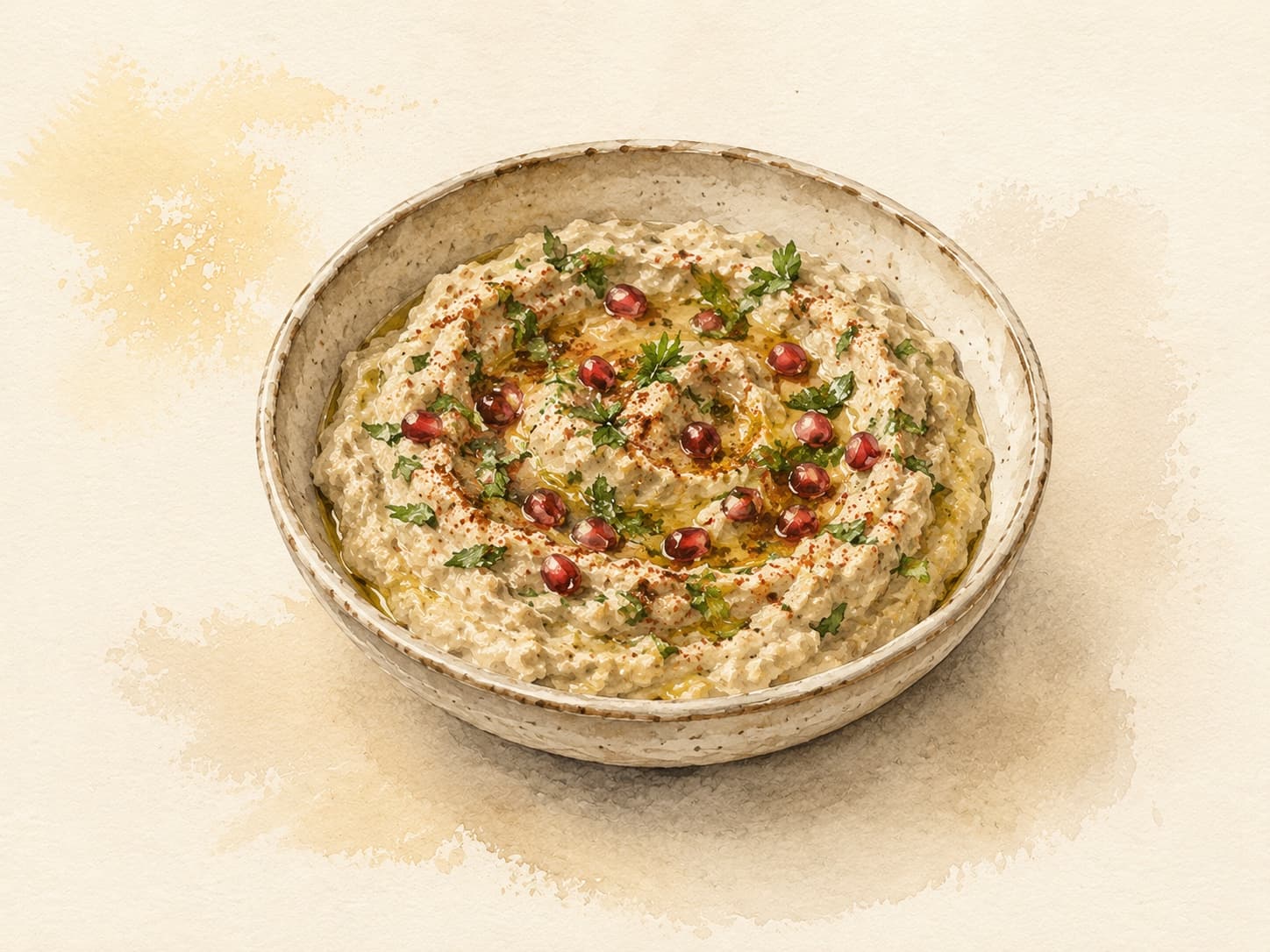
A smoky, creamy dip made from roasted eggplant, tahini, and garlic.
Contents (5 sections)▾
Ingredients
- 1 large eggplant
- 2 tablespoons tahini
- 2 cloves garlic, minced
- 2 tablespoons olive oil
- 1 tablespoon lemon juice
- 1/2 teaspoon cumin
- Salt to taste
- Fresh parsley for garnish
Steps
Preheat the oven to 400°F (200°C).
Prick the eggplant with a fork and roast for 20-25 minutes until soft.
Let the eggplant cool, then scoop out the flesh into a bowl.
Add tahini, garlic, olive oil, lemon juice, cumin, and salt; blend until smooth.
Transfer to a serving dish, drizzle with olive oil, and garnish with parsley.
Tools you'll want
Why this works
Roasting the eggplant at high temperatures caramelizes (browns the natural sugars with heat, deepening flavor and sweetness) its sugars, enhancing sweetness. The skin chars, imparting a smoky flavor. Allowing the roasted eggplant to cool before blending maintains creaminess. The balance of tahini (a smooth paste ground from toasted sesame seeds) and olive oil provides a smooth texture while contributing to the dip's rich flavor.
The acidity of lemon juice brightens the overall taste, cutting through the richness. Garlic adds a sharp note, while cumin introduces warmth. Salt amplifies flavors, ensuring a well-rounded dip. The blending process aerates (whips air into) the mixture, creating a light and fluffy consistency.
Common mistakes
Roasting in the oven (not over flame).
Target: Char the eggplant DIRECTLY over an open gas flame OR under a high broiler until skin is blackened and flesh collapsed.
Why it matters: Baba ganoush's defining quality is its smoky aroma — produced by the char on the eggplant skin permeating the flesh during cooking. Oven-roasted eggplant produces a fine dip but lacks the signature smokiness.
What to do: Place eggplant directly on a gas burner (over flame). Turn with tongs as each side blackens. About 15–20 minutes total. Skin should be charred, flesh visibly collapsed and soft.
Workarounds:
- No gas? Broiler on high, eggplant 5 cm from heat element, turning every 5 minutes.
- For deep smoke without flame, add 1/4 tsp smoked paprika to the finished dip.
Not draining the flesh.
Target: Scoop flesh into a colander or strainer for 15 minutes to drain excess liquid.
Why it matters: Roasted eggplant releases substantial water. Without draining, the dip is thin and watery, not the creamy texture that defines baba ganoush.
What to do: Cut roasted eggplant in half, scoop flesh into a colander over a bowl. Let sit 15 minutes. Discard the dark liquid.
Workarounds:
- For drier eggplant, press the flesh in cheesecloth.
Using a food processor.
Target: Mash with a fork or pestle — keep some texture. NOT a food processor.
Why it matters: Food processor produces a uniform, gluey paste — not baba ganoush's slightly chunky, rustic character. Authentic baba ganoush has visible eggplant fiber.
What to do: Hand-mash with fork. Some lumps are correct.
Workarounds:
- For ultra-smooth (Lebanese restaurant style), THEN use a food processor briefly. Modern variation.
Skipping the smoke aromas.
Target: A few drops of liquid smoke OR a pinch of smoked paprika if the char wasn't aggressive enough.
Why it matters: A pale baba ganoush misses the smoky punch that distinguishes it from "eggplant dip." If your roast didn't develop enough char, supplement.
What to do: Taste the dip. If smokiness is missing, add liquid smoke (3 drops) or smoked paprika (1/4 tsp).
Workarounds:
- For deeper aroma, add a small amount of toasted cumin powder.
Skimping on tahini and lemon.
Target: 3 tbsp tahini + 2 tbsp lemon juice + 2 cloves garlic + salt per eggplant.
Why it matters: Tahini provides body and richness; lemon provides brightness. Too little of either and the dip is thin and one-note.
What to do: Start with the recommended amounts, then adjust to taste.
Workarounds:
- For more depth, finish with a drizzle of olive oil + pomegranate molasses + sumac (a tangy, deep-red Middle Eastern spice with a lemony tartness).
What to look for
- The eggplant should be completely soft and slightly collapsed.
- A rich, creamy texture without visible lumps.
- A deep, smoky aroma during blending.
- A glossy surface when drizzled with olive oil.
Chef's view
Baba ganoush is a staple of Middle Eastern cuisine, often accompanying pita bread and fresh vegetables. Its roots trace back centuries, showcasing the culinary tradition of utilizing simple ingredients to create complex flavors. This dip exemplifies the balance of earthiness and freshness, making it a versatile dish for various occasions.
The preparation reflects a communal aspect of Middle Eastern dining, where sharing food fosters connection. Each region has its variations, but the core elements remain consistent. This dish embodies the philosophy of transforming humble ingredients into something extraordinary.
<!-- beginner-glossed v1 -->Get the essays in your inbox — free
Weekly notes on flavor, fermentation, and food history — the writing behind the Atlas of Flavor. No spam; unsubscribe anytime.