
Bucatini all'Amatriciana
This dish exemplifies the balance of flavors from simple ingredients, highlighting the harmony of pork, tomato, and cheese.
Contents (5 sections)▾
Ingredients
- 400g bucatini pasta
- 150g guanciale, diced
- 400g canned San Marzano tomatoes, crushed
- 50g Pecorino Romano cheese, grated
- 1 small onion, finely chopped
- 2 cloves garlic, minced
- 1 teaspoon red pepper flakes
- Salt, to taste
- Black pepper, to taste
- Olive oil, for sautéing
Steps
In a large skillet, heat olive oil over medium heat and sauté guanciale until crispy.
Add onion and garlic, cooking until soft and fragrant.
Stir in crushed tomatoes and red pepper flakes; simmer for 10 minutes.
Cook bucatini in salted boiling water until al dente; reserve some pasta water.
Toss bucatini in the skillet with the sauce, adding reserved pasta water if needed.
Serve with grated Pecorino Romano on top, and season with salt and black pepper.
Tools you'll want
- · Digital kitchen scale (gram precision)
Why this works
The key to Bucatini all'Amatriciana lies in the combination of guanciale (cured pork cheek — richer and porkier than bacon) and ripe tomatoes. Guanciale, with its rich fat content, renders down (melts its fat slowly into the pan over gentle heat) to create a flavorful foundation. This fat carries the essence of the dish, allowing the tomatoes to meld seamlessly. The bucatini's hollow structure traps the sauce, ensuring each bite is flavorful.
Temperature control is crucial. Sauté the guanciale over medium heat to gradually render the fat without burning. Adding the tomatoes too early can result in a watery sauce. Simmering allows flavors to concentrate, creating a robust and balanced profile. The addition of Pecorino Romano (a hard, sharp, salty Italian sheep's-milk cheese) at the end provides a salty, creamy finish.
The pasta’s cooking water is an essential tool. Adding it to the sauce helps emulsify (bind the fat and water into one smooth, unified sauce), creating a cohesive texture. This technique enhances the sauce's cling to the pasta.
Common mistakes
Using bacon instead of guanciale.
Target: Guanciale (cured pork jowl). Pancetta acceptable; bacon wrong.
Why it matters: Guanciale has 70 % fat content and a sweet, complex flavor specific to cured pork jowl. Bacon is smoked, and the smoke aroma dominates and shifts amatriciana into a different category entirely.
What to do: Source from an Italian deli. Cut into chunky lardons (1 cm cubes), render slowly.
Workarounds:
- No guanciale? Pancetta (cured pork belly, like unsmoked bacon) is the standard substitute. Different but acceptable.
- Bacon-only? Blanch 30 seconds in boiling water first to dial back the smoke.
Wrong pasta.
Target: Bucatini (hollow long pasta) — the traditional shape for amatriciana.
Why it matters: Bucatini's hollow center captures sauce in a way solid pasta can't. Spaghetti or linguine work as substitutes, but the dish reads differently.
What to do: Source bucatini specifically. De Cecco and Barilla brands are widely available.
Workarounds:
- No bucatini? Rigatoni or mezzi rigatoni — the ridged surface holds sauce well.
- Spaghetti is acceptable; linguine is acceptable; angel hair is wrong (too thin).
Adding cheese to hot pan.
Target: Add Pecorino Romano OFF the heat, after pasta is tossed in sauce.
Why it matters: Pecorino added to a still-hot pan melts into stringy clumps or oily separation. Off-heat addition lets the cheese coat without breaking.
What to do: Pull pan from heat → add cheese → toss vigorously → serve immediately.
Workarounds:
- For extra emulsion stability, mix cheese with a splash of pasta water before adding — creates a paste that integrates more smoothly.
Skipping the wine deglaze.
Target: 1/2 cup dry white wine to deglaze (pour in liquid and scrape up the tasty browned bits stuck to the pan) the pan after rendering guanciale, before adding tomatoes.
Why it matters: The wine lifts the browned fond from the pan (where the guanciale's flavor concentrates) and adds acidic complexity. Without it, the sauce lacks depth.
What to do: After guanciale is golden, pour in wine, scrape the pan with a wooden spoon, reduce until alcohol is gone (about 2 minutes).
Workarounds:
- No wine? 1 tbsp white wine vinegar diluted with 1/4 cup water approximates the acidic deglaze.
Wrong tomatoes.
Target: Canned San Marzano DOP (a protected label guaranteeing they're the real, certified variety) tomatoes — sweet, low-acid, low water content.
Why it matters: Generic canned tomatoes are watery and acidic — requires longer reduction and more sugar. San Marzano produces the proper texture and balance with minimal manipulation.
What to do: Look for "DOP" certification on the label. Crush by hand for chunky texture, or pass through a food mill (a hand-cranked tool that purées and strains out skins and seeds) for smooth.
Workarounds:
- No San Marzano? Any high-quality whole peeled canned tomato (Mutti, Bianco DiNapoli). Fresh tomatoes only in peak summer.
Adding onion or garlic.
Target: Traditional amatriciana contains NO onion and NO garlic. Just guanciale, tomato, pecorino, chili, and pasta.
Why it matters: Modern home versions add onion or garlic, but traditional Roman amatriciana is austere by design. The guanciale and pecorino provide enough aromatic depth.
What to do: Resist the urge. Stay simple.
Workarounds:
- For an Italian-American "amatriciana," sautéing 1 small chopped onion in the guanciale fat is widespread and unobjectionable — just know it's not traditional.
What to look for
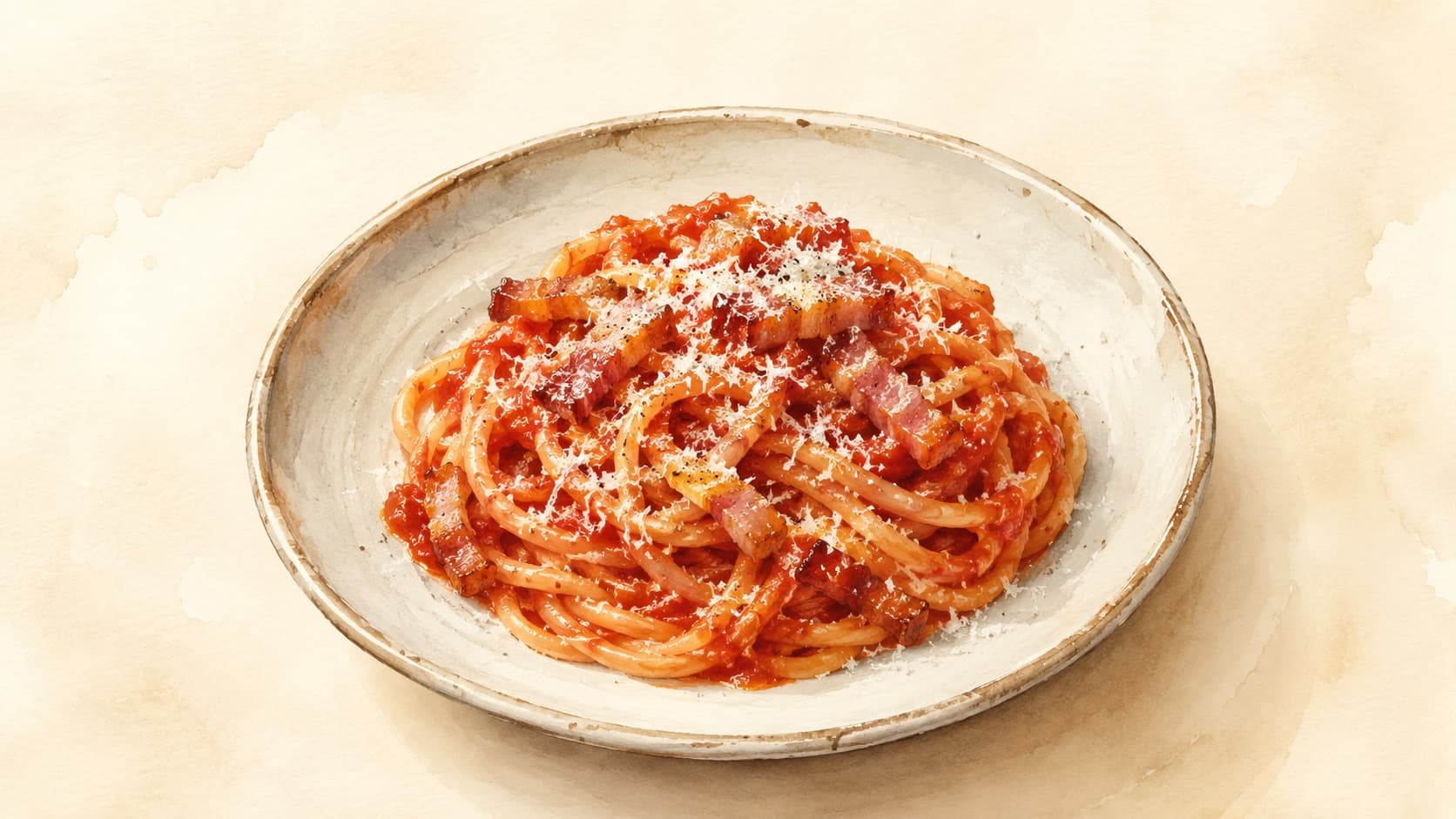
- A vibrant red sauce with visible flecks of guanciale.
- The bucatini should be slightly firm to the bite.
- A glossy finish on the pasta from the sauce.
- A dusting of cheese that melts slightly on top.
- The aroma of rich pork and tomatoes filling the air.
Chef's view
Bucatini all'Amatriciana represents the essence of Roman cuisine: simplicity and quality ingredients. Originating from the town of Amatrice, this recipe showcases how few elements can create something profound.
Historically, the dish was a staple for shepherds, using readily available ingredients. The technique has remained largely unchanged, honoring tradition while allowing for personal touches. Each cook can impart their style, but the core elements remain sacred.
<!-- beginner-glossed v1 -->Get the essays in your inbox — free
Weekly notes on flavor, fermentation, and food history — the writing behind the Atlas of Flavor. No spam; unsubscribe anytime.